




Egypt Packing List 2026: Everything to Bring for Every Type of Trip
 Magdy Fattouh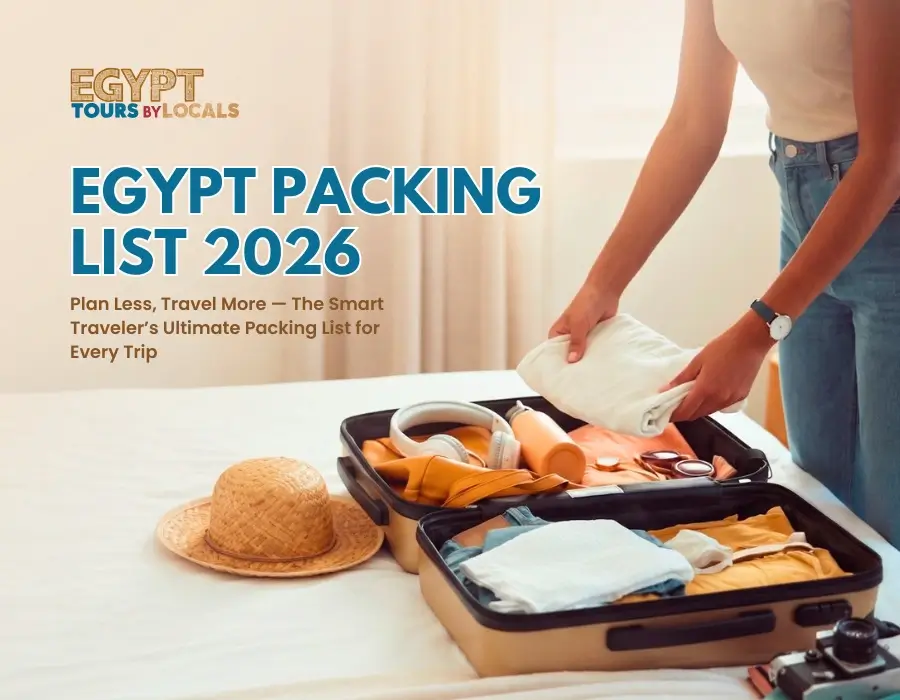
What Should You Pack for Egypt?
Light linen and cotton everything. Long trousers or a maxi skirt, a versatile scarf, and one long-sleeve shirt for mosques; grip-soled walking shoes for the sites (no flip-flops or heels at temples); SPF 50+, a wide-brimmed hat and electrolytes; a Type C/F adapter, $1 bills for tips and small EGP notes.
- ClothingLinen/cotton, trousers or maxi, scarf + one long-sleeve
- ShoesGrip-soled walkers; back-strap sandals for evenings
- Sun & healthSPF 50+, hat, electrolytes, stomach meds
- Leave behindHeavy denim, hard-sided luggage, shorts for sites
After 12+ years of welcoming visitors to Egypt, I’ve seen every packing mistake in the book. The traveler who brought a winter coat to Luxor in June. The couple who forgot sunscreen at the Pyramids in August. The solo traveler who packed five formal outfits for a budget Nile cruise. This packing list is the one I wish I could hand every visitor before they leave home.
For other practical details, such as visas, health and arrival, see our essential Egypt trip information.
What makes this guide different is that it comes from someone who has stood at the Pyramids of Giza on a scorching August afternoon, watched visitors struggle across the uneven stone plateau in flip-flops, and handed out tissues to tourists who had no idea that Cairo evenings in January require a jacket. Our team at Egypt Tours By Locals has guided 1,200+ groups from 75+ countries — and we’ve seen what works, what doesn’t, and what gets left behind in hotel rooms, never to be used again.
Whether you’re planning an archaeological tour of Cairo, Luxor, and Aswan, a Red Sea beach holiday in Hurghada or Sharm el Sheik, or a classic Nile cruise, this packing guide has you covered — by season, by trip type, and with a comprehensive printable checklist at the end.
Before You Pack: What Type of Egypt Trip Are You Taking?
Egypt is not one destination — it’s several, and what you pack depends enormously on where you’re going and what you’re doing. Before diving into the full list, identify your trip type:
- Archaeological cultural tour (Cairo, Luxor, Aswan, Alexandria): You’ll spend long hours at outdoor sites in direct sun, walking on uneven stone, visiting mosques and temples, and navigating busy markets. Comfort, modesty, and sun protection are your priorities.
- Red Sea beach holiday (Hurghada, Sharm el Sheikh, Marsa Alam): International resort standards apply. Dress codes are relaxed within resort grounds, but pack a cover-up for moving around town or visiting local areas.
- Combined trip (Cairo + Red Sea): You’ll need elements from both lists, but they overlap more than you’d think. Don’t overpack.
- Nile cruise: Nile cruises have specific requirements regarding cabin storage and formal evening dinners. For a dedicated guide, see our Nile cruise packing list
Clothing — What to Pack for Egypt
Clothing is where most visitors go wrong — either packing too much, the wrong fabrics, or the wrong style for the sites they’re visiting. Here’s what actually works.
Clothing for Archaeological Sites Cities
Egypt’s archaeological sites require a balance between staying cool and dressing respectfully. Lightweight, breathable fabrics are essential — and modesty matters more than you might expect, particularly in mosques, traditional markets, and rural areas.
What to pack:
- Light, loose-fitting tops in breathable fabrics (linen or cotton). Synthetic quick-dry fabrics also work well for warmer months.
- Long trousers or maxi skirts for women — more comfortable than shorts for long temple visits and required at many religious sites.
- A light long-sleeve shirt for mosque visits and conservative areas. A simple linen overshirt doubles as sun protection at sites and a cover layer in over-air-conditioned restaurants.
- One smart-casual outfit for nicer restaurants and evening meals in Cairo.
- A versatile scarf or sarong — the single most useful item in any Egypt packing list. It works as a hijab for mosque visits, sun protection, a light blanket on cold overnight trains, and a beach cover-up.
What to avoid: Very tight clothing draws unwanted attention in conservative areas. Heavy denim is miserable in Egyptian heat. Shorts are fine at resorts but out of place in city areas and unwelcome at religious sites.
For complete guidance on what’s appropriate at each type of site, see our dress code guide
Clothing for Beach Red Sea Resorts
If your trip includes time at a Red Sea resort, normal international standards apply. Bikinis and swimwear are completely fine at the pool and on the beach — Egyptian international resorts have no specific dress restrictions on resort grounds.
- Normal swimwear — bikinis, swim shorts, whatever you’d pack for any international beach resort.
- A cover-up or light dress for walking between the pool, beach, and hotel facilities.
- Light casual clothing for evenings — summer dresses, light trousers, linen shirts.
- One smarter outfit if you plan to eat at nicer resort restaurants.
If you’re visiting local towns near the resort (old Hurghada, local markets), dress more modestly — long trousers and covered shoulders are appropriate.
Packing by Season
Egypt’s climate varies significantly by season and by region. Here’s how to adjust:
- Summer (June–August): Egypt in summer is intensely hot — Luxor and Aswan regularly exceed 40°C. Pack breathable fabrics only (linen, cotton, or moisture-wicking synthetics). A wide-brimmed hat is essential, not optional. SPF50+ sunscreen is non-negotiable. Visit major sites at opening time (7 am) or late afternoon — avoid midday entirely.
- Winter (December–February): Cairo evenings can drop to 8–10°C, and the desert gets surprisingly cold at night. A light jacket or fleece for evenings is essential. Days are mild and pleasant (18–22°C in Cairo). Aswan and Luxor remain significantly warmer than Cairo throughout winter.
- Spring/Autumn (March–May, September–November): The most pleasant travel seasons. Pack light layers — you’ll want a jacket for evenings but won’t need heavy clothing during the day. Be aware that March–April can bring khamsin desert sandstorms — pack a scarf that can cover your face.
Shoes — The Most Important Decision You’ll Make
I’ve guided visitors at the Valley of the Kings with blistered feet, flip-flop-wearing tourists who turned back halfway across the Giza plateau, and people in heels attempting to navigate Khan el Khalili. The wrong shoes will ruin your trip to Egypt faster than any other packing mistake.
What to pack:
- Comfortable walking shoes — with a solid grip and ankle support — are non-negotiable for anyone visiting temples, tombs, and archaeological sites. The stone floors at Karnak, the sandy plateau at Giza, and the steep descending passages in the Valley of the Kings all require footwear with proper sole grip.
- Sandals — Sandals with a back strap — for resort use, evening meals, and days when you’re not covering major sites. Pure flip-flops are fine for pool areas, but too unsupported for any serious walking.
What NOT to wear at major sites: Flip-flops and heels at the Pyramids or in the Valley of the Kings. The Giza plateau is uneven stone and sand — the distances are longer than they look, and the terrain is challenging.
Magdy’s insider tip: Break in new shoes before you arrive. Blisters at the Valley of the Kings in 40°C heat are not something you recover from quickly.
Documents Travel Essentials
A little organization before you travel saves enormous stress on the ground. Egypt’s border crossing and hotel check-in procedures run smoothly when everything is printed and organized.
- Passport (valid at least 6 months beyond your travel dates)
- Printed AND digital copy of your e-visa or visa on arrival confirmation
- Travel insurance documents — policy number and emergency contact written separately from your phone
- Hotel booking confirmations (printed copies are useful for check-ins)
- Emergency contact card — one for your bag, one left with someone at home
- Photocopies of your passport photo page — kept separate from your actual passport
- A visa letter, if required for your nationality
To find out the visa requirements specific to your nationality, see our guide “Egypt Visa“.
Magdy’s insider tip: Photograph all your documents — passport, visa, travel insurance, hotel bookings — and email them to yourself before you travel. If your phone dies, you can access them from any internet connection.
Health Medical Essentials
Egypt is a safe destination for most travelers, but some basic health preparations can make a significant difference to your experience.
- SPF50+ sunscreen: The single most important health item in your bag. Good sunscreen in sufficient quantity is hard to source quickly in tourist areas. The Egyptian sun is intense year-round — I’ve guided visitors who got significant sunburn in February.
- Insect repellent: Particularly important near the Nile riverbanks, at felucca stops, and in Upper Egypt. Less of an issue in Cairo and resort areas.
- Stomach medication (Imodium or similar): A precaution that many visitors are grateful they packed. Traveler’s stomach is not guaranteed, but it is common enough that being prepared is sensible.
- Antihistamine: For reactions, dust (khamsin season), or insect issues.
- Personal medications: Bring more than you think you’ll need. Specific prescription medications may not be available locally.
- Electrolyte sachets: Particularly valuable in summer — dehydration happens faster than visitors expect in Egyptian heat.
- Basic first aid: Plasters, antiseptic wipes, paracetamol.
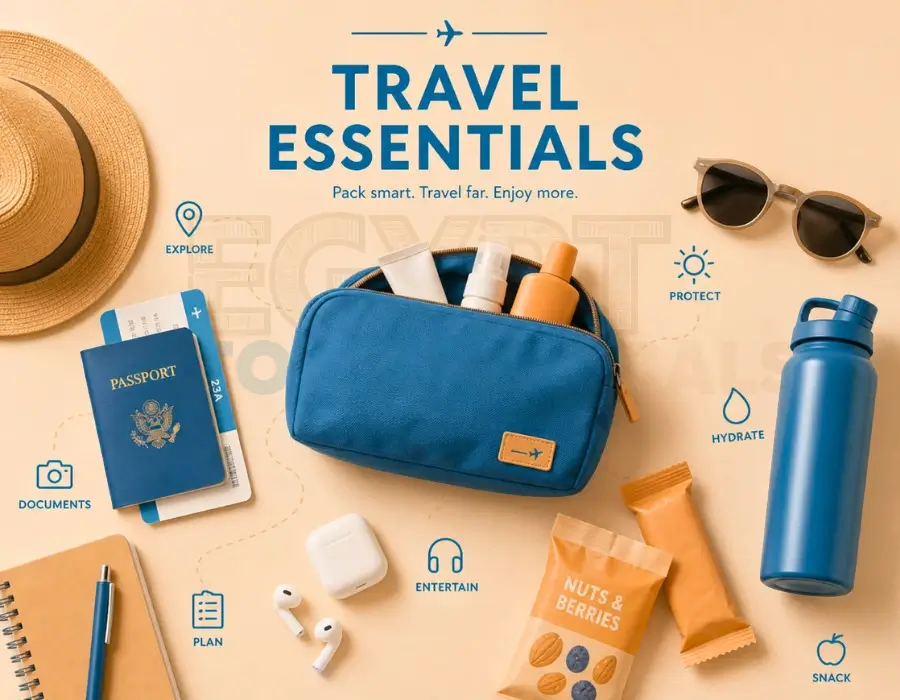
Sun Protection — Non-Negotiable
A separate section because it genuinely cannot be overstated. Even in winter, the Egyptian sun is stronger than most visitors expect.
- Wide-brimmed hat — a baseball cap does not provide sufficient coverage for the neck and ears during long site visits
- UV sunglasses — polarised lenses are particularly useful against reflected glare at desert sites
- Lip balm with SPF — lips burn quickly at exposed archaeological sites
- Rashguard for snorkeling — the Red Sea sun reflecting off the water burns very fast
Electronics Tech
Egypt’s infrastructure for travelers has improved significantly. 4G coverage is reliable in tourist areas, most sites allow photography, and power is readily available in hotels.
- Power adapter: Egypt uses Type C and F plugs (same as most of continental Europe), running at 220V. UK and North American visitors need an adapter. Most hotel rooms have at least one international socket, but don’t rely on its convenience.
- Power bank: Essential for long days at sites. There are no charging points at ancient temples, and a full day at Karnak, Luxor Temple, and the Valley of the Kings will drain your phone completely. Minimum 10,000mAh recommended.
- Camera: Photography is permitted at most Egyptian sites, though some tombs in the Valley of the Kings charge a photography fee or prohibit the use of flash. A mirrorless camera with a wide-angle lens captures tomb interiors particularly well.
Money Security
Keeping your money and documents secure in Egypt requires some basic precautions, particularly in busy markets and tourist areas.
- Money belt or secure inner-pocket wallet: Recommended for busy areas like Khan el Khalili market and crowded urban streets. Less necessary inside gated tourist sites and resort grounds.
- USD cash (small denominations): USD is widely accepted alongside EGP at tourist sites and for tips. Carry a supply of $1 bills for small tips throughout your trip.
- Visa or Mastercard debit/credit card: ATMs are available in cities and airports. Inform your bank before you travel.
- Small EGP notes: For tips, local transport, and small purchases at markets.
For detailed guidance on tipping expectations throughout your trip, see our tipping guide for Egypt.
Magdy’s insider tip: Never put your phone or wallet in your back pocket in busy markets and narrow souks. It takes seconds to lose something you won’t get back.
What NOT to Pack — Common Mistakes
Just as important as what to bring is what to leave at home. Here’s what most visitors pack unnecessarily:
- Heavy formal wear. Unless you’re specifically planning a fine-dining experience in Cairo, formal clothing is rarely needed. Smart-casual covers almost all eventualities on an Egypt trip.
- Expensive jewelry. There is no occasion on most Egypt itineraries that requires your best pieces, and it creates an unnecessary security concern in busy areas.
- Hard-sided large suitcases for Nile cruises. Cabin storage on Nile cruise vessels is tight. A soft-sided bag or medium-sized case is far more practical.
- Too many shoes. Two pairs cover almost every Egypt itinerary — walking shoes and sandals. Three is the absolute maximum.
- Hair styling tools without checking the voltage. Many tools are not compatible with 220V without a voltage converter, not just an adapter. Check before you pack.
- Things better bought in Egypt: Spices (buy fresh at the market — they’re extraordinary and far cheaper). Papyrus (buy the real thing from a reputable seller in Egypt rather than pre-buying overseas). Scarves and shawls (Egypt is one of the best places in the world to buy these — beautifully made and excellent value). For more information on what you can buy in Egypt during your trip, check out this guide: What to buy in Egypt?
Egypt Packing List — The Complete Checklist
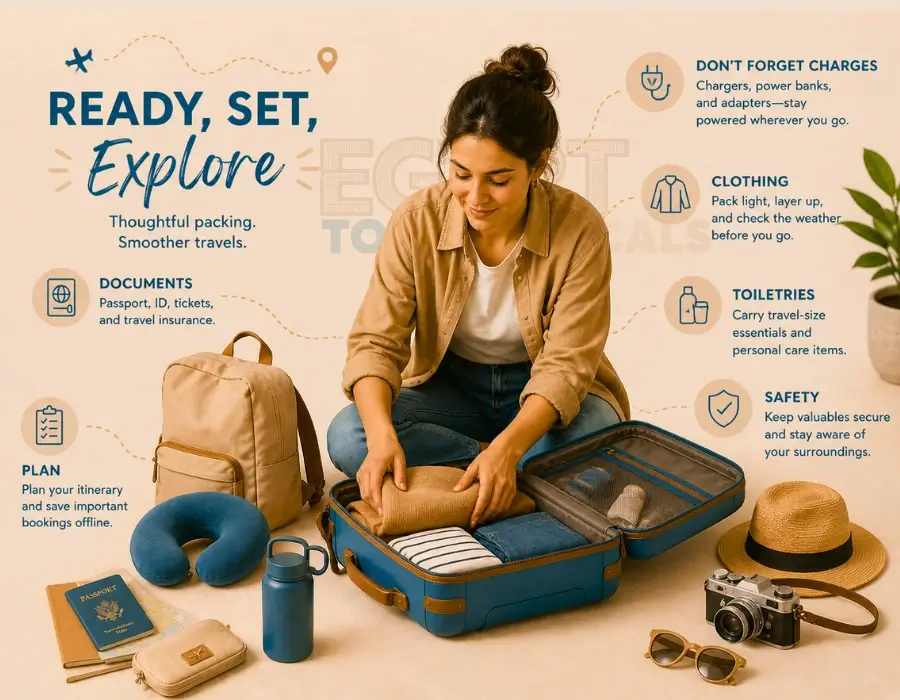
Save, print, or screenshot this section. Below is a comprehensive 55-item checklist across all categories — the practical result of 20+ years of watching what visitors actually use, and what they wish they’d left behind.
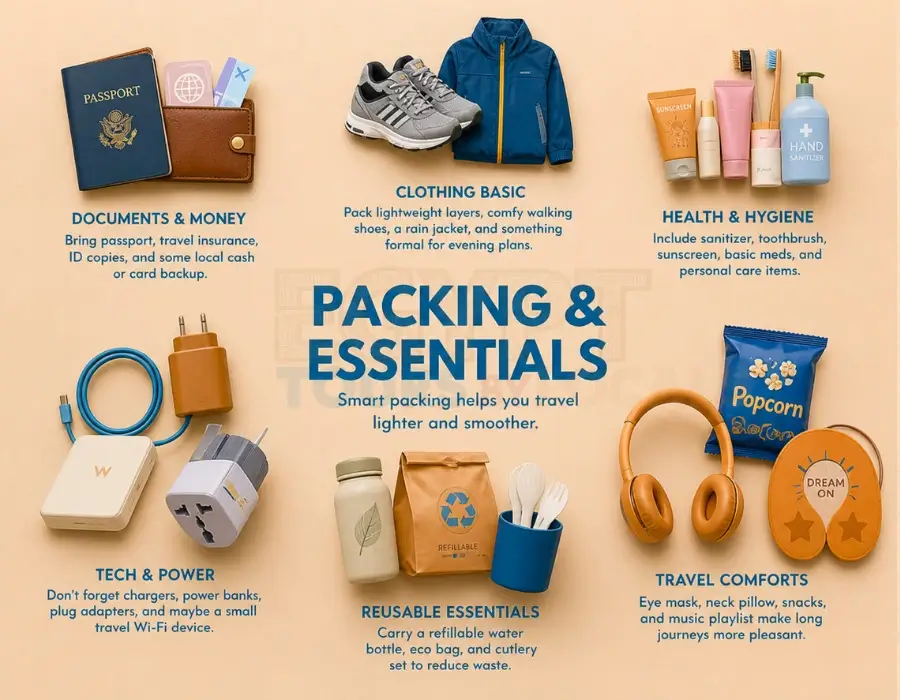
CLOTHING
- 5–7 light T-shirts or tops (breathable linen or cotton)
- 2–3 light long-sleeve shirts for mosques and sun cover
- 2 pairs of light trousers (linen or cotton preferred)
- 1–2 maxi skirts or loose dresses (women)
- 1 smart-casual outfit for evenings
- Light jacket or fleece (for evenings — essential October to April)
- Swimwear (if visiting the Red Sea or a hotel with a pool)
- Cover-up or light sarong (beach and resort transitions)
- Versatile scarf (mosque visits, sun cover, cold nights)
- Underwear x 7
- Lightweight pajamas or sleepwear
SHOES
- Comfortable walking shoes with grip (broken in before travel)
- Sandals with a back strap
- Optional: lightweight trainers for resort evenings
DOCUMENTS
- Passport (valid 6+ months beyond your travel dates)
- E-visa printout or visa confirmation (printed and digital)
- Travel insurance documents + emergency contact number
- Hotel booking confirmations (printed copies)
- Emergency contact card
- Photocopies of passport photo page (separate from passport)
- Driving license if renting a vehicle
HEALTH MEDICAL
- SPF50+ sunscreen — bring enough from home for the full trip
- After-sun lotion
- Insect repellent
- Stomach medication (Imodium or equivalent)
- Antihistamine tablets
- Paracetamol and/or ibuprofen
- Plasters and basic wound care
- Electrolyte sachets (especially valuable for summer visits)
- Any prescription medications — bring an extra supply
- Hand sanitiser
SUN PROTECTION
- Wide-brimmed hat (not just a baseball cap)
- UV sunglasses — polarised lenses recommended
- Lip balm with SPF
- Rashguard for snorkeling (Red Sea visitors)
ELECTRONICS
- Type C/F power adapter or universal adapter
- Power bank — minimum 10,000mAh for full site days
- Phone charging cable + a spare
- Camera and memory cards
- Laptop or tablet (if needed)
- Earphones
MONEY
- USD cash — mixed denominations, including $1 bills for tips
- EGP cash — small notes for tips, transport, markets
- Visa or Mastercard debit or credit card
- Money belt or inner-pocket secure wallet
PRACTICAL EXTRAS
- Reusable water bottle (refill at your hotel — don’t rely on buying)
- Day bag or small backpack for site visits
- Dry bags or zip-lock bags (for Red Sea or dusty conditions)
- Travel padlock for luggage
- Pen (needed for customs and immigration forms)
- Wet wipes — invaluable in markets and at dusty archaeological sites
Tissues - Travel-sized laundry detergent if packing light
- Eye mask and earplugs (for overnight trains or early morning flights)
- Small torch or headlamp — some tomb passages in the Valley of the Kings are dark
Frequently Asked Questions About Packing for Egypt
What should I pack for Egypt in February?
February is one of the most pleasant months to visit Egypt. Days are mild and sunny (17–22°C in Cairo, warmer in Luxor and Aswan), but evenings can be surprisingly cool — Cairo can drop to 8–10°C after dark. Pack light clothing for daytime site visits (linen and cotton work well) plus a light jacket or fleece for evenings. Comfortable walking shoes are essential. SPF50+ sunscreen is still needed even in February — the Egyptian winter sun is stronger than most visitors expect, particularly at exposed sites like the Giza plateau and the Valley of the Kings.
What should I pack for Egypt in summer?
Summer (June–August) in Egypt requires serious heat preparation. Pack exclusively breathable fabrics — linen, cotton, or moisture-wicking synthetics. A wide-brimmed hat is essential, not optional. Bring SPF50+ sunscreen from home in sufficient quantity. Electrolyte sachets are worth including for summer heat. Plan your site visits for 7–9 am or late afternoon only — Luxor and Aswan in particular are extremely challenging at midday in July and August. A high-quality power bank is essential, as your phone will work hard in the heat.
Do I need a money belt for Egypt?
A money belt or secure inner-pocket wallet is recommended for busy areas like Khan el Khalili market, Cairo’s busier streets, and crowded tourist sites. Inside gated archaeological sites, international resorts, and restaurants, it’s less necessary. The most practical approach is to keep your day’s spending money in an accessible pocket and keep your main cash, cards, and passport documents in a more secure location. Never put your phone or wallet in a back pocket in crowded market areas.
What shoes should I wear at the Pyramids?
Comfortable walking shoes with a solid grip are essential. The Giza plateau is uneven, with stone and sand; the distances across the site are longer than they look on any map, and the terrain is physically demanding — particularly if you’re visiting nearby Saqqara or Dahshur on the same day. Avoid flip-flops — they’re unsafe on uneven surfaces and offer no support for long days on your feet. Heels are completely unsuitable. Sandals with a back strap are the minimum acceptable option; proper walking shoes with ankle support are strongly recommended.
What is the dress code for tourists in Egypt?
Dress code expectations vary by location. At mosques and religious sites, both men and women should cover their shoulders and knees — women should also cover their hair (scarves are available to borrow at most major mosques, but bringing your own is more practical). In cities and at archaeological sites, modest dress is appropriate — avoid anything revealing or very tight. At international Red Sea resorts, normal swimwear is perfectly fine at the pool and on the beach. A versatile scarf is the most useful single item for navigating dress requirements across different settings throughout an Egypt trip. For a full breakdown by location, see our Egypt dress code guide.
What plug adapter do I need for Egypt?
Egypt uses Type C and F sockets (the same as most of continental Europe), running at 220V. Visitors from the UK need a UK-to-European adapter. Visitors from North America need a Type C/F adapter — check whether your devices are dual-voltage (most modern phones, laptops, and camera chargers are — look for ‘100–240V’ on the label) as non-dual-voltage devices also need a voltage converter. Most hotels have at least one international socket in each room, but its location may not be convenient. A universal adapter covers all bases.
Final Thoughts: Pack Smart, Not Heavy
A well-packed bag is the foundation of a smooth trip to Egypt. Too little and you’re scrambling at airport pharmacies in an unfamiliar city; too much and you’re dragging an oversized case across temple courtyards in 40°C heat. The checklist above reflects the practical results of 20+ years of observing what visitors actually use — and what they leave unused in hotel rooms.
The single most important items on this list are sunscreen, comfortable walking shoes, and a versatile scarf. Everything else builds from there.
If you’re planning your first visit to Egypt and want guidance beyond the packing list, our complete Egypt first-timer guide covers everything from visa requirements to where to go, how long to spend, and what to expect when you arrive. And if you’d like help building an itinerary that suits your travel style — whether cultural, coastal, or a mix — our local team is ready to help.
Having guided 1,200+ groups from 75+ countries across Egypt, we know what makes a trip genuinely memorable: good planning, realistic expectations, and a local expert who knows the difference between the official itinerary and the real experience. 98% of our guests recommend us to friends and family.
Related guides

How Far in Advance Should You Book Your Egypt Trip? The Honest Timing Guide
Quick Answer How Far in Advance Should You Book Your Egypt Trip? Book an Egypt tour…
Private vs Group Tours in Egypt: The Real Numbers, Honestly Compared
Quick Answer Private or Group Tour in Egypt — Which Should You Choose? For couples, families,…
Egypt Tour Package vs DIY: The Real Cost Breakdown, Line by Line
Quick Answer Egypt Tour Package vs DIY — Which Is Actually Cheaper? At the hostel tier,…
Ready to plan your Egypt trip?
Tell us your dates and interests. A Cairo consultant will reply within 24 hours with an itemised itinerary — free to enquire.