





Egypt in Summer: Honest Guide to Visiting in June, July & August
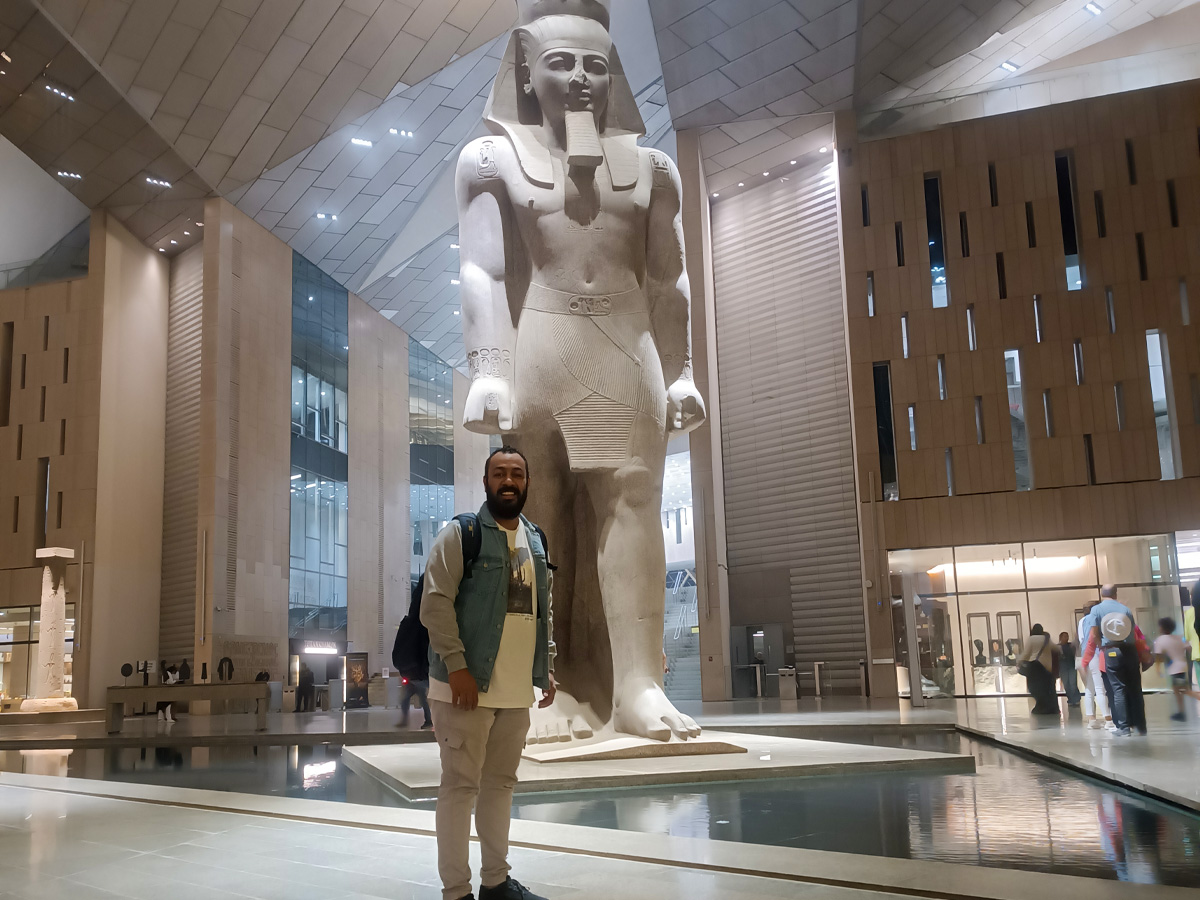 Magdy Fattouh
Is Egypt Too Hot to Visit in Summer?
It depends on where you go. Red Sea resorts (sea at 27–29°C with constant breezes) and a well-scheduled Cairo visit are excellent in summer — fewer crowds and 20–40% cheaper prices. Luxor and Aswan hit 43–45°C at midday. The golden rule: finish outdoor sightseeing before 10 am, rest at midday, resume after 5 pm.
- Best basesHurghada & Sharm — sea 27–29°C
- The ruleOutdoors before 10 am, resume after 5 pm
- Savings20–40% cheaper, lowest crowds of the year
- HottestLuxor/Aswan 43–45°C midday — 5 am starts
Every summer, we receive the same question from travelers around the world: “Is Egypt too hot in summer? Should I cancel my trip?” The honest answer? It depends entirely on where you go and what you plan to do — and that is the nuance most travel sites never give you.
I have guided over 1,200 groups through Egypt in every season, including the sweltering peak of August in Luxor. I have watched visitors suffer in the midday sun at the Valley of the Kings, and I have watched others have the trip of their lives on the beaches of Hurghada in July. Summer in Egypt is not a single experience — it is several very different ones, depending on your destination, timing, and expectations.
In this guide, I will give you the unvarnished local perspective on visiting Egypt in June, July, and August: the temperatures by city, the advantages most sites skip over, and the practical framework for deciding whether summer is right for your trip.
Is Egypt Too Hot in Summer? (Honest Answer)
Yes — Egypt in summer is genuinely hot. But “too hot” is a personal threshold, not an objective fact, and it also varies dramatically by location. Cairo in August averages highs of 37–40°C (99–104°F). Luxor and Aswan push even further, regularly hitting 42–45°C (108–113°F) in July and August. The Sinai and Red Sea coasts are typically 34–38°C (93–100°F) but offer sea breezes and immediate access to cooling water.
Here is what the other guides will not tell you: Egypt in summer has real advantages that peak-season visitors never experience. Crowd levels at the major monuments are at their lowest of the year. The Pyramids of Giza, which receive 15,000+ visitors per day in October–November, are noticeably quieter. You will not queue for 45 minutes to enter the Great Pyramid. You will not fight for space in Tutankhamun’s tomb. If you are strategic about your timing — visiting sites at 6–8 am before the heat builds, retreating indoors by noon, and resuming at 5 pm — Egypt in summer is entirely manageable for the prepared traveler.
The honest verdict: summer works well for beach destinations and a carefully structured Cairo visit. It is genuinely punishing for full Luxor and Aswan itineraries, and we will explain why below.

Egypt Summer Weather: Month-by-Month Breakdown
Understanding how conditions shift over the three summer months helps you plan around the peak heat rather than blindly booking the cheapest flight.
| Month | Avg High | Humidity | Tourists |
|---|---|---|---|
| June | 35–40°C (95–104°F) | Low–Moderate | Low |
| July | 37–42°C (99–108°F) | Low (Cairo), Higher (Coast) | Low |
| August | 37–42°C (99–108°F) | Low (Cairo), Higher (Coast) | Low–Moderate |
June in Egypt: What to Expect
June is the “entry point” to the Egyptian summer and, for many travelers, the sweet spot. Temperatures have climbed past spring but have not yet reached the brutal ceiling of late July and August. Cairo averages 35–38°C (95–100°F), and the evenings cool to a comfortable 22–24°C (72–75°F) — making rooftop dinners in the city genuinely pleasant.
One local tip almost no one mentions: the Khamsin winds, which batter Egypt with sandstorms in April and May, are largely over by June. You get the emptier monuments without the orange dust clouds. Hurghada and Sharm el-Sheikh in June offer warm sea temperatures of around 27°C (81°F) and still-manageable beach weather. Dive visibility on the Red Sea reefs is excellent at this time of year.
June is our most recommended summer month for first-time visitors who want to combine Cairo sightseeing with a Red Sea extension.
July in Egypt: What to Expect
July is peak Egyptian summer. Temperatures in Luxor and Aswan regularly exceed 43°C (109°F) during midday hours. Cairo hits 38–41°C (100–106°F). If you are visiting Upper Egypt (Luxor and Aswan), July requires military-level planning: 5 am starts, absolutely no outdoor activity between 11 am and 5 pm, and a commitment to indoor alternatives (museum visits, Nile felucca rides at sunset rather than midday).
On the positive side, July is when Egyptians themselves holiday at the Red Sea. Hurghada’s waterparks, beach resorts, and restaurants are buzzing with local energy — a side of Egypt that winter tourists simply never see. If you want an authentic glimpse of how Egyptians actually spend their leisure time, a July stay at the coast is surprisingly rich.
One practical note: hotel prices in Cairo drop by 25–40% in July compared to November–March. The exact same Nile-view room at a Cairo hotel costs significantly less — and the pool becomes the most important amenity on the booking page.

August in Egypt: What to Expect
August mirrors July in intensity. This is the hottest month across all of Egypt, but it also marks the very end of the low season — global school holidays mean a slight uptick in family tourists in the final two weeks of August, particularly at Red Sea resorts.
For the monuments, August remains the least crowded calendar month of the year. Having guided groups through the Grand Egyptian Museum in August, I can confirm: walking through the Tutankhamun galleries without the shoulder-to-shoulder crowds of December is a genuinely different — and better — experience. The artifacts deserve contemplation, not a procession.
August is also when night tours of the Pyramids and Sound & Light shows become particularly atmospheric. The air is warm but dry, the skies are clear, and the site has a stillness you will not find in any other month.
Best Places to Visit in Egypt in Summer
Red Sea (Hurghada & Sharm el-Sheikh) in Summer
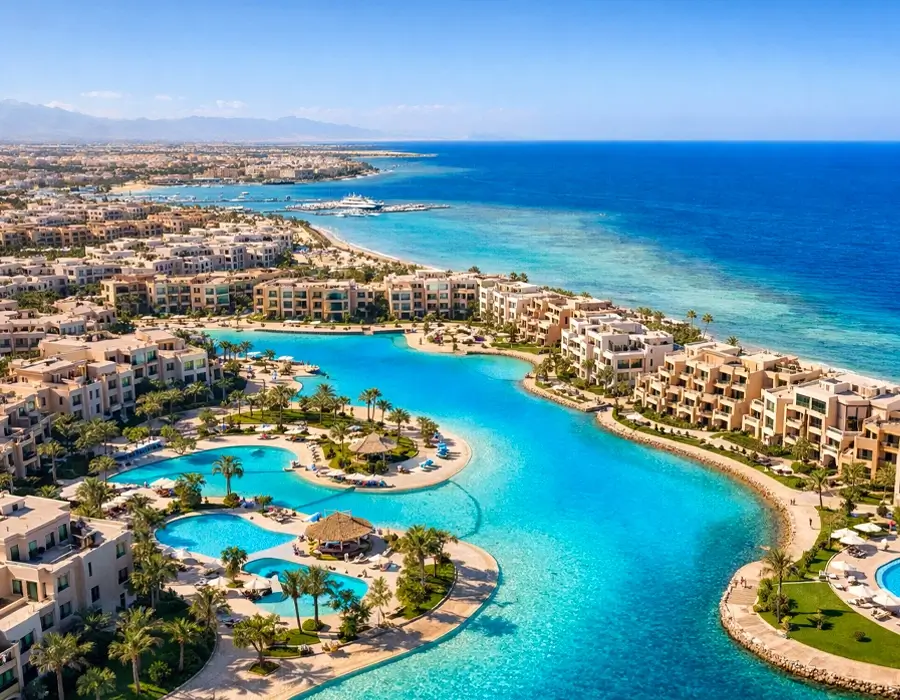
For summer visiting, Hurghada and Sharm el-Sheikh are the clear winners. Water temperatures of 27–29°C (81–84°F), consistent sunshine, and the immediate cooling effect of swimming in the sea make the coastal resorts the most comfortable experience in Egypt in June, July, and August.
Hurghada’s House Reef and the reefs around Giftun Island offer world-class snorkeling that summer visitors enjoy at a fraction of the crowd levels seen during European school holidays in late October. Sharm el-Sheikh’s Ras Mohammed National Park — widely considered one of the top 10 dive sites in the world — is accessible year-round, but summer dive boats run with smaller groups.
Insider tip: book a dawn boat excursion leaving at 6 am. By the time the sun is punishing (10 am onwards), you are already back at your resort pool, having completed the best part of the day. This scheduling principle — front-load outdoor activities, retreat mid-day — applies everywhere in Egypt in summer, but is easiest to execute on the coast.
Check out the complete guide to the best Places to visit in Egypt in Summer
Cairo in Summer: Is It Manageable?
A relaxing summer trip to Cairo can be enjoyed with a well-organized itinerary. The city never sleeps, and its indoor attractions—such as the Grand Egyptian Museum on the Giza Plateau, the Coptic Museum, and the covered markets of Khan el-Khalili—are air-conditioned and unaffected by the heat. Therefore, a summer Cairo itinerary that includes a morning visit to the Pyramids (arriving at 6:30 a.m., when the gates open), an afternoon spent exploring museums, and an evening of Nile cruises or dining is an ideal choice.
What to avoid: midday visits to Saqqara or Dahshur without shade structures. These open-desert sites offer very little cover, and the heat radiating from the sand adds another 5–8 degrees to the perceived temperature. We have had guests turn back on their own initiative at Saqqara in July — it is a different animal from the Giza plateau, which at least has food stalls and shade options.
Cairo practical note: Metro and taxi travel between sites during midday keeps you out of direct sun and is fast and affordable. Built in a genuine 12 pm–4 pm hotel rest period, and your Cairo summer days become very comfortable.
Uncover the highlights of Cairo with carefully designed day tours — from the Pyramids of Giza to the Grand Egyptian Museum, all with private guides and seamless transfers. 👉 View Cairo Day Tours Now
Luxor & Aswan: Only for the Brave
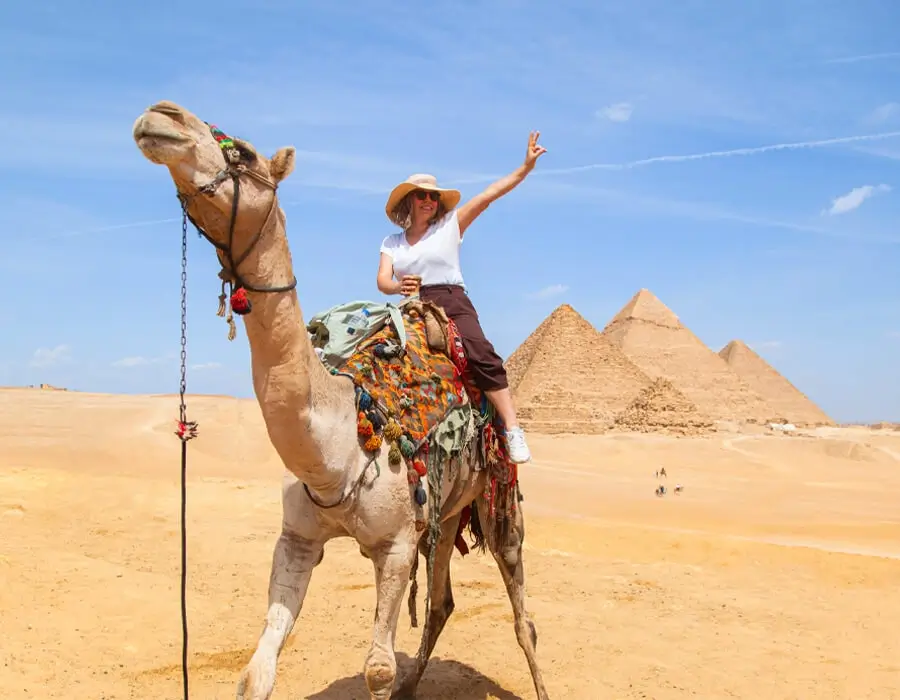
I will not sugarcoat this. Luxor and Aswan in July and August are genuinely extreme. When I guide groups through the Valley of the Kings in summer, we leave our hotel before 5 am and are back inside with the air conditioning by 10 am. Even experienced travelers who consider themselves heat-tolerant sometimes underestimate what 44°C (111°F) in an airless valley feels like.
That said, Luxor and Aswan in summer have one extraordinary advantage: you may have entire temples to yourself. Standing alone inside the Temple of Karnak at 6:30 am in August, with the columns lit gold by early sun and not another visitor in sight, is one of the most profound Egypt experiences I have ever shared with guests. It is simply not available in winter.
If you choose Luxor and Aswan in summer, commit to the early start without exception, plan a full Nile felucca afternoon (there is always a breeze on the water), and book a felucca or dahabiyya overnight cruise — sleeping on the Nile in summer is significantly cooler than any land hotel without exceptional air conditioning.
Top Tips for Surviving Egyptian Summer
- Start every outdoor visit before 7 am. This is non-negotiable for sites like the Valley of the Kings and Karnak. The difference between 6:30 am and 10 am is not discomfort versus comfort — it is a completely different experience.
- Carry electrolyte sachets, not just water. The dry heat of Egypt causes salt depletion faster than humid heat. Straight water without electrolytes can leave you feeling worse, not better.
- Wear loose, light-coloured, long-sleeved linen. This sounds counterintuitive to Western visitors. In Egypt’s dry heat, covered skin in breathable fabric is significantly cooler than bare skin in direct sun — and it protects against sunburn.
- Book accommodation with strong air conditioning and a pool as a non-negotiable. Read recent reviews specifically about AC performance — older hotels sometimes have systems that cannot cope with 42°C outside temperatures.
- Eat your main meal at lunch (indoors, air-conditioned). Egyptian lunches are wonderful. The midday meal break forces the right behavior: get inside, eat well, rest. Resume at 4–5 pm.
- Use SPF 50+ and reapply every 90 minutes. Egypt’s sun intensity at altitude (Aswan is at a higher elevation than most visitors realize), combined with reflective sand and stone, makes sunburn shockingly fast.
- Never underestimate heat exhaustion. Know the symptoms: heavy sweating, sudden stopping, pale skin, nausea, and weakness. If anyone in your group shows these signs, get them inside immediately, apply cool, wet cloths to the neck and wrists, and seek medical attention.
Best Things to Do in Egypt in Summer
Summer is not the season to be crossing Egypt in an uncomfortable minibus between five sites. It rewards slower, deeper itineraries. Here is what genuinely works:
- Sunrise visits to the Pyramids of Giza — the light is extraordinary at 6:30–7:30 am, and crowds are minimal in summer.
- Red Sea diving and snorkeling — the water is warm, visibility is excellent, and dive operators offer better availability.
- Felucca sailing on the Nile at sunset in Luxor or Aswan — the river breeze is the best natural air conditioning in Egypt.
- Egyptian Museum and Grand Egyptian Museum visits — world-class air-conditioned museums at their quietest.
- Cooking classes and food tours in Cairo — Khan el-Khalili and the surrounding streets are best explored in the cooler evening hours.
- Overnight Nile cruises — the cabins are air-conditioned, the decks are breezy, and summer rates are 30–40% lower than peak season.
- Sound & Light show at Karnak Temple — an evening outdoor event when the temperature drops to 28–30°C and the atmosphere is magical.
- Cairo by night — the city truly comes alive after 9 pm in summer. Egyptians dine late, streets fill with families, and rooftop restaurants overlooking the Nile are at their most atmospheric.
Is a Summer Egypt Trip Worth It?
The honest local verdict: yes, for the right traveler.
Summer in Egypt rewards visitors who are flexible, willing to adapt their schedule to the sun, and interested in a less commercialized version of the country. The monuments are quieter. The prices are lower — flights, hotels, and tour packages all run 20–40% cheaper than the October–April peak. And there is a quality of solitude at the great sites that is simply unavailable in high season.
Summer is not ideal for: first-time travelers who want to pack in eight destinations in eight days; visitors with heat-related health conditions; families with very young children (under 5) who cannot regulate their own temperature; or anyone unwilling to restructure their day around the sun.
Summer is excellent for: experienced travelers who have been to Egypt before and want to revisit on their own terms; beach-primary trips with a Cairo add-on; travelers who prioritize authenticity and fewer crowds over comfort; and anyone who has dreamed of having Karnak Temple almost to themselves at dawn.
Having guided 1,200+ groups across every season, I would tell you honestly: my most memorable Egypt moments have disproportionately been in summer. The emptiness creates a different relationship with the monuments. It is not for everyone — but for the right person, it is unforgettable.
Planning around the heat across the whole year? See our best time to visit Egypt guide, and compare the shoulder months — May and September — when the heat is easing.
Frequently Asked Questions About Visiting Egypt in Summer
How hot is Egypt in August?
August is Egypt’s hottest month. Cairo averages 37–41°C (99–106°F). Luxor and Aswan regularly reach 43–45°C (109–113°F) at midday. The Red Sea coast is somewhat cooler at 34–37°C (93–99°F) due to sea breezes. All regions cool significantly after sunset, with nights ranging from 22–26°C (72–79°F).
Is Egypt too hot to visit in summer?
For beach destinations (Hurghada, Sharm el-Sheikh) and a structured Cairo itinerary with early starts, Egypt in summer is manageable and even enjoyable. For full Luxor and Aswan programmes, the heat is genuinely extreme and requires disciplined 5–6 am starts and strict midday rest. Whether it is “too hot” depends entirely on your heat tolerance and willingness to adapt your schedule.
What is the weather like in Egypt in August, specifically?
August in Egypt is dry, sunny, and very hot. Cairo’s humidity is low (10–20%), making the heat feel more like dry desert heat than muggy. The Red Sea coast has slightly higher humidity. There is essentially no rain anywhere in Egypt in August. Evenings are warm but comfortable at 23–26°C (73–79°F).
Where is it not too hot in Egypt in August?
The Red Sea coastal resorts — particularly Hurghada and Sharm el-Sheikh — are the most comfortable summer destinations in Egypt. Sea temperatures of 28–29°C (82–84°F) and constant breezes from the water make the heat far more manageable. Alexandria, on the Mediterranean coast, is also significantly cooler than inland Egyptian cities, with temperatures of 28–32°C (82–90°F) in August.
What should I wear in Egypt in summer?
Loose, light-coloured, long-sleeved linen or cotton clothing is the local standard for a reason. Covered skin in breathable fabric actually feels cooler than bare skin in direct desert sun. Women in particular benefit from covering their shoulders and knees, both for sun protection and for entry to religious sites. Quality UV-protective sunglasses and a wide-brimmed hat are essential.
Is it cheaper to visit Egypt in summer?
Yes, significantly. Flights, hotels, and package tours to Egypt are 20–40% cheaper in June, July, and August than during the October–April peak season. Luxury hotels that are fully booked in November at high prices often have excellent summer availability. If budget is a priority and you can adapt to the heat, summer offers the best value of any season — see the real numbers in our Egypt trip cost breakdown.
Are the Pyramids open in summer?
Yes. The Giza Plateau, the Pyramids, and the Sphinx are open daily throughout summer, typically from 8 am–5 pm (with some variation by entry type). We strongly recommend arriving at the gates between 6:30 and 7 am if you purchase tickets in advance. The early morning light is spectacular, and the heat has not yet built to its midday peak.

The Bottom Line on Egypt in Summer
Egypt in summer is not for the unprepared — but it is absolutely for the curious, the flexible, and those who prioritize experiences over comfort. The monuments are quieter, the prices are lower, and the Egypt you encounter in July has a rawness and authenticity that the peak-season version rarely delivers.
Plan your days around the sun (not despite it), front-load all outdoor activities before 10 am, retreat indoors at midday, and re-emerge in the evening when the temperature drops and Cairo, Luxor, and Hurghada reveal their nocturnal personalities. Follow that framework, and summer becomes one of the most rewarding times to visit.
With 13+ years of guiding experience and 1,200+ groups taken through Egypt in every season, our team at Egypt Tours By Locals has built summer itineraries that work — not generic templates, but schedules designed around how Egypt actually behaves in June, July, and August.
Related guides

Essential Egyptian Arabic for Travellers: Phrases That Actually Matter
I have been guiding international visitors through Egypt for 10 years. In that time, I have…
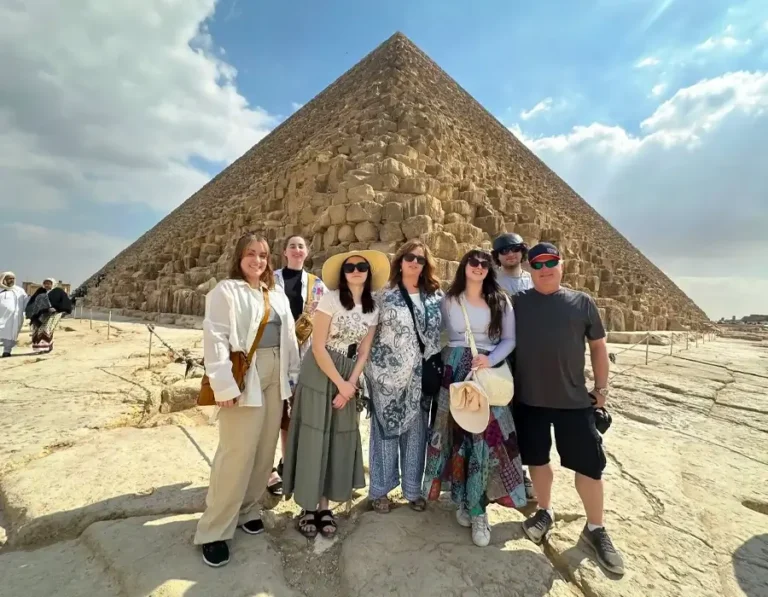
Egypt All-Inclusive Holiday: The Complete Planning Guide for 2026
You've booked your all-inclusive Egypt holiday — or you're about to. The hotel says everything is…
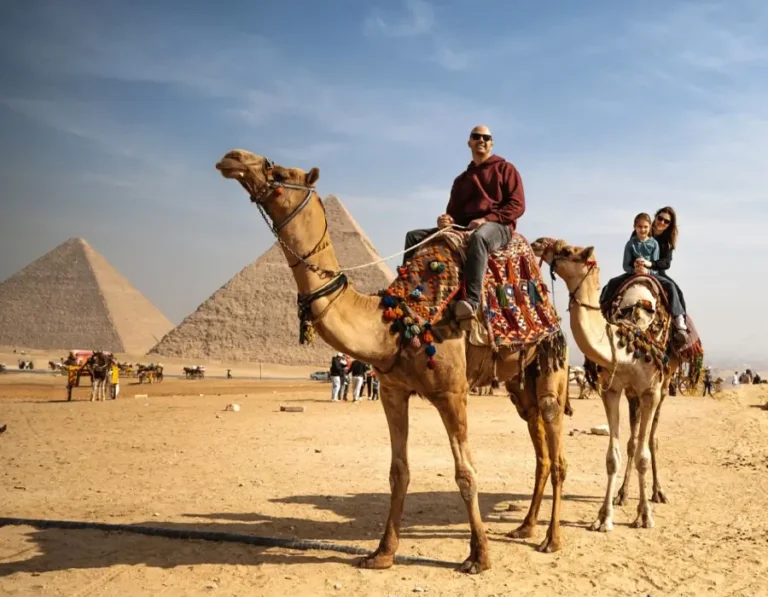
Visiting the Pyramids of Giza: The Complete Practical Guide (2026)
You've seen them in every documentary, on every travel bucket list, and in countless Instagram posts.…
Ready to plan your Egypt trip?
Tell us your dates and interests. A Cairo consultant will reply within 24 hours with an itemised itinerary — free to enquire.