




Cairo Shopping Guide 2026 – Best Markets, Malls & Hidden Local Spots
 Magdy Fattouh
Quick Answer
Where Should You Shop in Cairo?
Khan el-Khalili is the icon — gold, spices, copper and perfume. For real local prices try Souq el-Ataba (fabric) or the Friday flea market Souq el-Gomaa; for handmade crafts, Souq el-Fustat in Coptic Cairo. Start bargaining at 40% of the ask, pay cash, and walk away slowly when needed. The exact lines locals use are in our Egyptian Arabic phrases for travelers guide.
- SouvenirsKhan el-Khalili — the classics
- Local pricesSouq el-Ataba · Souq el-Gomaa (Fri)
- CraftsSouq el-Fustat & the tentmakers’ souk
- HaggleStart at 40% · cash · “La, shukran”
For over thirteen years, I have explored the back alleys of Khan el-Khalili. I started as a history student drawn to Mamluk architecture, and later became a guide who noticed the difference between what tourists buy and what is truly worth buying. One moment stands out: an American client once paid 450 Egyptian pounds for a ‘hand-painted papyrus’ in the main tourist alley.
Three days later, in the spice district behind the gold souk, a local artist showed us hand-painted papyrus on real reed paper for just 80 pounds. My client looked at me, and her expression said it all. This guide is here to help bridge that gap between the tourist market and the real Cairo.
Shopping in Cairo is one of the misunderstood arts of travel. The tourists who return with hand-engraved copper trays, custom-blended perfume oils, and spices you cannot find at home went somewhere different. The difference usually lies in knowing where to look and what to ask. What follows is our honest guide.
Khan el-Khalili: The Complete Honest Guide
Let’s begin with the most famous spot, since everyone visits and many get it wrong. Khan el-Khalili is Cairo’s best-known market, but also the most misunderstood. It is not a tourist trap, but there is one inside. Knowing the difference makes all the difference.
What Khan el-Khalili Actually Is
Khan el-Khalili began as a Mamluk caravanserai in 1382 and has been a trading center for more than 600 years. The main alley, where tour buses stop, is lined with souvenirs priced three to four times what locals pay. But the market stretches far beyond that busy street.
The secret to Khan el-Khalili is simple: walk away from where the vendors are calling you, and head toward the quieter areas instead.
Cairo has amazing markets and malls, but if you’re short on time, see how you can explore Cairo in a day to combine sightseeing with shopping.
What to Buy in Khan el-Khalili
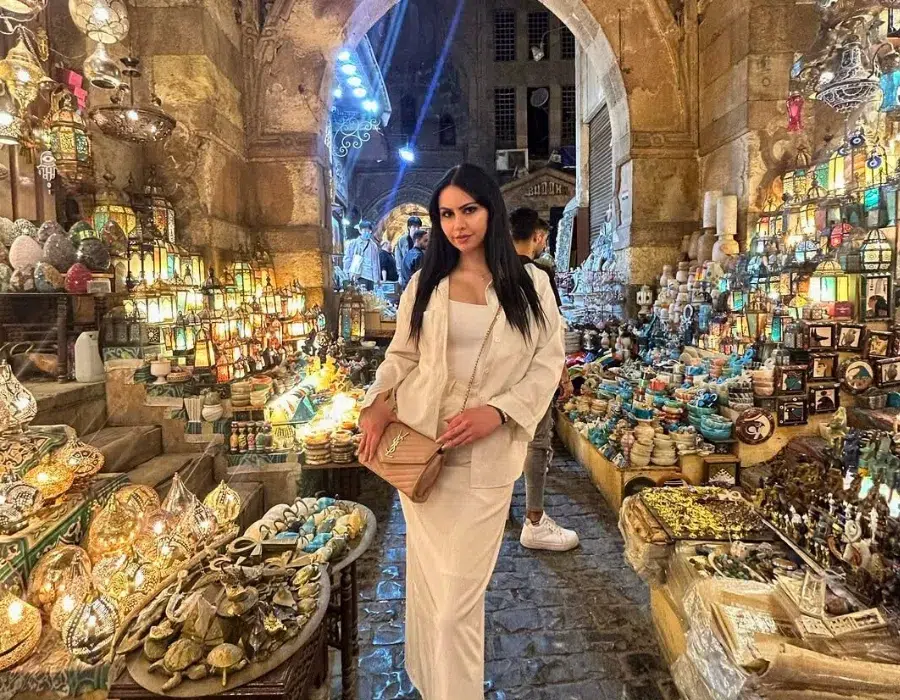
Gold and Silver Jewellery
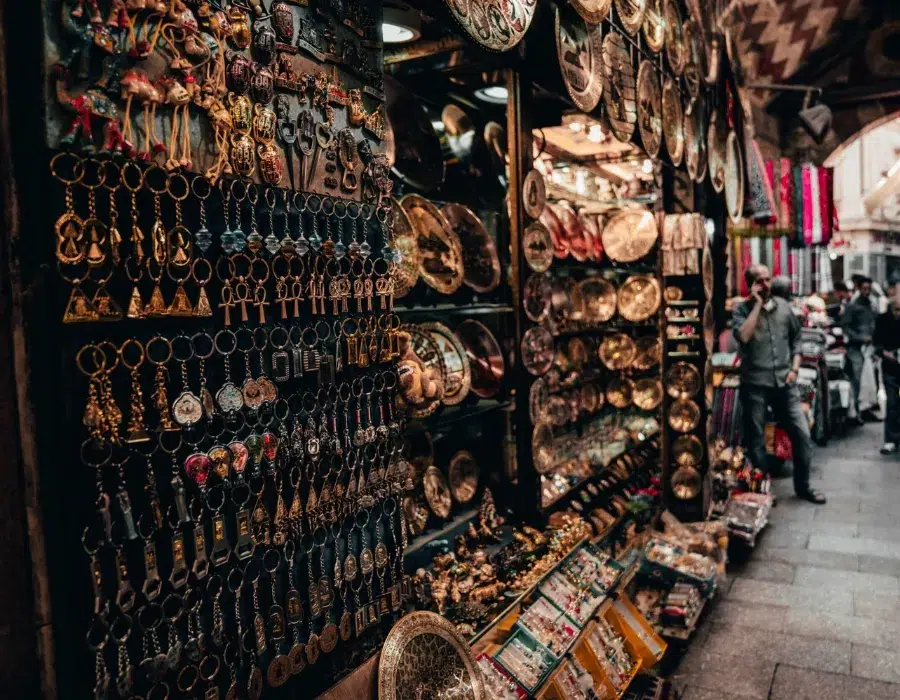
The gold souk within Khan el-Khalili sells by weight at the daily market rate. Check the gold spot price on your phone before entering. For a cartouche — your name rendered in hieroglyphics — expect to pay approximately 800–1,800 EGP in silver depending on size. Allow 30–60 minutes for on-the-spot engraving. Ask for 925 hallmarked silver.
Spices and Herbs
From the spice market (Souq al-Attarine) immediately adjacent to Khan el-Khalili. Priority purchases: karkade (hibiscus), cumin, black seed (nigella), cardamom. A custom ras el-hanout or baharat blend made to your taste costs around 60–120 EGP for 200g and is one of the most genuinely personal souvenirs you can take home.
Copper and Brassware
Coppersmiths have worked in these alleys for generations, making everything by hand. A hand-engraved copper tray (30–40cm) should cost 300–600 EGP at a workshop. In the tourist alley, the same tray starts at 800 EGP and is often machine-made. Listen for the sound of hammering to find the real workshops.
Perfume Oils
Genuine Egyptian perfume oil is thick and concentrated, not watery. A 10ml bottle of quality single-note oil costs 150–400 EGP. Alcohol-based perfumes sold as ‘pure oil’ are the main thing to watch for; genuine oil does not evaporate quickly when rubbed on skin.
Want to experience Egypt off the beaten path? Check out our guide on how to travel Egypt like a local.
What to Skip
- ‘Antiques’ from tourist-facing stalls — virtually all are reproductions
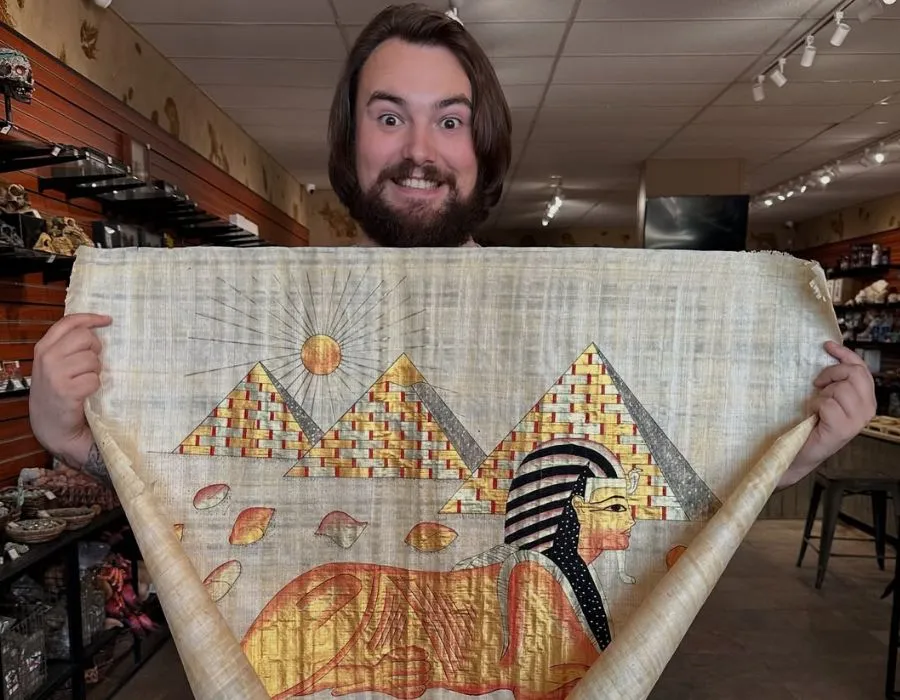
- Cheap papyrus made from banana leaf (test: hold it up to the light. Banana leaf shows coarse, parallel fibers, while real papyrus is smoother)
- Any ‘exclusive’ product that a vendor insists is unavailable elsewhere
El-Fishawy Café
No visit to Khan el-Khalili is complete without tea at El-Fishawy, which has reportedly been open since 1773. The café is tucked in a narrow alley in the heart of the market and decorated with large antique mirrors. Naguib Mahfouz, Egypt’s Nobel Prize-winning novelist, used to write here. Try karkade, mint tea, or ahwa sada (unsweetened Arabic coffee).
Practical Information
- Getting there: Metro to Al-Ataba station (Line 1 or 2), walk 15 minutes east, or use a ride-share app
- Opening hours: Most shops 10 am- 10 pm. Friday mornings are quieter; resumes mid-afternoon
- Best time: Late afternoon (4–7 pm) for atmosphere; early morning (911 amm) for fewer crowds
- Cash only. Bring Egyptian pounds.
Souk Al Khayamiya: The Tentmakers’ Bazaar
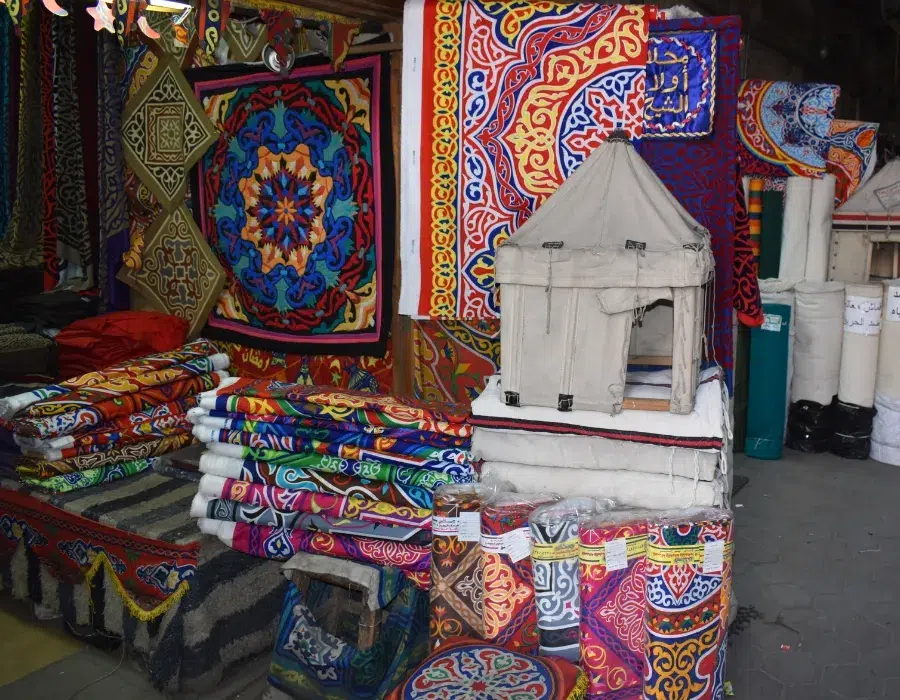
One of Cairo’s great hidden-in-plain-sight secrets, this medieval covered market is skipped by most tour itineraries. It is a fifteen-minute walk from Khan el-Khalili, just south of the ancient Fatimid gate of Bab Zuweila.
What It Is and Why It Matters
Souk Al Khayamiya, the Street of the Tentmakers, is Cairo’s last remaining traditional covered market. A high vaulted roof covers the narrow alley, and every inch of wall and ceiling is hung with brilliant appliqué textiles in reds, blues, golds, and greens: geometric patterns, Pharaonic motifs, Quranic calligraphy, folkloric scenes. The craft practiced here, Khayamiya, dates back to the Pharaonic era but flourished under the Mamluks.
You can watch artisans working in their small open workshops as you walk through. They sit cross-legged, needle and thread moving through fabric with a speed and precision that makes it look effortless.
What to Buy and Prices
- Wall hangings: 600–2,000 EGP depending on size and complexity
- Cushion covers: approximately 200–500 EGP
- Commissioned bespoke pieces with custom motifs are available. Ask the artisans directly.
To check authenticity: real hand-stitched Khayamiya has visible stitches on the back and slightly uneven edges. Machine-printed fabric looks perfectly uniform.
Getting There
Walk south from Khan el-Khalili along Al-Muizz Street toward Bab Zuweila. After passing through the gate, cross the street and look for the covered alley on your left. The walk from Khan el-Khalili takes about 15 minutes. Alternatively, ride-share directly to ‘Bab Zuweila.’
Stay safe on your journey—read our tips on how to avoid tourist scams in Egypt.
Souq el-Fustat: The Craft Village in Old Cairo
Near the Coptic Cairo complex, the ancient religious district south of the city centre, Souq el-Fustat is one of Cairo’s best-kept shopping secrets and arguably the best place in the city to buy high-quality, handmade Egyptian crafts.
What Makes It Different
Established in 2002 as a collaboration between the Cairo Governorate and UNESCO, Souq el-Fustat was created to preserve traditional Egyptian handicrafts facing extinction. It is a complex of approximately 50 open workshop-galleries, each occupied by an artisan who makes and sells their own work on-site. The crafts come from across Egypt — Siwa Oasis, Nubian weavings, Upper Egyptian woodwork, Coptic embroidery, and Bedouin jewellery.
What to Buy
- Blown glass lamps and vases
- Handwoven rugs and tapestries
- Leather bags and goods
- Bedouin embroidery and silver jewellery with genuine folk inspiration
- Recycled-fabric products by women from the Zabaleen community
Unlike most Cairo markets, prices here are often partly fixed. This appeals to visitors who find aggressive bargaining stressful.
Getting There
Located in Coptic Cairo, next to the Amr Ibn al-Aas Mosque and steps from the Hanging Church. Take the Cairo Metro to Mar Girgis station (Line 1). Best combined with a visit to the Coptic Cairo monuments.
The Local Markets Tourists Never Find
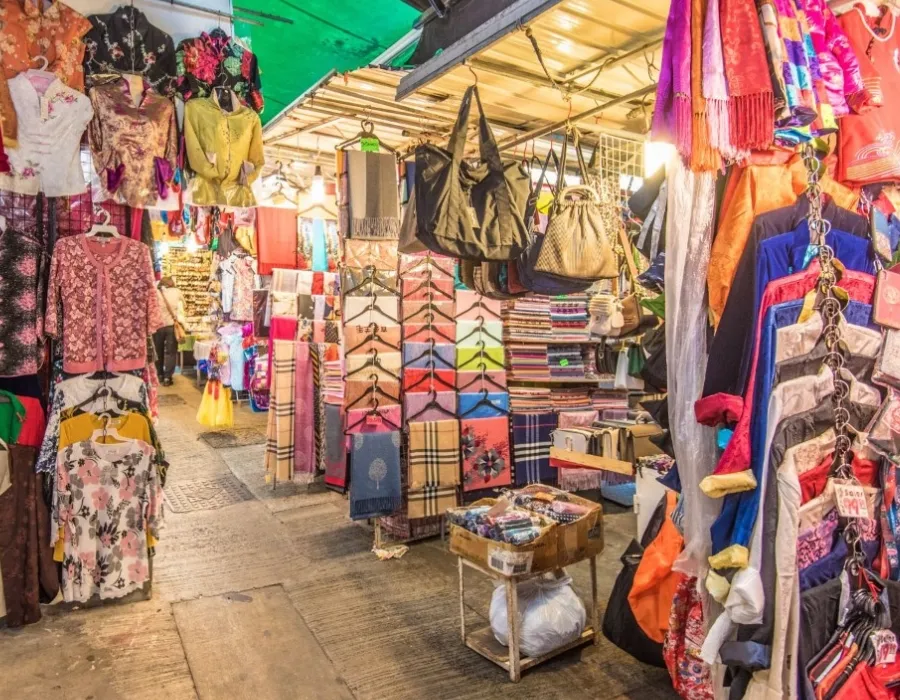
The markets listed below are where Egyptians really shop, and you will see almost no tourists. Prices are much lower than in tourist areas. Visiting with a local guide on your first trip is helpful—not for safety, but because it saves you time finding the best spots.
Souq el-Gomaa (Friday Market)
Cairo’s great flea market is held every Friday morning in the Imam al-Shafi’i area of southern Cairo. It is colossal, selling vintage furniture, old books, second-hand clothes, antique radios, silverware, rugs, and genuine antiques mixed with junk. It starts at sunrise, and most good material is gone by 10 am. Arrive by 7:30 am at the latest.
Tourists have found genuine Mamluk-era copper pieces here for 200 EGP, old hand-painted ceramic tiles, Art Deco silver frames, and even Soviet-era binoculars. The market changes every week, depending on what arrives from across Cairo.
Getting there: The market is in the Imam al-Shafi’i district in southern Cairo. The best way to get there is by taxi or ride-share. Tell the driver,’ Souq el-Gomaa, Imam el-Shafi’i.’ Plan for a 45-minute trip from central Cairo.
Souq el-Ataba
The area around Ataba Square in downtown Cairo is a real working market where locals buy fabrics, household items, tools, cheap electronics, and shoes. If you are interested in fabric, this is a great place. Egyptian cotton and linen are sold by the meter at local prices (50–150 EGP per meter, depending on quality).
Getting there: Metro to Ataba station (Lines 1 and 2 intersect here).
Before your trip, check out our guide on Essential Egypt Travel Tips to make your journey smooth and enjoyable.
Wekalet el-Balah (Vintage & Fabric Market)
Near Ramses Square, Cairo’s second-hand market for clothing and fabric has been running since the 19th century. Surplus denim and leather jackets cost 100–250 EGP, vintage European fabrics are 30–80 EGP per meter, and second-hand linen is much cheaper than in the West. You have to dig through the goods, so it is not for everyone, but for some travelers, it is the best way to spend an afternoon in Cairo.
Cairo’s Shopping Districts: A Neighbourhood Guide
| Area | Best For | Atmosphere | Price Level |
|---|---|---|---|
| Khan el-Khalili | Gold, spices, copper, perfume oils, crafts | Medieval market, tourist & local mix | Negotiate. Start at 40% of the asking price. |
| Souk Al Khayamiya | Handmade appliqué textiles, fabric art | Covered medieval market, artisan workshops | Moderate, with honest prices. |
| Souq el-Fustat | High-quality handmade crafts, Bedouin jewellery, leather | Curated artisan complex, quieter | Higher quality means higher prices. |
| Islamic Cairo back streets | Artisans’ workshops, copper, bookbinders | Authentic working neighbourhood | Prices are lower than in the main souk. |
| el-Balad) | Books, fabric, everyday goods | Urban, working, genuine | Moderate |
| Zamalek | Boutique fashion, galleries, artisan homeware | Upscale residential, relaxed | Higher-end |
| City: Higher-end prices. | International brands, electronics, and a food court | Modern international mall | Standard mall prices. |
| Souq el-Gomaa (Friday) | Antiques, vintage, flea market goods | Local market with almost no tourists. | Cheap, but be sure to negotiate. |
| Souq el-Ataba | Fabric, household goods, shoes | This local job market is very busy. | Very low, local prices. |
| Wekalet el-Balah | Vintage clothing, surplus fabric | Second-hand market with no tourists. | Very low prices. |
What to Buy: Category Guide
Spices and Herbs
- Karkade (hibiscus flowers): 250g costs approximately 40–80 EGP
- Cumin and coriander: exceptional Egyptian quality, fraction of European prices
- Black seed (nigella/habbatus sauda): seeds or pressed oil
- Custom blend: ask your spice vendor for a ras el-hanout or baharat mix. A personalized 200g blend costs 80–150 EGP.
Gold and Silver Jewellery
Gold in Egypt is sold by weight at the daily market rate, plus a fee for making the piece. Check the price of 21-carat gold on your phone before you enter any shop. For a cartouche, silver versions start at about 800 EGP for a small piece. To find a trustworthy jeweler, look for 18k or 21k hallmarks on gold and 925 marks on silver. Do not buy from any jeweler who will not weigh the piece in front of you.
Perfume and Essential Oils
Pure Egyptian essential oil is thick and concentrated. A 10ml bottle: 150–400 EGP. A 30ml custom blend: 400–900 EGP. The perfume shops of Khan el-Khalili are a legitimate destination if you know how to navigate them: allow 20–30 minutes to smell, discuss, and blend. There is no pressure to buy.
Planning your trip? Discover the best time to visit Egypt to make the most of your journey.
Egyptian Cotton
Genuine Egyptian cotton products are best found in dedicated textile shops in Downtown Cairo and Ataba, rather than in tourist markets. Buying fabric by the metre and having something made by a local tailor is cost-effective for a longer stay.
Papyrus Art
Genuine papyrus: holds painted detail well, flexible, does not crack when gently rolled. Banana leaf fake: coarser, visible parallel fibres when held to light. Genuine hand-painted papyrus: approximately 200–800 EGP depending on size and detail.
Khayamiya Textiles
If you visit just one place outside the usual tourist spots, choose Souk Al Khayamiya. Each piece takes days or even weeks to make. A Khayamiya wall hanging is one of the most unique and truly Egyptian souvenirs you can find in Cairo.
Shopping Etiquette & Negotiation
Negotiating in Cairo’s markets is a must; it is how things work. Prices in tourist shops often start at 150–400% of what an informed buyer would pay.
The Basic Approach
Ask the price. Offer about 40% of that figure—the vendor counters in the middle. You usually meet somewhere between 50–65% of the opening price for tourist goods. Walk away slowly if you cannot agree; this often resolves things.
Practical Rules
- Never say how much you love something before you agree on a price. If the vendor knows you want it, that gives them leverage.
- Do not begin negotiating unless you intend to buy if the price meets your target.t
- Small bills help. Having 50- and 100-EGP notes lets you honestly say you have limited cash.
- The best negotiating position is genuine readiness to leave
A Story from Guiding
A client was offered a copper tray for 1,200 EGP in the main Khan el-Khalili alley. She wanted it, but the vendor would not come below 900. She walked away. He called her back at 700. She kept walking. We had coffee around the corner. Twenty minutes later, she went back alone and bought it for 550. The vendor was happy; she was happy. That is how the market works.
Best Time to Visit Cairo for Shopping
The best time to visit is from October to April, when Cairo is pleasant or mildly cool and long market visits are comfortable. In summer (June to August), temperatures reach 35–40°C, so visit Khan el-Khalili before 10 am or after 5 pm. During Ramadan, markets come alive after sunset, filled with lights, families, and a festive mood. Shopping in the evenings during Ramadan is a special experience.
Frequently Asked Questions
Where to shop cheap in Egypt?
If you’re looking for cheap shopping in Egypt, local markets are the best option. Places like Khan El Khalili and Ataba Market in Cairo offer very low prices on clothes, souvenirs, and everyday items—especially if you bargain. Smaller neighborhood shops also provide good budget deals compared to malls.
Where to shop in Cairo?
Cairo offers both traditional markets and modern malls. For a cultural experience, visit Khan El Khalili. For modern shopping, go to City Stars Mall or Mall of Egypt, where you’ll find international brands, food courts, and entertainment.
Where to buy cheap clothes in Cairo?
For affordable clothing, locals usually shop at Ataba Market and nearby wholesale areas. These markets offer very cheap fashion, basic clothing, and trendy items if you are willing to explore and negotiate prices.
Which malls in Egypt have both clothes and electronics?
Large malls like City Stars Mall, Mall of Egypt, and Cairo Festival City Mall combine fashion stores and electronics shops, making them ideal for one-stop shopping.
What should I not buy in Cairo?
Avoid “antique” items from street vendors (often fake), low-quality papyrus made from non-traditional materials, and products sold as “rare” or “exclusive” without proof. Always be careful with expensive items like gold and silver—buy only from trusted stores.
What are must-buy items in Cairo?
Popular souvenirs include Egyptian cotton products, spices, perfumes, handmade crafts, papyrus art, and jewelry inspired by ancient Egypt. These items reflect the country’s cultural heritage and make great gifts or keepsakes.
Do markets in Cairo accept credit cards?
Most street markets and souks are cash-based. It’s best to carry Egyptian pounds in small bills. ATMs are widely available near major shopping areas.
What should I wear when shopping in Cairo?
Wear comfortable, modest clothing, especially in traditional markets. Lightweight clothes that cover shoulders and knees are ideal, along with comfortable walking shoes.
What Arabic phrases help in the market?
Useful phrases include:
- “Bikam?” (How much?)
- “Momkin arkhass?” (Can you lower the price?)
- “La, shukran” (No, thank you)
These help you communicate and bargain more easily.
Related Guides
Related guides
MrBeast’s 100-Hour Adventure in the Pyramids: What He Discovered
Egypt’s Great Pyramids of Giza have stood for over 4,500 years, captivating travelers, archaeologists, and history…
Khan el-Khalili Bazaar Guide 2026 A Local Egyptian’s Honest Review
I have a complicated relationship with Khan el-Khalili. I love it. I have been coming here…

Best Places to Visit in Egypt During Summer – Travel Guide 2026
Planning a summer holiday to Egypt in 2026? While the sun blazes, Egypt offers a blend…
Ready to plan your Egypt trip?
Tell us your dates and interests. A Cairo consultant will reply within 24 hours with an itemised itinerary — free to enquire.