By Magdy Fattouh | Egypt Tours By Locals | Last Updated: March 2026
Fourteen days in Egypt is the sweet spot. Long enough to stand inside a pharaoh’s tomb, sail the Nile at sunset, and still have time to float in the Red Sea — without ever feeling rushed.
This Egypt itinerary 14 days is built on more than two decades of guiding over 1,200 private groups through Egypt. It covers Cairo, Alexandria, Luxor, Aswan, Abu Simbel, and the Red Sea — with realistic transport logistics, honest time estimates, and the kind of insider detail you only get from a local Travel expert who has walked every one of these sites hundreds of times.
Whether you are travelling as a couple, a family, or solo, this two-week Egypt itinerary can be followed as written or used as a foundation for a fully customised Egypt tour built around your pace and interests.
⭐ Rated 4.9/5 by 247 verified travellers across 32 countries — see our Egypt tour packages
Best Pre-Planned 14-Day Egypt Tour Packages
If you would rather hand the planning to experts, these two pre-built itineraries are our most-booked 14-day options:
| Package | Highlights | From (USD) |
|---|---|---|
| 14 Day Tour – Cairo & Cruise with Hurghada | Giza · GEM · Nile Cruise · Hurghada | From $2270 |
| 14 Day Itinerary – Cairo, Alex, Cruise with Sharm | Giza · GEM · Alexandria · Nile Cruise · Sharm El-Sheikh | From $2450 |
✏️ Prefer to customise every detail? Build your own Egypt itinerary →

Your 14-Day Egypt Itinerary at a Glance
| Day | Destination | Key Highlights |
|---|---|---|
| 1 | Cairo — Arrival | Khan El-Khalili evening walk, optional Nile dinner cruise |
| 2 | Cairo — Giza + GEM | Pyramids of Giza, Great Sphinx, Saqqara, Grand Egyptian Museum |
| 3 | Cairo — City | Coptic Cairo, Cairo Citadel, Islamic Cairo |
| 4 | Alexandria | Bibliotheca Alexandrina, Qaitbay Citadel, Corniche seafood |
| 5 | Fly to Aswan | Cairo→Aswan (1h 20m), Philae Temple (UNESCO), sunset felucca |
| 6 | Aswan | High Dam, Unfinished Obelisk, Nubian village |
| 7 | Abu Simbel | Ramses II colossal temples (UNESCO) — the trip highlight |
| 8 | Nile Cruise — Kom Ombo | Board cruise, Kom Ombo double temple, Crocodile Museum |
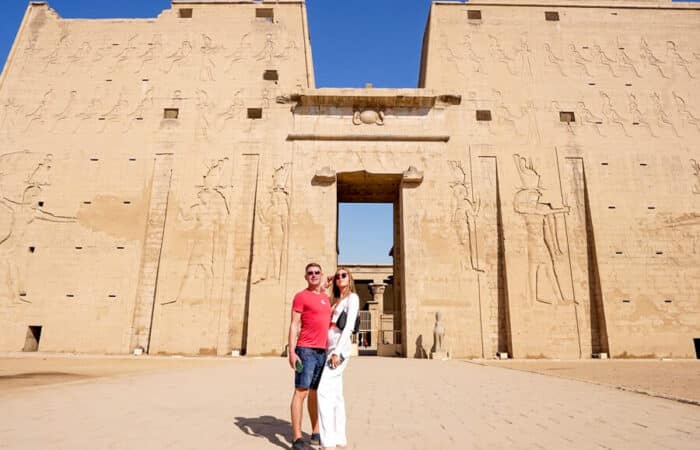
| 9 | Nile Cruise — Edfu | Temple of Horus at Edfu (best-preserved in Egypt) |
| 10 | Nile Cruise — Luxor | Karnak Temple complex, Luxor Temple at night |
| 11 | Luxor West Bank | Valley of the Kings, Hatshepsut Temple, Colossi of Memnon |
| 12 | Fly to Red Sea | Luxor→Hurghada (50 min), check in, first reef swim |
| 13 | Red Sea | Giftun Island snorkelling or Ras Mohammed diving, beach |
| 14 | Return Cairo | Islamic Cairo farewell walk, departure |
💡 Pro tip: This route flies south to Aswan first, then cruises northward with the Nile’s natural current to Luxor. It is how the ancient Egyptians sailed — and the most efficient, least backtracking way to structure two weeks in Egypt.
Only Have 10 Days? Here Is What to Cut
Not everyone can take two full weeks. If you have 10 days, this is how I would structure it — keeping every must-see and removing only what can wait for a second trip.
| Day | Destination | What Changed vs 14 Days |
|---|---|---|
| 1 | Cairo — Arrival | Same |
| 2 | Cairo — Giza + GEM | Same — non-negotiable |
| 3 | Fly to Aswan + Philae | ✂️ Alexandria removed |
| 4 | Abu Simbel + board cruise | Aswan condensed to morning only |
| 5 | Cruise — Kom Ombo | Same |
| 6 | Cruise — Edfu + Luxor | Combined into one day |
| 7 | Luxor West Bank | Valley of the Kings + Hatshepsut — both kept |
| 8 | Fly to Hurghada | Same |
| 9 | Red Sea | One day instead of two |
| 10 | Return Cairo + depart | Same |
What you lose: Alexandria, the second Cairo day (Citadel + Islamic Cairo), one Nile cruise day, one Red Sea day, and the Nubian village in Aswan.
What you keep: Everything that cannot be replicated — the Grand Egyptian Museum, Abu Simbel, the Valley of the Kings, a Nile cruise with Kom Ombo and Edfu, and the Red Sea reef.
⚠️ First-time visitors should always keep Abu Simbel. I have guided over 150 trips there in 20+ years. It is the single site that most consistently exceeds expectations — and the one travellers most regret skipping when they try to save a day.
Day 1: Arrival in Cairo
Cairo hits you the moment you land. The scale of it, the noise of it, the smell of jasmine and exhaust and spice — it is overwhelming in the best possible way. Your first day is an arrival day by design.
If your flight lands in the afternoon, check in and head to Khan El-Khalili for the evening — Cairo’s famous Ottoman-era bazaar, trading continuously since 1382. Walk the lanes of Al-Muizz Street after dark, order a mint tea. Resist nothing.
✦ Magdy Fattouh — In the Field
I always tell my clients: arrive with no plan and no map. On my very first night guiding in Cairo, I got lost in the copper-beaters’ quarter with a couple from Sydney. We ended up drinking mint tea with a metalworker named Hamdi until midnight. They still send me photos — from their wedding, from their children. Khan El-Khalili does this to people.
Magdy Fattouh, Licensed Tour Consultant & Travel Expert · Egypt Tours by Locals
Where to Stay in Cairo
- Luxury: Marriott Mena House (Pyramid views from breakfast) · Four Seasons Nile Plaza
- Mid-range: Steigenberger Pyramids Cairo · Kempinski Nile Hotel
- Budget: Ful Hotel · Dahab Hostel (Zamalek)
Full guide: best hotels in Cairo →
Day 2: The Pyramids of Giza and the Grand Egyptian Museum
Morning: Giza Plateau (Arrive by 8:00 AM)
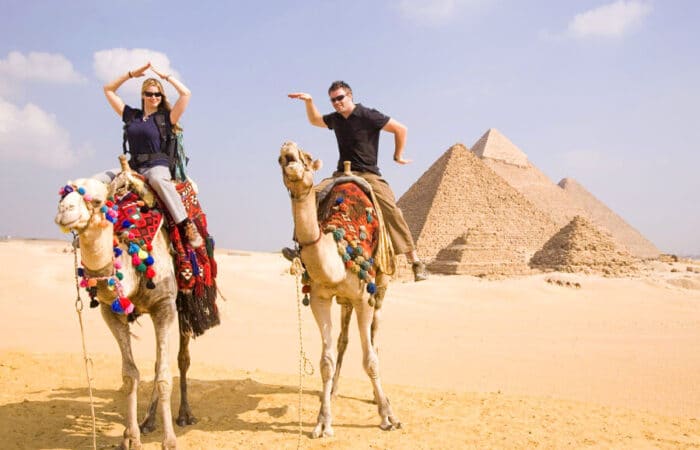
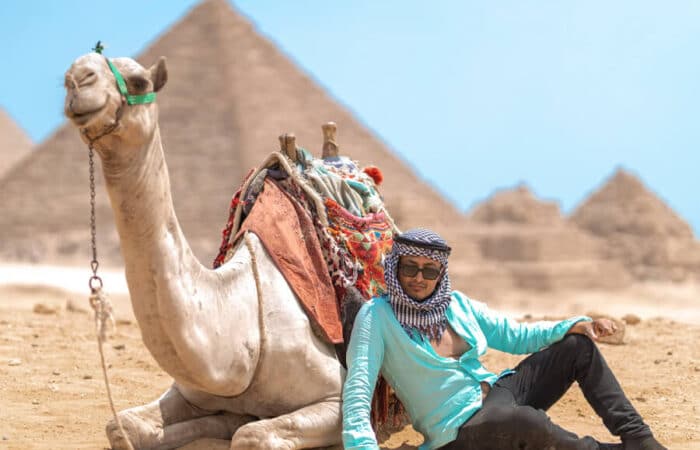
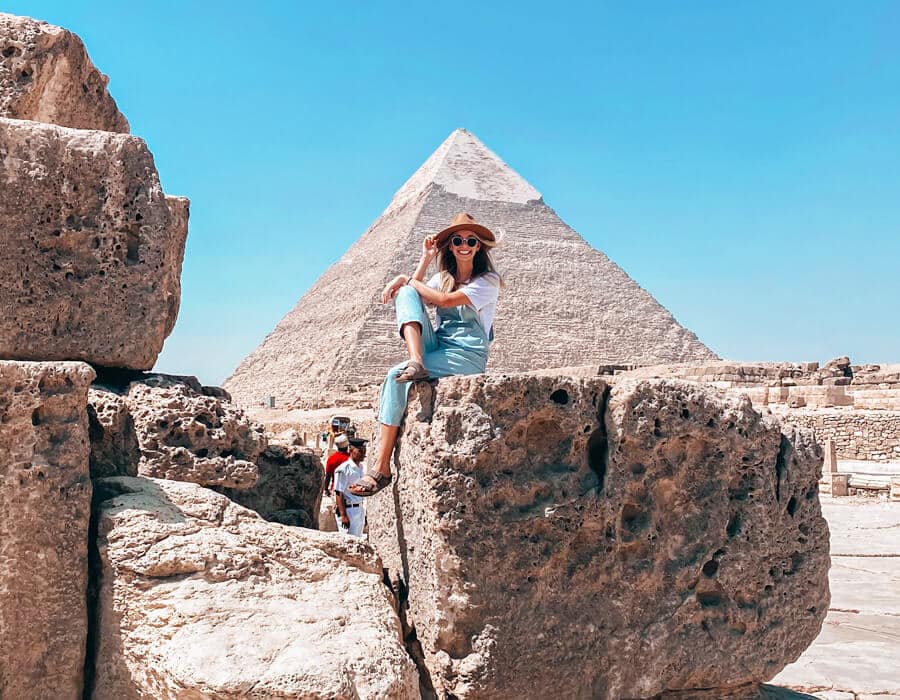
Arrive at the Giza Plateau as early as possible. By 10:00 AM the tour coaches arrive. The complex holds three main pyramids — Khufu, Khafre, and Menkaure — plus the Great Sphinx and several queens’ pyramids. Allow 3–4 hours minimum. Afterwards, drive 30 minutes south to Saqqara to see the Step Pyramid of Djoser — the world’s first pyramid, predating Giza by 70 years. Far fewer tourists, far more atmosphere.
✦ Magdy Fattouh — In the Field
I have stood at the base of the Great Pyramid of Khufu more than 800 times. I still walk every group to the same spot — on the southern ridge above Menkaure’s pyramid, where all three align perfectly in the morning haze. I let them stand there in silence for two full minutes before I say a word.
Then I say: the tallest of these was built 4,500 years ago. Nothing about them has changed. Everything about us has.
— Magdy Fattouh, Licensed Tour Consultant & Travel Expert · Egypt Tours by Locals
Afternoon: The Grand Egyptian Museum (GEM)
The Grand Egyptian Museum is one of the most significant museum openings of this century — just 2 km from the Pyramids. It houses the complete treasures of Tutankhamun — all 5,000 objects displayed together for the first time in history. The Royal Mummies Hall, the Khufu Solar Boat Gallery, and the grand staircase lined with 87 royal statues are unmissable. Allow 3 hours minimum. Book timed entry in advance at gem.gov.eg.
✦ Magdy Fattouh — In the Field
On the opening week of the Grand Egyptian Museum, I walked the grand staircase with a group of twelve. A woman from Manchester stopped halfway up, looked at the 87 royal statues lining the walls above her, and started crying.She said: ‘I don’t know why I’m doing this.’ I told her: everyone does.
— Magdy Fattouh, Licensed Tour Consultant & Travel Expert · Egypt Tours by Locals
Entrance Fees (Approx. 2025/26 — see EGP breakdown section below)
- Giza Plateau: $15 USD (~795 EGP) + $20 to enter a pyramid (~1,060 EGP)
- Saqqara: $10 USD (~530 EGP)
- Grand Egyptian Museum: from $25 USD (~1,300 EGP) — timed entry, book at gem.gov.eg
Day 3: Islamic Cairo, Coptic Cairo, and the Cairo Citadel
Morning: Coptic Cairo
Start in the oldest part of the city. Coptic Cairo is home to some of the earliest Christian communities in the world. The Hanging Church (Al-Moallaqah) dates to the 4th century with an extraordinary timber ceiling shaped like Noah’s Ark. Nearby, the Ben Ezra Synagogue and Church of Abu Serga complete one of the world’s most remarkable concentrations of ancient religious architecture.
Late Morning: Islamic Cairo
Walk north through the medieval lanes of Islamic Cairo to Khan El-Khalili — the bazaar at the heart of the city since 1382. See our Cairo shopping guide for what is actually worth buying and what to avoid.
Afternoon: Cairo Citadel
Take a short taxi to the Citadel of Saladin, where the Mosque of Muhammad Ali — alabaster walls and Ottoman domes — is one of the most striking interiors in Africa. The citadel also offers the best panoramic view over Cairo, with the Pyramids visible on clear days.
✦ Magdy Fattouh — In the Field
I always save the Citadel for 4:30 PM on clear winter days. There is a terrace on the northern wall that most visitors never find. From there you can see the Pyramids of Giza to the southwest and the Muqattam limestone cliffs to the east.
The whole of Cairo lies between them. I have sat there on quiet mornings and felt the 5,000 years of this city all at once.
— Magdy Fattouh, Licensed Tour Consultant & Travel Expert · Egypt Tours by Locals
Day 4: Alexandria: Mediterranean, History, and Seafood
Alexandria is 225 km northwest of Cairo — a 2.5-hour train from Ramses Station (first class ~$5–8 USD, approximately 265–425 EGP). The city Alexander the Great founded in 331 BC now feels like a Mediterranean port living quietly with its own mythology. Full Alexandria City guide →
Key Sites
- Bibliotheca Alexandrina: Modern library on the site of the ancient Library of Alexandria — allow 1.5 hours.
- Qaitbay Citadel: Built in 1477 on the exact foundation of the ancient Lighthouse of Alexandria — one of the original Seven Wonders. Best at 4 PM.
- Montaza Palace Gardens: 150 acres of royal seafront parkland — perfect for a late afternoon walk.
✦ Magdy Fattouh — In the Field
My groups always come to Alexandria expecting a second Cairo. What they find feels more like Marseille mixed with melancholy — Mediterranean, full of ghosts, beautiful.
I always end the day at a fish restaurant on the corniche where I have been eating for fifteen years. The owner’s name is Nabil. He never shows me a menu. He just brings whatever his brother’s boat landed that morning.— Magdy Fattouh, Licensed Tour Consultant & Travel Expert · Egypt Tours by Locals
Food tip: Try sayyadiyya (spiced fish with rice) or fresh-grilled sea bream. See: popular Egyptian foods →
Days 5 & 6: Aswan: Nubian Culture and the Ancient South
Fly Cairo to Aswan — 1 hour 20 minutes, $50–$120 USD (approximately 2,650–6,360 EGP). Fly south to Aswan first, then cruise northward with the Nile current to Luxor. It is how the ancient Egyptians sailed.
Day 5 — Afternoon
Take a short boat to Philae Temple, a UNESCO World Heritage Site dedicated to the goddess Isis — relocated to higher ground in the 1960s to save it from the Aswan High Dam reservoir. End with a sunset felucca ride on the Nile between the granite islands.
Day 6 — Full Aswan
- Aswan High Dam: Built 1960–70, it reshaped Egypt’s entire agricultural calendar.
- Unfinished Obelisk: Still in the quarry where it was carved, still attached to the bedrock. At 42 metres — the largest obelisk ever attempted. The tool marks cut by ancient craftsmen are one of the most tangible connections to pharaonic labour.
- Nubian Village: Cross the river to visit a living Nubian community — their own language, cuisine (dates, hibiscus tea, spiced ful), and vivid painted houses. Visit respectfully, with a local guide.
✦ Magdy Fattouh — In the Field
I have a friend on Elephantine Island — a Nubian man named Hassan whose family has lived there for seven generations. When I bring small groups to visit — never more than four people, always by prior arrangement — his mother serves ful with Nubian spices and dark honey, and his daughter plays the oud while we eat.
I have guided clients to the Valley of the Kings a thousand times. Hassan’s table is what they remember.
— Magdy Fattouh, Licensed Tour Consultant & Travel Expert · Egypt Tours by Locals
Day 7 — Abu Simbel: Ramses II’s Greatest Monument
Set an alarm for 4:00 AM.
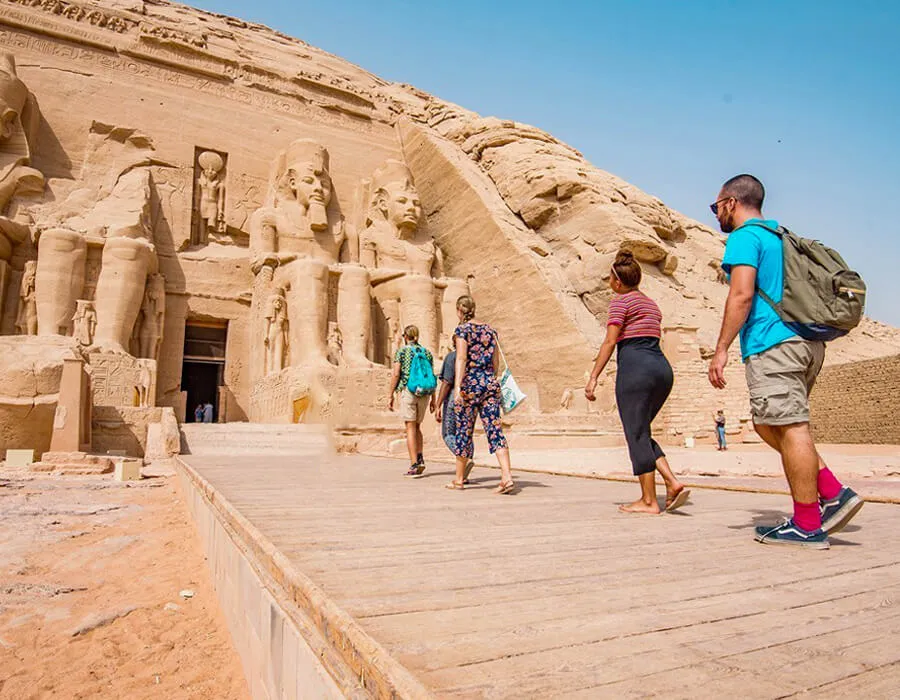
The Abu Simbel temples, part of the UNESCO Nubian Monuments World Heritage Site, are 280 km south of Aswan. Carved into sandstone cliffs around 1264 BC by Ramses II, they were saved from the rising waters of Lake Nasser by a UNESCO project in the 1960s that cut the entire cliff face into 20-tonne blocks and reassembled them on higher ground.
Two temples: the Great Temple of Ramses II — aligned so that sunlight penetrates the innermost sanctuary on the pharaoh’s birthday and coronation date — and the Temple of Nefertari, one of only two temples in ancient Egypt built for a queen.
✦ Magdy Fattouh — In the Field
I was twenty-four years old the first time I saw Abu Simbel. A trainee guide from Cairo who had studied the photographs and thought he was prepared. I was not prepared.
When the morning sun struck the face of the second Ramses at exactly 6:47 AM — the precise moment the ancient priests aligned the temple to achieve — and the shadow retreated from his stone chin, I sat down on the ground. I could not stand.
That was 2003. I have returned over 150 times since. I still cannot fully explain what happens to me at that moment.
— Magdy Fattouh, Licensed Tour Consultant & Travel Expert · Egypt Tours by Locals
Getting There
- Private car from Aswan: Depart 4:00–4:30 AM, return by early afternoon. Best value for groups (~$80–120 per person, approximately 4,240–6,360 EGP).
- Shared convoy tour: Departs at 4:00 AM — less flexible but cheaper.
- Short flight: Egypt Air 30-minute flight from Aswan — the view over Lake Nasser is unforgettable.
Board your Nile cruise ship on return to Aswan that evening.
Days 8 – 10: Nile Cruise: Sailing North Through 3,500 Years of History
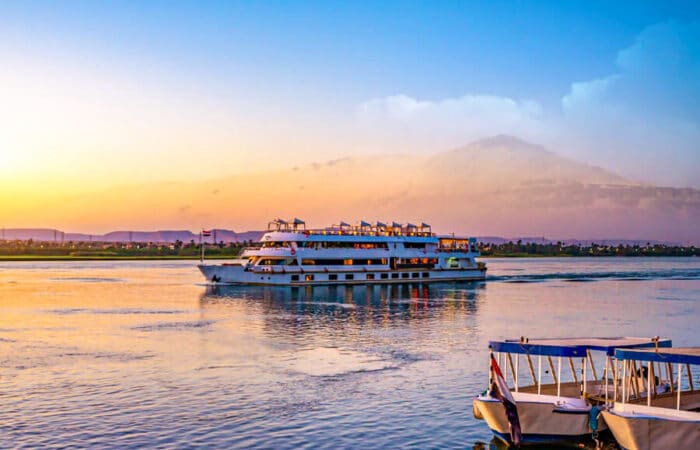
The classic 4-night Nile cruise between Aswan and Luxor stops at Kom Ombo and Edfu. Temples rise from the riverbank, palm-lined villages drift past, egrets stand in shallows, the Sahara begins just beyond the thin green strip of cultivated land.
✦ Magdy Fattouh — In the Field
The river between Kom Ombo and Edfu is the stretch I love most. The banks narrow, the date palms lean over the water, and on early mornings you can see smoke from village bread ovens rising on both sides.
I have watched it from the deck of cruise ships over two hundred times. I still go up every single morning.
— Magdy Fattouh, Licensed Tour Consultant & Travel Expert · Egypt Tours by Locals
Day 8: Kom Ombo
Kom Ombo is one of Egypt’s most unusual temples — uniquely dedicated to two gods simultaneously: Sobek (the crocodile god) and Horus (the falcon god). The temple is literally split down the middle with a duplicate layout for each deity. The adjacent Crocodile Museum houses dozens of mummified crocodiles found in the temple’s sacred lake.
Day 9: Edfu
Edfu Temple is the best-preserved major temple in Egypt — completed around 57 BC under the Ptolemaic pharaohs. Buried under sand and silt for over a thousand years, its inscriptions and painted reliefs are extraordinarily intact. Arrive from the dock by calèche (horse-drawn carriage) — 10 minutes, ~$2–3 (approximately 106–160 EGP).
Day 10: Luxor East Bank
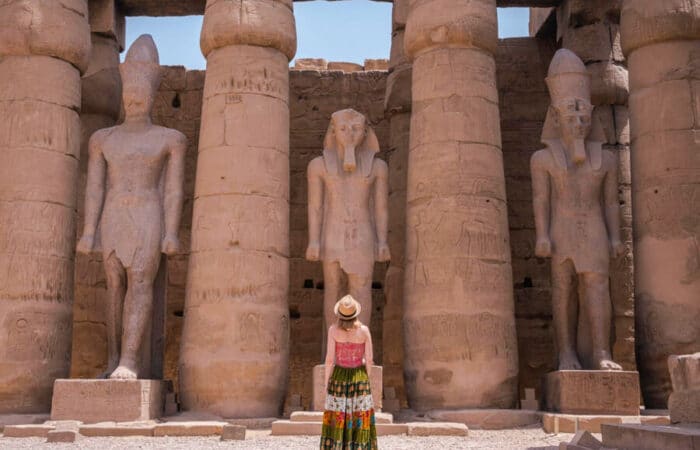
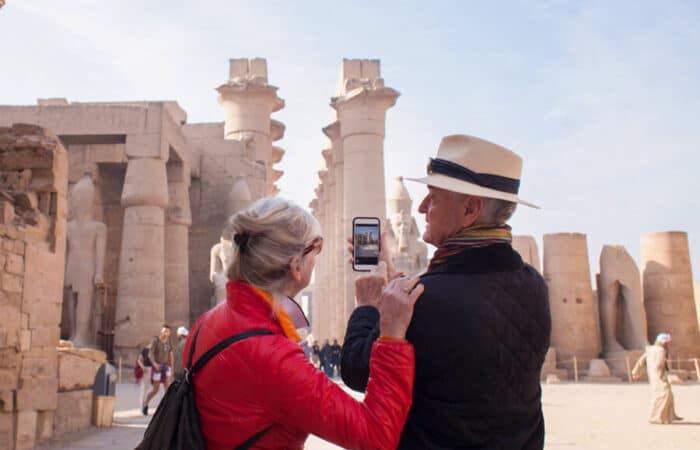
Karnak Temple Complex is the largest ancient religious site in the world — built and expanded over 2,000 years. The Hypostyle Hall contains 134 columns up to 21 metres high, all covered in bas-reliefs. Late afternoon, walk south to Luxor Temple — spectacular when illuminated at night.
Tip: Buy the Luxor Pass if visiting multiple sites — covers all Luxor sites and saves significant money and queuing time.
Cruise Ship Selection
- Luxury: Oberoi Zahra · Sonesta St. George · M/S Mayfair
- Mid-range: Movenpick Royal Lotus · Nile Premium
- Budget: 3-star cruises that include guided excursions
Day 11: Luxor West Bank: Valley of the Kings, Hatshepsut, Colossi
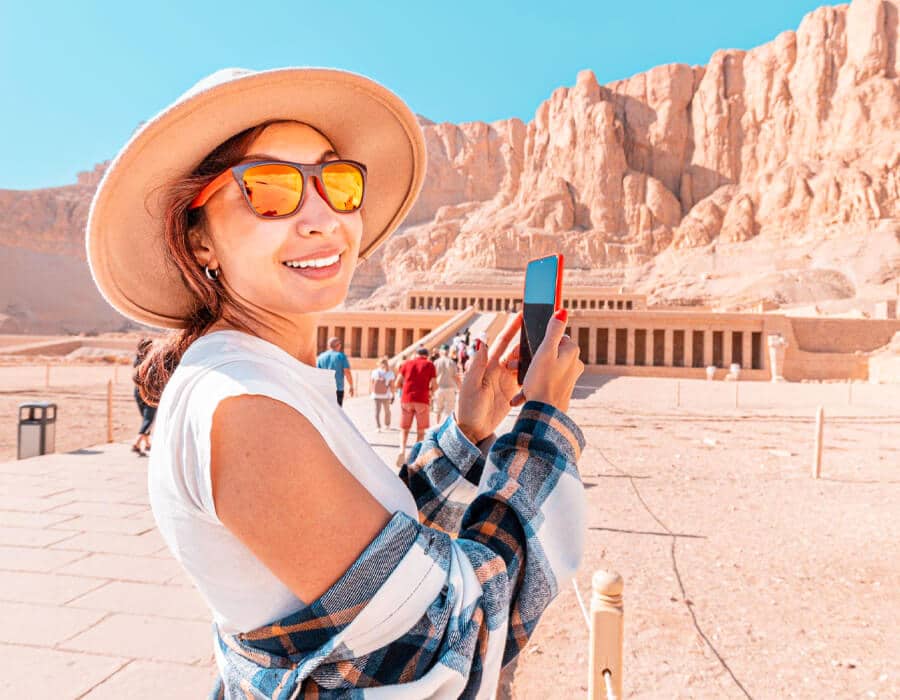
Cross the Nile by ferry (~$1 USD · ~53 EGP) to the West Bank — the Land of the Dead in ancient Egyptian cosmology.
Valley of the Kings
Valley of the Kings: 63 royal tombs cut into limestone cliffs between 1539 and 1075 BC. General ticket (~$15 USD · ~795 EGP) admits you to three tombs. Tutankhamun’s tomb requires a separate ticket (~$25 USD · ~1,325 EGP) — seeing his actual mummy in the painted chamber where Howard Carter discovered it in 1922 is one of the most affecting experiences in Egypt.
✦ Magdy Fattouh — In the Field
My favourite tomb in the Valley is KV57 — Horemheb, the general who became pharaoh. Most tourists never find it. In parts the paintings are unfinished — you can see the sketch lines beneath the colour, the actual working drawings of the craftsmen who died before they could finish.
I always pause my groups there and say: this is not mythology. These were real people. With deadlines.
— Magdy Fattouh, Licensed Tour Consultant & Travel Expert · Egypt Tours by Locals
Temple of Hatshepsut (Deir el-Bahari)
Built into the limestone cliffs — three tiered colonnades rising against raw rock. The painted reliefs inside record Hatshepsut’s famous trading expedition to the land of Punt. One of the most architecturally distinctive structures of the ancient world.
Colossi of Memnon
Two 18-metre quartzite statues of Amenhotep III standing since 1350 BC. The mortuary temple they once guarded is almost entirely gone — but the statues are unmissable and the stop is free.
Days 12 & 13: Red Sea: Hurghada vs Sharm El-Sheikh — Which Is Right for You?
After 10 days of temples and desert, the Red Sea feels like a reward. Both Hurghada and Sharm El-Sheikh offer world-class reefs — but they are genuinely different experiences. Here is an honest side-by-side comparison:
| Factor | Hurghada | Sharm El-Sheikh |
|---|---|---|
| Best for | Families, first-timers, budget | Divers, couples, nightlife seekers |
| Reef quality | Good (Giftun Island, house reefs) | Exceptional (Ras Mohammed, Blue Hole) |
| Marine life | Turtles, dolphins, reef fish | Sharks, rays, vertical coral walls |
| From Luxor | 50-min direct flight | 5h drive or connection via Cairo |
| Nightlife | Moderate | Vibrant (Naama Bay strip) |
| Prices | Generally lower | Slightly higher |
| Family facilities | Excellent all-inclusive options | Good, more adult-oriented |
| Water sports | Good variety | Excellent (kite, surf, dive) |
| Solo travellers | Fine | Better social scene |
| Best resort area | Sahl Hasheesh · Makadi Bay | Naama Bay · Sharm Old Market |
Our recommendation: For a 14-day itinerary coming from Luxor, Hurghada is the practical choice — the 50-minute direct flight is decisive. Choose Sharm if serious diving is your priority and you’re willing to route via Cairo.
Hurghada
A snorkelling trip to Giftun Island is the essential activity — some of the most biodiverse coral in the Red Sea. Makadi Bay, 30 km south, has a calmer, more local feel. See where to stay in Hurghada →
- Best resorts: Steigenberger Aldau Beach Hotel (beachfront, reef access) · Jaz Aquamarine (family-friendly)
Sharm El-Sheikh
Ras Mohammed National Park at the tip of Sinai is one of the top ten dive sites in the world. Glass-bottom boat tours access the reef if you don’t dive. See things to do in Sharm → and where to stay in Sharm →
- Best resorts: Rixos Premium Seagate (adults, contemporary) · Baron Palms Resort (all-inclusive)
🌊 Reef-safe mineral sunscreen only — no chemical sunscreens. Egypt’s Red Sea marine protected areas are strict, and enforcement is real.
Day 14 — Cairo Farewell
Fly back to Cairo (50–60 minutes from Red Sea resorts). If time allows before your international departure, a final walk through Islamic Cairo — the Al-Azhar Mosque, Mosque-Madrassa of Sultan Hassan, and the hidden house museum of Bayt Al-Suhaymi (a perfectly preserved 17th-century Ottoman merchant’s home) — is a quiet, reflective coda to two extraordinary weeks.
Last souvenirs at Khan El-Khalili: hibiscus (karkade) tea, papyrus bookmarks, silver cartouche jewellery. See our full Cairo shopping guide for what is actually worth buying.
Essential Planning Tips for 14 Days in Egypt
Best Time to Visit Egypt
October to March is optimal — 20–28°C in Cairo, cooler in Aswan. November and February offer the best balance of good weather and lower prices. See: best time to visit Egypt →
Visa and Entry Requirements
Most Western nationalities (US, UK, EU, Australian, Canadian) can obtain a single-entry e-Visa online for $25 USD (~1,325 EGP) at visa2egypt.gov.eg — processing takes 3–5 business days. Visa on arrival available at Cairo Airport at the same price. Always carry a printed copy.
Is Egypt Safe?
Yes — Egypt receives over 15 million tourists annually. Major sites have dedicated tourist police. The main practical risks are petty hustling near tourist sites and night-time road travel — both easily managed with a good local operator.
Getting Around Egypt
- Cairo to Aswan: Fly (1h 20m · $50–120 USD · ~2,650–6,360 EGP) — strongly recommended
- Aswan to Luxor: Nile cruise (included in itinerary)
- Cairo to Alexandria: Train (2.5h · $5–8 first class · ~265–425 EGP)
- Luxor to Hurghada: Fly (50 min · $40–80 USD · ~2,120–4,240 EGP)
- Within cities: Uber (Cairo, Luxor, Hurghada) or pre-arranged private car
Tipping (Bakshish)
Budget $5–10 USD (~265–530 EGP) per day for guides, $2–3 (~106–160 EGP) per day for drivers, 5–10 EGP for site attendants, hotel porters, and toilet attendants. Carry small bills at all times. Read our full guide about: Tipping in Egypt →
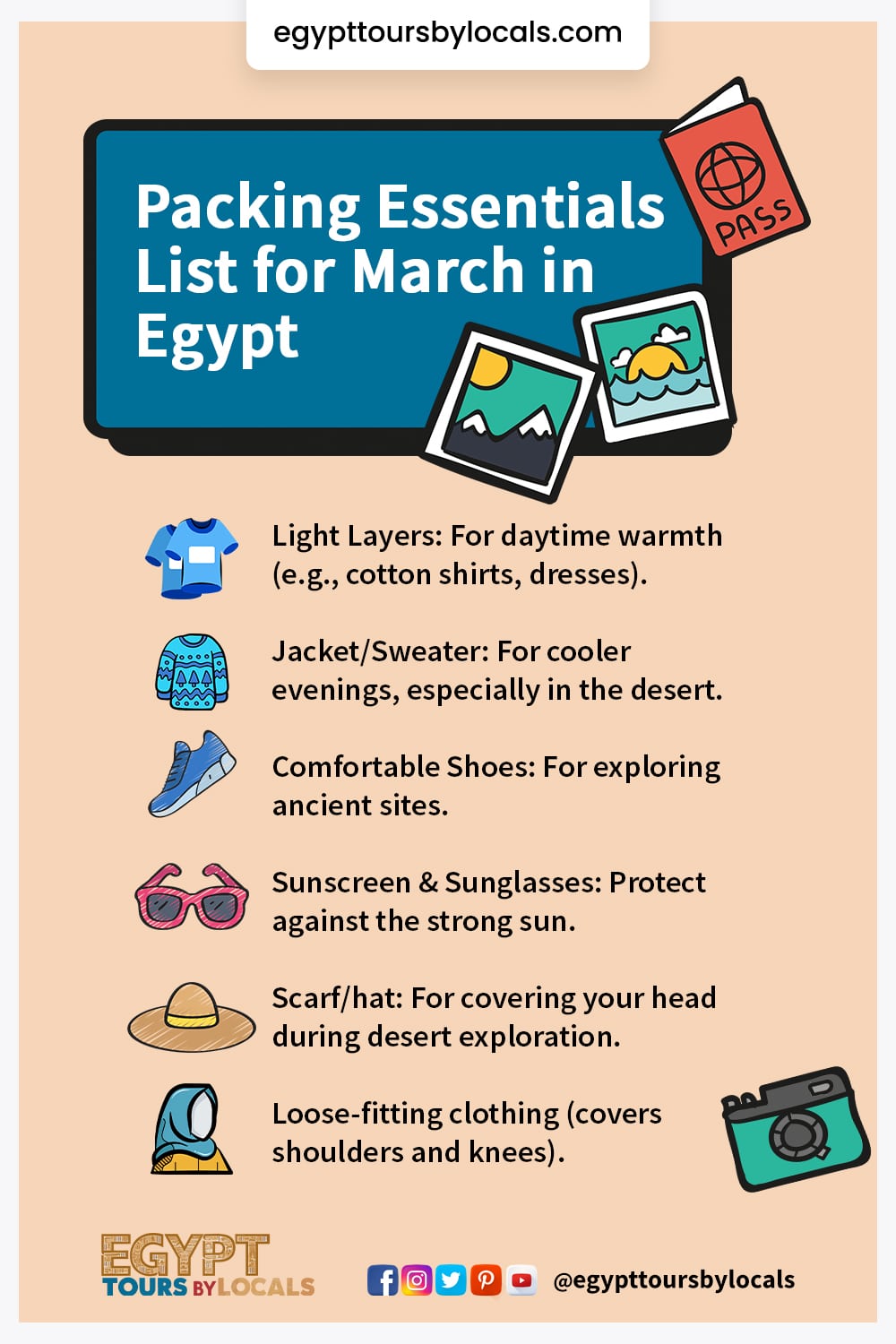
Packing Essentials
- Light breathable fabrics for day · layer for AC transport and desert evenings
- Modest clothing for mosques and temples (shoulders and knees covered)
- Reef-safe mineral sunscreen · wide-brim hat · reusable water bottle
- Comfortable walking shoes — expect 15,000+ steps on pyramid and temple days
- European C-type power adaptor · eSIM (Airalo ~$5 for 1 GB) or local SIM (~$10 · ~530 EGP for 10 GB)
Full guide: what to wear in Egypt →
Egypt Costs in Egyptian Pounds — Real Budget Breakdown
Exchange rate as of 30 March 2026: $1 USD = approximately 53 EGP. Egypt’s Pound has weakened significantly since 2022, making Egypt exceptional value for USD, GBP, and EUR travellers.
Entrance Fees
| Attraction | USD | EGP (approx.) |
|---|---|---|
| Egypt e-Visa | $25 | ~1,325 EGP |
| Giza Plateau entry | $15 | ~795 EGP |
| Pyramid interior (optional) | $20 | ~1,060 EGP |
| Grand Egyptian Museum | From $20 | From 1,060 EGP |
| Saqqara | $10 | ~530 EGP |
| Philae Temple | $12 | ~636 EGP |
| Valley of the Kings (3 tombs) | $15 | ~795 EGP |
| Tutankhamun’s tomb (extra ticket) | $25 | ~1,325 EGP |
| Karnak Temple | $12 | ~636 EGP |
| Hatshepsut Temple | $10 | ~530 EGP |
Transport
| Journey | USD | EGP (approx.) |
|---|---|---|
| Cairo–Aswan flight | $50–120 | 2,650–6,360 EGP |
| Luxor–Hurghada flight | $40–80 | 2,120–4,240 EGP |
| Cairo–Alexandria train (1st class, return) | $12–16 | 636–848 EGP |
| Abu Simbel private car (per person) | $80–120 | 4,240–6,360 EGP |
| Uber/taxi within city | $3–8 | 160–425 EGP |
| Nile ferry (Luxor West Bank) | ~$1 | ~53 EGP |
Accommodation (Per Night)
| Type | USD / night | EGP / night |
|---|---|---|
| Budget hotel / hostel (per night) | $25–50 | 1,325–2,650 EGP |
| Mid-range 4-star hotel (per night) | $80–150 | 4,240–7,950 EGP |
| 5-star hotel in Cairo (per night) | $180–350 | 9,540–18,550 EGP |
| Nile cruise budget (per night) | From $60 | From 3,180 EGP |
| Nile cruise luxury (per night) | From $200 | From 10,600 EGP |
Food
| Meal Type | USD | EGP |
|---|---|---|
| Street food (ful, ta’meya, koshari) | $2–4 | 106–212 EGP |
| Mid-range restaurant | $8–15 | 424–795 EGP |
| Fine dining | $25–60 | 1,325–3,180 EGP |
Total 14-Day Trip Budget (Per Person, Excl. International Flights)
| Style | USD (14 days) | EGP (14 days) |
|---|---|---|
| Budget | $1,200–$1,800 | 63,600–95,400 EGP |
| Mid-range | $2,500–$4,000 | 132,500–212,000 EGP |
| Luxury | $5,500–$9,000+ | 291,500–477,000+ EGP |
💰 The currency advantage is real. A mid-range restaurant meal at 800 EGP costs a British traveller roughly £12. A 4-star hotel at 6,000 EGP/night costs a US traveller roughly $113. Egypt has not been this affordable for Western visitors in a generation.
Frequently Asked Questions About 14 Days in Egypt
Is 14 days enough time to see Egypt?
Yes — 14 days is the ideal length for a first visit. It gives you time to see Cairo, Alexandria, Aswan, Abu Simbel, and Luxor properly, experience a Nile cruise, and still have two days at the Red Sea — without ever feeling rushed.
What is the best route for a 14-day Egypt itinerary?
Cairo (3 days) → Alexandria day trip → fly to Aswan → Abu Simbel → Nile cruise north to Luxor → fly to Red Sea → return to Cairo. This follows the Nile’s natural current and minimises all backtracking.
How much does a 14-day Egypt trip cost?
Budget: $1,200–$1,800 USD (63,600–95,400 EGP). Mid-range: $2,500–$4,000 (132,500–212,000 EGP). Luxury: $5,500–$9,000+ (291,500–477,000 EGP). All per person, excluding international flights. Egypt is exceptional value right now for USD and GBP holders.
Do I need a visa for Egypt?
Most Western nationalities can apply for an e-Visa online for $25 USD (~1,325 EGP) at visa2egypt.gov.eg — processing takes 3–5 business days. Visa on arrival is also available at Cairo Airport at the same price.
What is the best time to visit Egypt?
October to March is optimal. Temperatures are 20–28°C in Cairo — comfortable for outdoor sightseeing. December–January is peak season with higher prices. November and February offer the best balance of good weather and lower costs.
Hurghada or Sharm El-Sheikh for a 14-day itinerary?
Hurghada is the practical choice — a 50-minute direct flight from Luxor is decisive. Choose Sharm if serious diving is your priority and you don’t mind routing via Cairo. Sharm has more dramatic underwater scenery; Hurghada is better for families and budget travellers.
Is Egypt safe for tourists?
Yes. Egypt receives over 15 million tourists annually. Major sites have dedicated tourist police. Solo female travellers, families, and older travellers all visit successfully year-round. The main practical risks are petty hustling near sites and night-time road travel — both easily managed with a good local operator.
What should I not miss on a 14-day Egypt trip?
Grand Egyptian Museum, Pyramids of Giza, Valley of the Kings, Karnak Temple, Abu Simbel, a Nile cruise with Kom Ombo and Edfu, and at least one day at the Red Sea. Abu Simbel and the GEM are consistently the two experiences that most exceed traveller expectations.
Plan Your 14 Days in Egypt with Egypt Tours by Locals
Egypt Tours by Locals has been designing private Egypt itineraries since 2010 — over 14 years, 1,200+ groups, and 247 verified 5-star reviews from travellers across 32 countries. Our licensed local Expert local guides know every site in this itinerary personally, and our 98% recommendation rate reflects that.
About the Author
Magdy Fattouh is a licensed Egyptian tour guide and travel expert with 20+ years of experience leading private groups through Egypt. A graduate of Cairo University’s Faculty of Archaeology and History, Magdy has guided travellers from over 32 countries through the Pyramids, the Valley of the Kings, and every temple between Aswan and Alexandria. He writes to share the Egypt that tourists often miss — the stories behind the stones.
Connect: egypttoursbylocals.com/about-us