Last updated: April 15, 2026
The question I get asked most before any Egypt trip is not ‘what should I see?’ It is ‘what should I wear?’
There is a version of Egypt packing advice that is either too restrictive (‘cover everything at all times’) or too casual (‘it’s fine, dress normally’). Neither is accurate. The honest answer is: Egypt has different zones with different expectations, and packing smart for all of them is easier than most people think.
I have been guiding in Egypt for 10 years. What follows is exactly what I tell every client — not the diplomatic version, the practical version.
✅ The Golden Rules — Read These First
1. Cover shoulders and knees in temples, mosques, and traditional areas. This applies to both men and women.
2. Layers are more useful than a single heavy item. Egyptian days are warm; evenings (and Nile cruise nights) can be cool.
3. Comfortable, broken-in shoes matter more than almost anything else. You will walk on uneven stone for hours.
4. Bring a light scarf. It doubles as sun protection, mosque cover, and Nile cruise warmth.
5. Leave room in your bag. Egyptian cotton and souvenirs are worth buying — you will want space on the way home.
What to Wear: By Location
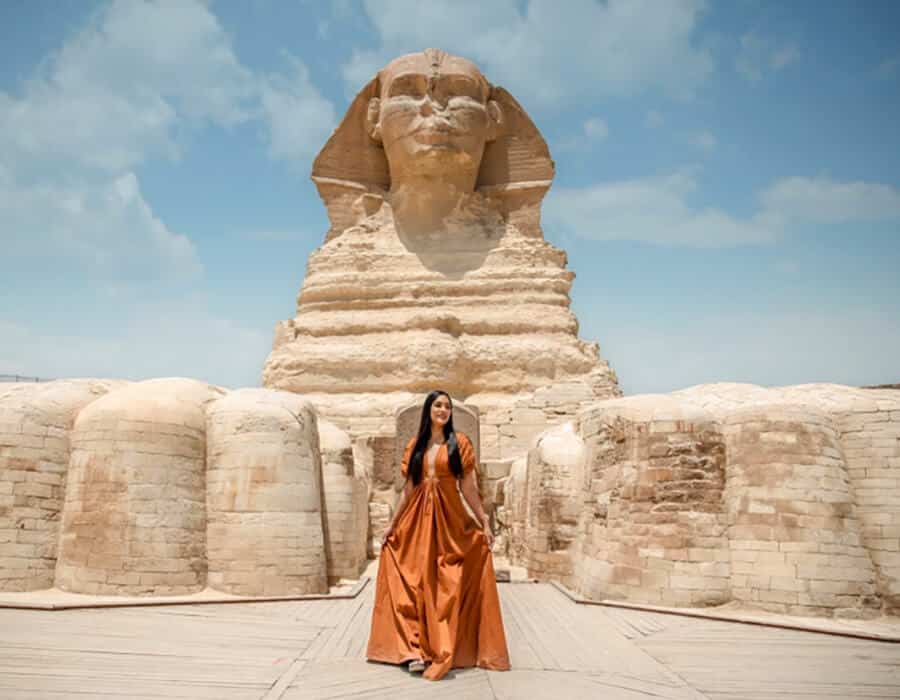
What to wear At Pharaonic Sites (Pyramids, Temples, Valley of the Kings) ?
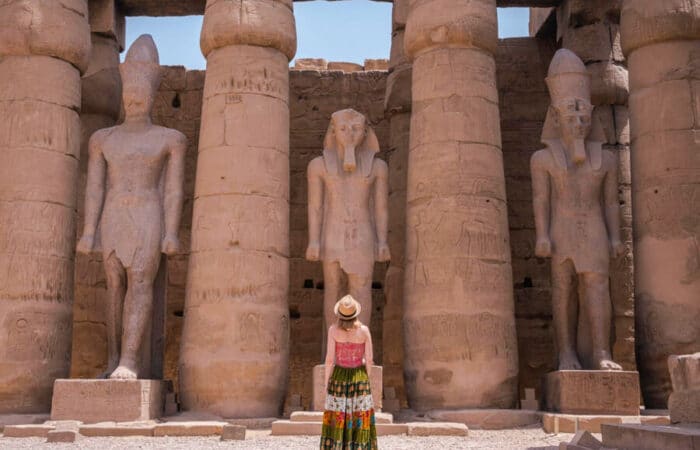
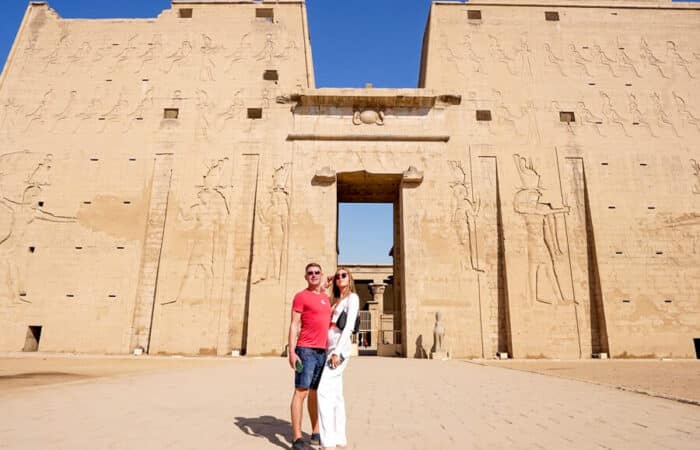
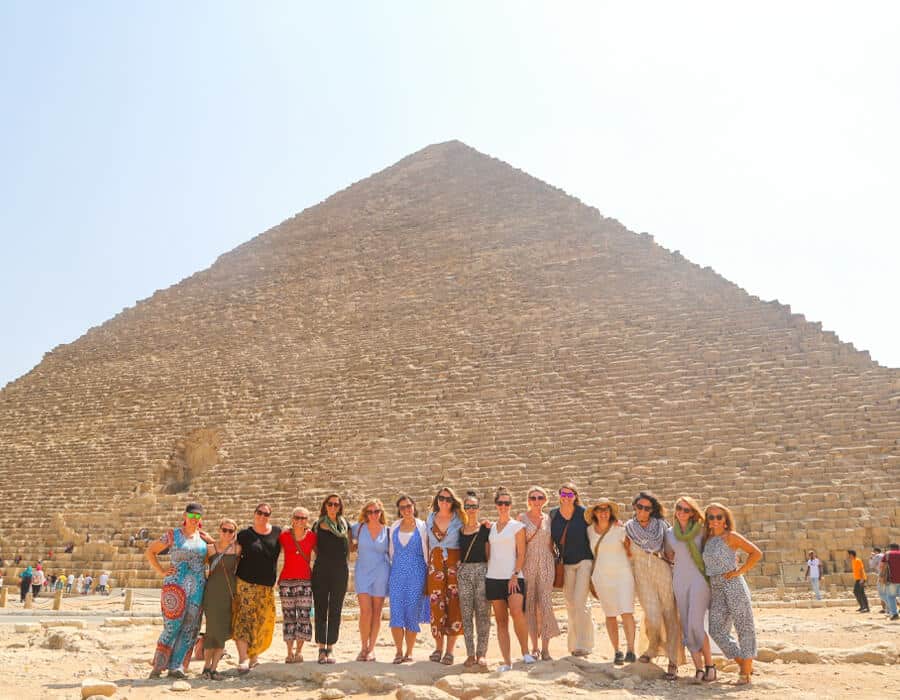
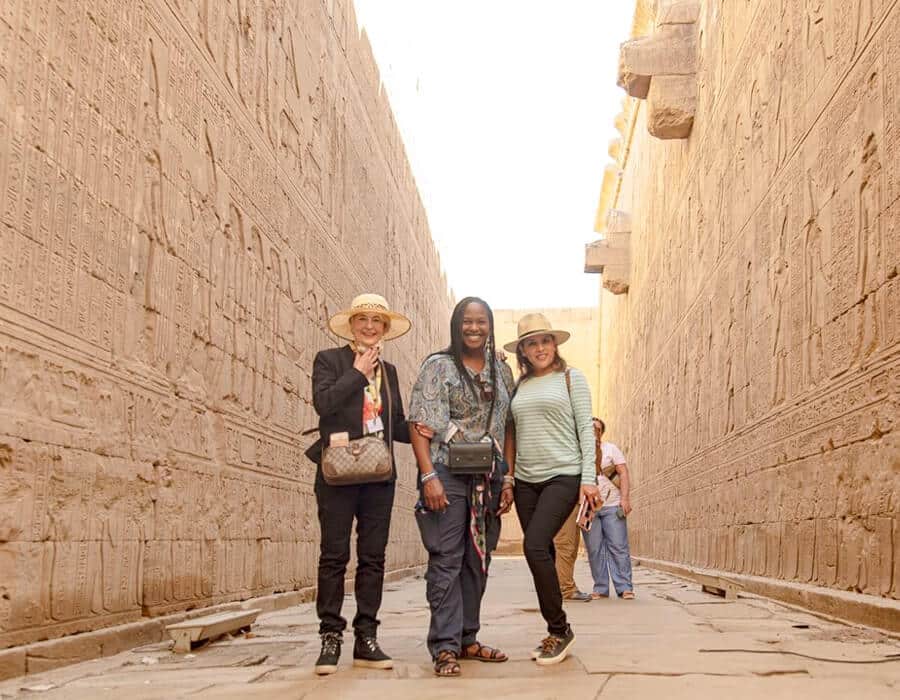
These are outdoor, often exposed sites with minimal shade and stone surfaces that absorb and radiate heat. Your priority here is sun protection and comfort, not cultural modesty — there is no religious dress code at Pharaonic sites.
- Lightweight, light-colored long trousers or midi skirt (men and women): Protects against sun on legs without overheating. Dark colours absorb more heat.
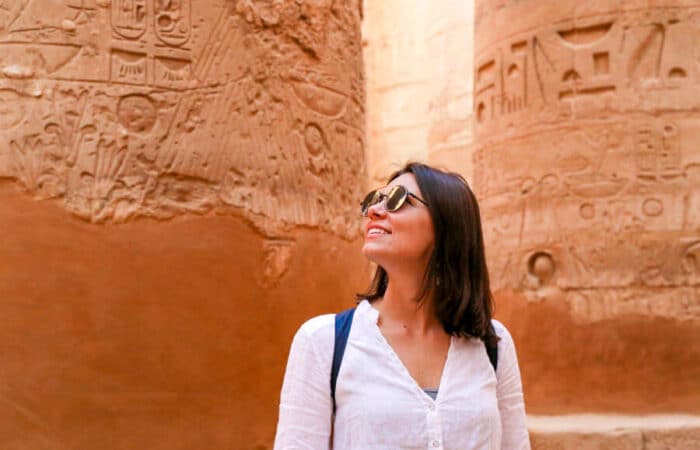
- Short-sleeved or long-sleeved shirt: Shoulders technically do not need to be covered at Pharaonic sites, but a lightweight long-sleeved shirt protects against sun and is easily removed. We recommend it.
- Broad-brimmed hat: Non-negotiable in summer; very useful in winter. You will spend hours in direct sun.
- Comfortable walking shoes: Stone surfaces, uneven ground, sand. Trainers are fine. Avoid new shoes — blisters ruin a day at the Pyramids.
- Sun cream (factor 30+): Buy before you go — quality is variable in Egypt and tourist-zone prices are high.
- Small backpack: For water, sun cream, a light layer for the evening, and purchases at the site gift shop.
→ Browse our Egypt tour packages
At Mosques and Islamic Cairo
Islamic Cairo: Mosques and traditional Islamic areas have genuine dress expectations for both men and women. This is not cultural performance — it is respectful behaviour in a place of active religious practice.
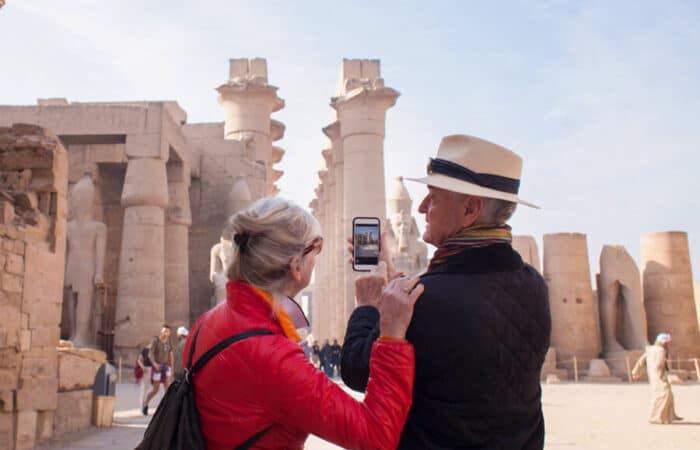
- Women: Shoulders, arms (ideally to the wrist), and legs covered to at least the knee. A scarf to cover hair is required inside mosques — bring your own or borrow one at the entrance. Loose, non-form-fitting clothing is most appropriate.
- Men: Long trousers and a shirt with sleeves. Shorts are generally not appropriate in mosques and traditional areas — even if technically permitted, they draw attention and reduce your welcome.
- Footwear: Slip-on shoes or shoes with easy fastenings — you will remove them before entering every mosque. Socks are useful (mosque floors can be cold in winter, hot in summer).
- The scarf rule: A lightweight scarf is the single most versatile item in an Egypt packing list. It can cover hair at mosques, protect your neck and shoulders from sun at sites, keep you warm on a cool Nile evening, and be folded into a cushion on long journeys. Pack two if possible.
On a Nile Cruise
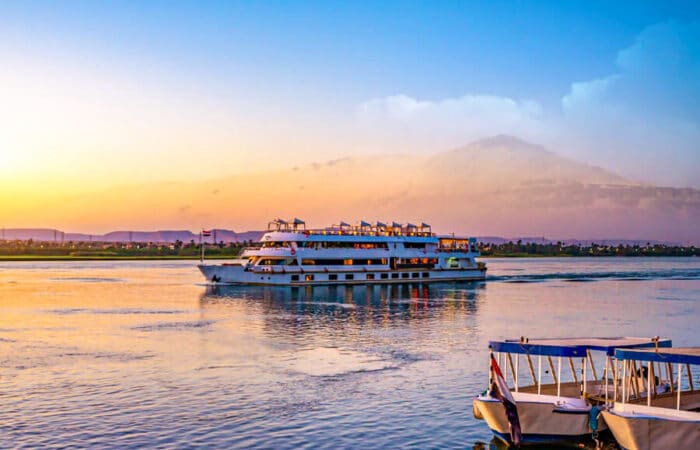
Nile cruises have a daytime outdoor component and an evening social component — often including a galabeya (traditional Egyptian robe) night.
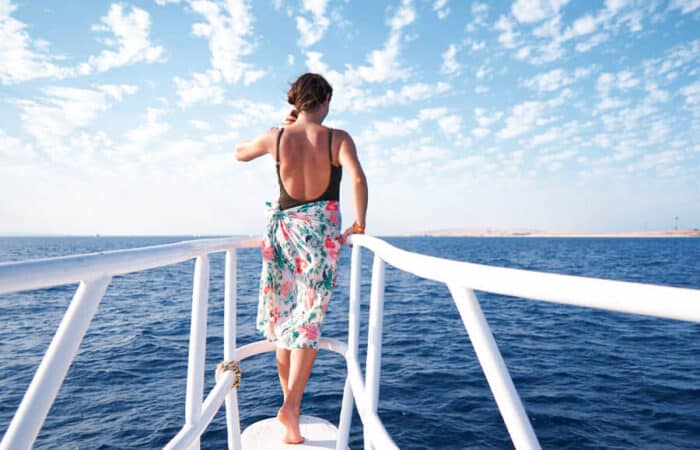
- Daytime deck wear: Light summer clothes, swimsuit for any pool on the vessel, sun hat and cream.
- Shore excursions (Luxor, Aswan, Kom Ombo, Edfu): Temple and mosque rules apply. Pack a light covering layer in your day bag.
- Evenings on the cruise: Smart-casual. Many cruises have a Galabeya Night where passengers wear the traditional Egyptian robe — it is provided or can be bought at the boat’s gift shop or in markets for $10–$20.
- The nights: Nile cruise nights in winter (October–March) can be very cold. Pack a warm layer — a fleece or light down jacket that you would not need during the day. This surprises many visitors.
→ Popular Egyptian Food (the dishes to try during your visit)
In Cairo (General City Life)
Cairo is a large, cosmopolitan city. In tourist areas, international hotels, upscale restaurants, and shopping malls, dress is comparable to any international city. In traditional residential neighbourhoods and local markets, more conservative dress is appreciated.
- Downtown Cairo, Zamalek, tourist areas: Standard Western dress is fine. Smart-casual works for restaurants and evenings.
- Local markets, residential neighbourhoods: Covered shoulders and knees as a courtesy. You do not have to dress like a local, but modest dress is noticed and appreciated in these areas.
- Beach resorts (Sharm, Hurghada): International resort standards apply. Swimwear at the beach and pool; cover-up for walking to restaurants or into town.
What to Wear: By Season
| Season | Dates | Cairo Temp | What to Pack | Key Differences |
| Winter | Nov–Feb | 14–21°C | Light layers, warm layer for evenings, scarf essential | Nile cruise nights cold — pack a fleece. Evenings cool in Cairo. |
| Spring | Mar–May | 17–33°C | Light clothing, sun protection, layers for cooler mornings | April winds (Khamsin) mean dust — bring a buff/neck gaiter |
| Summer | Jun–Sep | 28–38°C | Lightest possible clothing, strong sun protection, hat crucial | Temple visits should be morning-only. Stay hydrated. |
| Autumn | Oct–Nov | 22–30°C | Light clothing, one warm layer for evenings | Best overall conditions — our recommended season for packing ease |
Complete Packing Checklist
Clothing — Women
- 2–3 lightweight midi or maxi skirts OR 2–3 pairs lightweight long trousers
- 1 pair shorts (for beach/resort areas only)
- 3–4 short-sleeved tops (light colours)
- 1–2 long-sleeved lightweight tops (for mosques and evening layering)
- 1 lightweight cardigan or thin jumper (evenings, Nile cruise nights)
- 1 warmer layer / fleece (Oct–March trips)
- 2 lightweight scarves (multipurpose — mosque, sun, Nile evenings)
- 1 swimsuit (for Nile cruise pool or Red Sea)
- 1 smart-casual outfit for evening meals
- Galabeya (buy in Egypt for $10–$20 — no need to pack)
Clothing — Men
- 2–3 pairs lightweight long trousers (NO shorts for temple/mosque areas)
- 1 pair shorts (for beach or casual hotel use)
- 3–4 lightweight shirts (short or long sleeve)
- 1 smart-casual shirt for evening meals
- 1 lightweight layer / thin jumper (evenings)
- 1 warmer layer / fleece (Oct–March trips)
- 1 swimwear
Footwear
- 1 pair well-worn comfortable walking shoes / trainers — the most important item on this list
- 1 pair easy slip-on shoes for mosques (saves time, avoids sock situation)
- 1 pair sandals or flip-flops (for resort, cruise deck, evenings)
Accessories & Essentials
- Broad-brimmed hat or cap (non-negotiable for temple visits)
- Sunglasses
- Sun cream SPF 30+ (enough for the full trip — buy before you go)
- Insect repellent (Luxor and Aswan, especially at dusk)
- Small daypack / backpack for site visits
- Reusable water bottle (refill at hotels — do not buy bottled at site kiosks)
- Small padlock (for luggage on overnight trains)
- Portable charger / power bank
- Universal travel adaptor (Egypt uses Type C/F plugs, 220V)
Toiletries & Health
- Stomach medication (Imodium / rehydration sachets — carry, hope not to use)
- Antihistamine (dust, sun, and plant allergens in spring)
- Blister plasters (for new shoes situation)
- Lip balm with SPF (dry desert air)
- Hand sanitiser (for site visits before food)
What NOT to Bring
- New shoes: The single most common mistake. Blisters at the Pyramids on day one ruin the rest of the trip. Only bring shoes you have walked in for 20+ hours already.
- Heavy winter coat: Even in December, a mid-weight fleece and one decent warm layer is enough for Egypt. A full winter coat is overkill and takes up enormous bag space.
- Expensive jewellery: You will worry about it and it will not add to your enjoyment. Leave it at home.
- Tight or form-fitting clothing as your main wardrobe: Technically fine in tourist areas, but impractical for a day that moves between temples, mosques, and markets. Loose clothing is cooler, more comfortable, and more versatile.
- Too many clothes: Egyptian cotton is excellent and affordable. You can buy garments here. Leave space.
Shopping for Clothes in Egypt
Egypt produces some of the world’s finest cotton. If you want to buy clothing in Egypt rather than packing everything:
- Galabeya (traditional robe): $10–$20 in Khan el-Khalili or local markets. Excellent for cruise Galabeya Night, comfortable for evenings, and a genuine souvenir.
- Egyptian cotton T-shirts: Available in tourist shops throughout Egypt. Quality varies — feel the weight of the fabric. Heavier = better cotton.
- Lightweight scarves and wraps: Available everywhere from $3–$15. Buy two — one for sun protection and one for mosques.
Frequently Asked Questions
Can I wear shorts in Egypt?
It depends on where you are. At Red Sea resorts (Hurghada, Sharm el Sheikh): absolutely yes — shorts, swimwear, and beach clothing are all perfectly normal. In Cairo, Luxor, and Aswan: shorts are generally fine in tourist areas, restaurants, and hotels, but avoid wearing them inside mosques, Coptic churches, local markets, and conservative neighborhoods. My practical advice: pack one pair of lightweight linen trousers — they’re cooler than shorts in desert heat anyway, and solve any modesty question instantly.
What to wear to the Pyramids in Egypt?
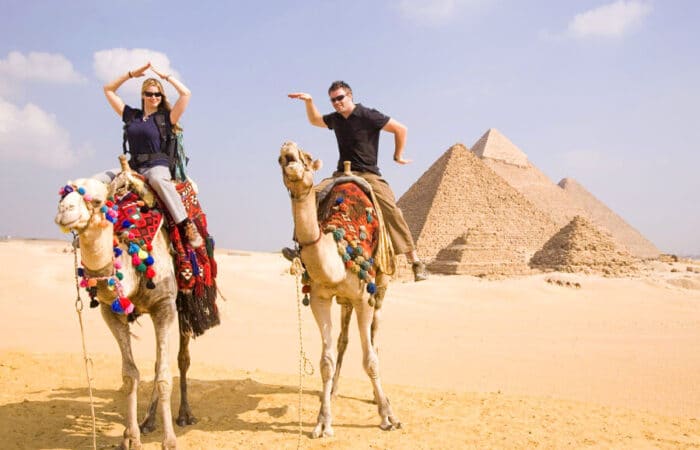
Practical and respectful: comfortable walking shoes are essential (the plateau is uneven stone and sand — no flip-flops). Light, loose-fitting clothing that covers your shoulders and knees works best — both for sun protection and for the respectful atmosphere around these ancient sites. A wide-brimmed hat is non-negotiable; the Giza Plateau has zero shade. Sunscreen SPF50+. Sunglasses. A light scarf you can use as an extra layer against wind and sun. Bring water — vendors sell it but at tourist prices.
What not to wear in Egypt as a tourist?
Inside religious sites (mosques, Coptic churches): no bare shoulders, no sleeveless tops, no shorts, no miniskirts. Bring a scarf — you’ll be asked to cover up if you arrive without one. In local markets and non-tourist neighborhoods: very tight or revealing clothing draws unwanted attention and is culturally disrespectful. At beach resorts: normal swimwear is completely fine — Hurghada and Sharm are international resort towns where beach dress is expected. Context is everything.
What to wear in Egypt as a female tourist?
Lightweight, loose-fitting tops in natural fabrics (linen and cotton are best for the heat). Long trousers or a maxi skirt for city sightseeing. A lightweight scarf is your most versatile item — use it for mosque visits, to shade from the sun, as a wrap on air-conditioned transport, or to cover your shoulders in conservative areas. Comfortable walking sandals or trainers. You do not need to cover your hair except when entering mosques. Egypt is not as conservative as some travelers expect — modest dress in the right contexts is the simple rule.
What to wear in Cairo as a man?
Lightweight trousers or chinos (shorts are fine in tourist areas and restaurants). Short-sleeve shirts are perfectly acceptable throughout the city. A light layer (thin shirt or linen jacket) is useful for heavily air-conditioned restaurants, museums, and transport. For mosques: cover your arms and legs. Cairo’s evenings can be warm enough for short sleeves year-round except December-January when a light jacket is advisable. Comfortable walking shoes — Cairo’s streets and historical areas involve a lot of walking on uneven surfaces.
What to wear on a Nile cruise in Egypt?
During the day: casual and comfortable — shorts or light trousers, t-shirts or linen tops, sandals. For temple visits from the cruise: bring something that covers shoulders and knees (a light linen shirt and trousers work perfectly). Evenings on board: smart-casual is the norm — a clean shirt and trousers for men, a sundress or smart top for women. No formal wear required on most Nile cruises. Crucially: bring a light cardigan or fleece — cruise cabin air conditioning can be surprisingly cold.
What to wear in Egypt by season?
Winter (December–February): Cairo evenings can reach 10–12°C — bring a proper jacket and layer. Days are warm (18–22°C). Luxor and Aswan are warmer but still cool at night. Spring/Autumn (March–May, September–November): light layers, one jacket for evenings. Summer (June–August): breathable fabrics only — linen, cotton, moisture-wicking materials. Wide-brimmed hat and SPF50+ are essential. Luxor and Aswan reach 42–45°C in summer. Red Sea coast is more bearable with sea breezes.
What to wear in Egypt in February?
February is one of Egypt’s most pleasant months. Daytime in Cairo: 18–22°C — light layers, a t-shirt and light jacket. Luxor and Aswan: warmer (22–28°C days), but evenings drop to 12–14°C — pack a proper warm layer. For the Nile: bring a light fleece or jacket for evening boat decks. Comfortable walking shoes. February is ideal weather for temple sightseeing — warm enough to be comfortable, cool enough to enjoy long outdoor visits without overheating.
🔗 Related Guides
→ Dos and Don’ts in Egypt (wider cultural etiquette)
→ Egypt Trip Cost 2026 (budget for clothing purchases)
→ Best Time to Visit Egypt (packing changes by season)
→ Ramadan in Egypt (specific dress advice during Ramadan)