
By Maro Saeed — Egypt Tours By Locals | Last Updated: April 2026
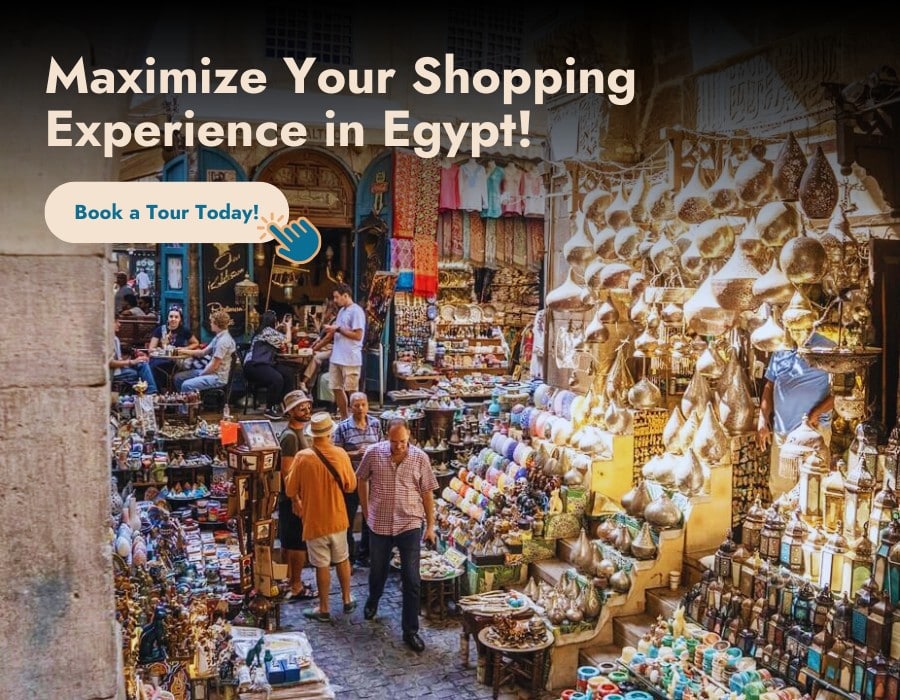
I still remember the first time I took a traveler from London into Khan El Khalili — she had her list ready: papyrus, spices, maybe some gold. Two hours later she was standing in a copper alley with a hand-engraved tray she never planned to buy, completely enchanted by the craftsman who made it in front of her eyes. That’s Egypt’s souvenir scene. It surprises you.
After 13 years guiding groups from 32+ countries through Egypt’s markets — from the crowded lanes of Cairo to the quieter Nubian souks of Aswan — I’ve learned which purchases are genuinely worth your money, which markets have the best prices, and what to say (and not say) when a vendor quotes you a price.
This guide covers 15 of the best things to buy in Egypt in 2026, with real price ranges in USD and EGP, specific market recommendations, authenticity tests, and tips on what not to buy. Whether you’re on a customised Egypt tour or exploring independently, bookmark this before you land.
Key Takeaways:
- 15 best souvenirs: from papyrus and Egyptian cotton to karkade tea, handwoven kilims and cartouche jewelry
- Real prices in USD + EGP: every item has a budget, mid-range and premium tier so you know what to expect
- Top 3 markets: Khan El Khalili (Cairo), Aswan Souk, Luxor Bazaar — each with different strengths
- Bargaining is expected: everywhere except fixed-price stores — I tell you which is which
- Food souvenirs you can take home: karkade tea, dates, dukkah, El Arosa tea — lightweight and genuinely special
- What NOT to buy: antiquities, ivory, and anything that could get confiscated at customs
- WhatsApp our team: +20 100 213 5997 — we can build a shopping itinerary into your Egypt trip
Is it Cheap to Shop in Egypt?
Short answer: yes — dramatically so for most international visitors. The Egyptian pound (EGP) gives travelers from the US, UK, EU, Australia and Canada extraordinary buying power. A hand-painted papyrus scroll that would cost £60 in a London gallery might be £7–12 at source in Giza. A custom cartouche pendant in silver that sells for $80 in an airport could be $18–25 in Khan El Khalili.
The catch is that tourist markets inflate prices significantly — the gap between the ‘tourist price’ and the ‘local price’ can be 200–400%. The fix is knowing what things actually cost before you go in. That’s what this section is for.
Egypt Souvenirs Price Guide — Budget to Premium (March 2026)
All EGP prices are approximate for March 2026. Gold gram prices are published daily by the Egyptian Chamber of Commerce.
| Souvenir | Budget | Mid-Range | Premium |
|---|---|---|---|
| Egyptian cotton towel/scarf | $8–20 / 400–1,000 EGP | $25–60 / 1,250–3,000 EGP | $80–200 / 4,000–10,000 EGP (certified linen set) |
| Papyrus scroll (small/medium) | $5–15 / 250–750 EGP | $20–60 / 1,000–3,000 EGP | $80–250 / 4,000–12,500 EGP (large, framed, hand-painted) |
| Cartouche pendant — silver | $15–25 / 750–1,250 EGP | $30–60 / 1,500–3,000 EGP | $80–150 / 4,000–7,500 EGP (gold-plated/solid) |
| Perfume oil + bottle | $10–20 / 500–1,000 EGP | $25–60 / 1,250–3,000 EGP | $70–150 / 3,500–7,500 EGP (custom blend, rare oud) |
| Gold jewelry (per gram, 18K) | N/A | $60–80 / 3,000–4,000 EGP | $80–120+ / 4,000–6,000 EGP (craftsmanship premium) |
| Alabaster figurine / vase | $5–15 / 250–750 EGP | $20–70 / 1,000–3,500 EGP | $100–400 / 5,000–20,000 EGP |
| Handwoven kilim (small) | $40–80 / 2,000–4,000 EGP | $100–300 / 5,000–15,000 EGP | $400–1,500+ / 20,000–75,000 EGP (large, Siwa) |
| Leather bag | $20–40 / 1,000–2,000 EGP | $50–130 / 2,500–6,500 EGP | $150–400 / 7,500–20,000 EGP |
| Spice selection pack | $3–8 / 150–400 EGP | $10–25 / 500–1,250 EGP | N/A (buy fresh from souk) |
| Karkade tea (250g) | $3–6 / 150–300 EGP | $8–18 / 400–900 EGP (organic, boxed) | N/A |
| Shisha pipe (decorative) | $15–35 / 750–1,750 EGP | $40–90 / 2,000–4,500 EGP | $100–300 / 5,000–15,000 EGP |
| Sand art bottle | $3–10 / 150–500 EGP | $15–35 / 750–1,750 EGP | $40–80 / 2,000–4,000 EGP (custom, large) |
| Galabeyya (traditional dress) | $15–40 / 750–2,000 EGP | $45–90 / 2,250–4,500 EGP | $100–250 / 5,000–12,500 EGP (Nubian embroidered) |
| Copper / brass tray or lamp | $10–25 / 500–1,250 EGP | $30–80 / 1,500–4,000 EGP | $100–300 / 5,000–15,000 EGP |
| Pottery / Nubian ceramic | $5–20 / 250–1,000 EGP | $25–70 / 1,250–3,500 EGP | $80–250 / 4,000–12,500 EGP (large decorative) |
15 Best Things to Buy in Egypt: Maro Saeed’s Picks
These aren’t just the most popular souvenirs — they’re the ones I’ve seen bring the most joy to travelers when they get home. Each one has a story. Here’s how to find the real thing, avoid the fakes, and pay a fair price.
1. Egyptian Cotton Products

Egyptian cotton isn’t a marketing phrase — it’s a specific agricultural product grown in the Nile Delta, where the extra-long staple fibres develop longer, stronger and softer than anywhere else on earth. The Egyptian Textile Consolidation Fund certifies genuine products, and that hologram sticker is the first thing I tell travelers to check for.
I once watched a traveler from New York spend ten minutes comparing two sets of bed linens in a Cairo store. She bought both. When I caught up with her three years later on a follow-up trip, she told me she’d replaced every other set of sheets at home with Egyptian cotton and never looked back. It’s that kind of souvenir — the one you don’t just display, you live with.
→ See our complete guide: What to Wear in Egypt for a full breakdown by location.
| ✅ Insider Tips | 💰 Price Range | 📍 Best Places to Buy |
|---|---|---|
|
|
|
2. Papyrus Art
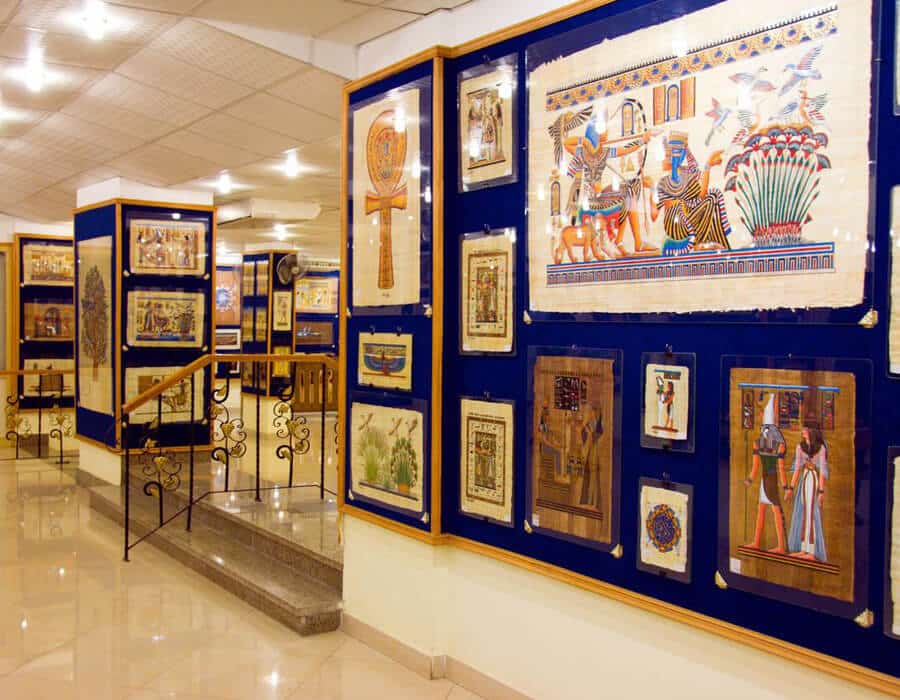
Real papyrus is one of the most duplicated items in Egypt’s entire souvenir market. The fakes — pressed banana leaf or thin card — look almost identical to the untrained eye. But the difference is easy to spot once you know what to feel for.
I once picked up a scroll from a market stall and did the roll test in front of the vendor. It crinkled and didn’t spring back. He looked embarrassed. Real papyrus — made from the stems of the papyrus plant — has a crosshatch fibre structure that gives it flexibility and strength. When you roll it gently and release, it springs flat. Banana leaf stays crumpled.
The Pharaoh’s Papyrus Institute in Giza is government-certified and offers live demonstrations. For personalised work, they can hand-paint your name in hieroglyphics on the same day. It’s one of the most meaningful souvenirs you can bring home.
| ✅ Insider Tips | 💰 Price Range | 📍 Best Places to Buy |
|---|---|---|
|
|
|
3. Cartouche Jewelry — Your Name in Hieroglyphics

In ancient Egypt, a cartouche was an oval hieroglyphic frame that enclosed the names of pharaohs — the oval itself representing the sun and eternity, protecting the royal name through this life and the next. Today, you can have your own name, or that of someone you love, engraved in hieroglyphics on a gold or silver cartouche pendant.
I’ve had this done for dozens of travelers. It never gets old watching their face when they see their name come out in 5,000-year-old symbols. One Australian couple had their children’s names done in silver — their youngest, who was seven at the time, now wears it as her school necklace. That’s the kind of souvenir that travels with someone for life.
Most gold shops in Khan El Khalili’s Gold District can engrave while you wait — silver pieces typically take 30–60 minutes. Ask for phonetic transliteration of your name (not a symbolic interpretation, which can vary between shops).
Check our guides about Where to stay in Egypt
| ✅ Insider Tips | 💰 Price Range | 📍 Best Places to Buy |
|---|---|---|
|
|
|
4. Perfume Oils and Incense (Oud / Bakhour)
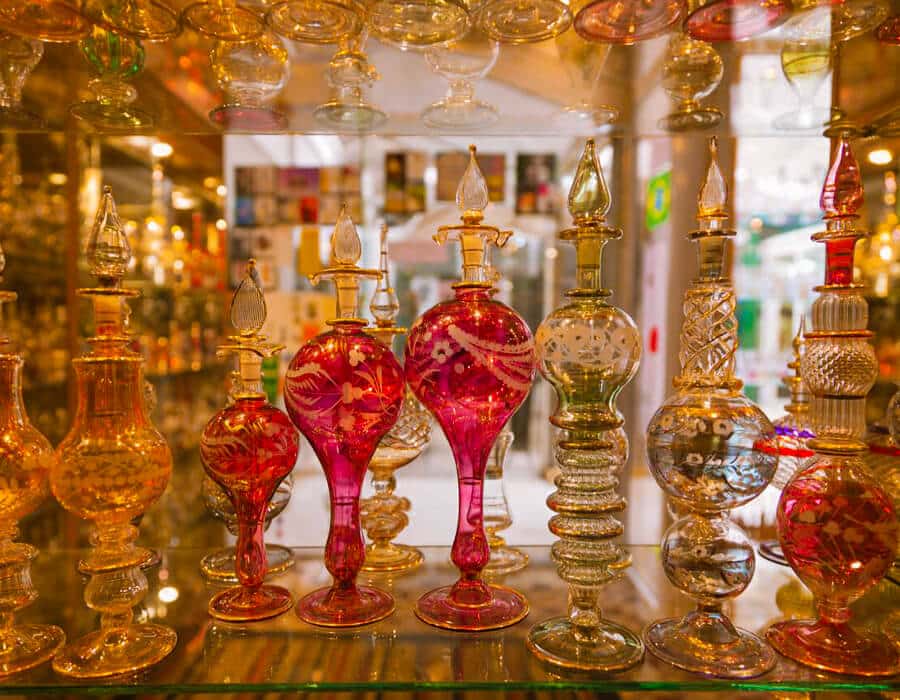
Perfume-making in Egypt predates written history. Ancient Egyptians offered scented oils to the gods at Karnak and burned bakhour (oud incense) in temples along the Nile. Today’s oil-based Egyptian perfumes are concentrated essences that last significantly longer on skin than alcohol-based European fragrances — they bind to body heat and deepen over the day rather than evaporating.
One of my favourite markets moments: I once watched a perfume vendor in Aswan custom-blend a fragrance for a traveler from Tokyo using jasmine, sandalwood and a touch of Egyptian amber. She described exactly what she wanted and he built it in front of her in about eight minutes, adjusting each addition with a single drop. She said it was the most personal thing she’d ever bought anywhere in the world.
The glass bottles are often as beautiful as the perfume itself — hand-blown Murano-style glass with fine gold detailing. Make sure they’re tightly sealed before packing.
| ✅ Insider Tips | 💰 Price Range | 📍 Best Places to Buy |
|---|---|---|
|
|
|
5. Gold and Silver Jewelry
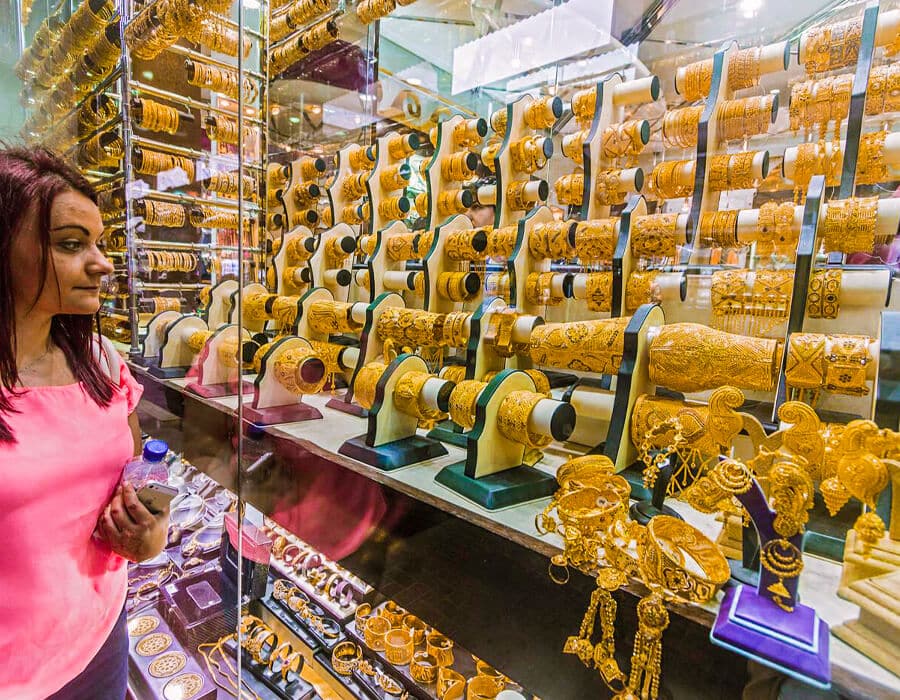
Egypt’s gold market operates with a transparency that surprises most Western travelers. The live gold gram price, published daily by the Egyptian Chamber of Commerce, is displayed openly in all reputable gold shops. You pay for the gram weight plus an eiyala (craftsmanship fee) — that’s it. No mystery pricing.
The traditional pharaonic motifs — the Ankh (key of life), the Eye of Horus, the scarab beetle, the lotus — are not just decorative. They carry 5,000 years of symbolic weight. A piece featuring these symbols is not a trinket. It’s a wearable piece of history. I wear an Ankh in silver that I bought at Khan El Khalili twelve years ago. It still turns heads.
If you’re buying gold seriously, bring a calculator. Weigh the piece yourself if you can, note the daily EGP gram price, add 15–25% for craftsmanship on intricate designs, and that’s your fair target price.
See our complete tipping in Egypt guide.
| ✅ Insider Tips | 💰 Price Range | 📍 Best Places to Buy |
|---|---|---|
|
|
|
6. Alabaster Statues and Carvings
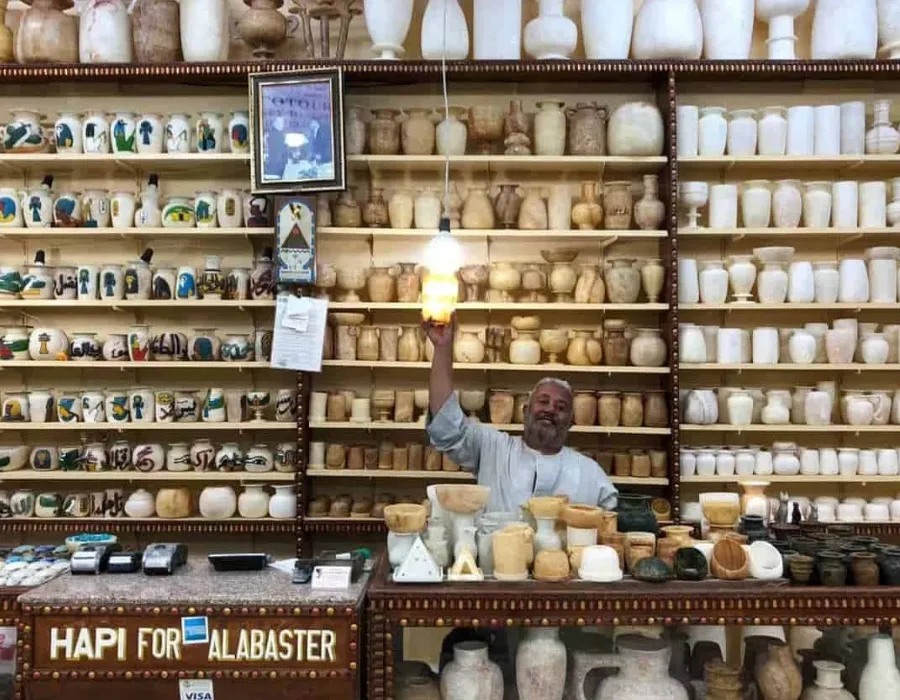
Alabaster has been quarried from the limestone hills near Luxor and worked by Egyptian craftsmen for more than 5,000 years. It’s a soft, translucent stone that glows from within when backlit — almost like it’s lit from inside. The Luxor area is where the material is sourced, so this is where you’ll find the most skilled carvers and the most honest prices.
The authenticity test is simple and satisfying: hold the piece up to your phone’s torch light. Genuine alabaster shows a warm internal glow, slightly orange-gold at the edges. Fake plastic or resin replicas — which are common in tourist stalls near the Pyramids — stay completely opaque. I’ve done this test dozens of times with travellers and it never fails to separate the real from the replica.
Small figurines pack beautifully — they’re lightweight, structurally solid, and don’t require special wrapping. Medium vases (15–25cm) make stunning home decor. Skip the large lamps unless you’re arranging shipping — they’re heavy and the electrical fittings need adapters.
| ✅ Insider Tips | 💰 Price Range | 📍 Best Places to Buy |
|---|---|---|
|
|
|
7. Handwoven Rugs, Kilims and Carpets
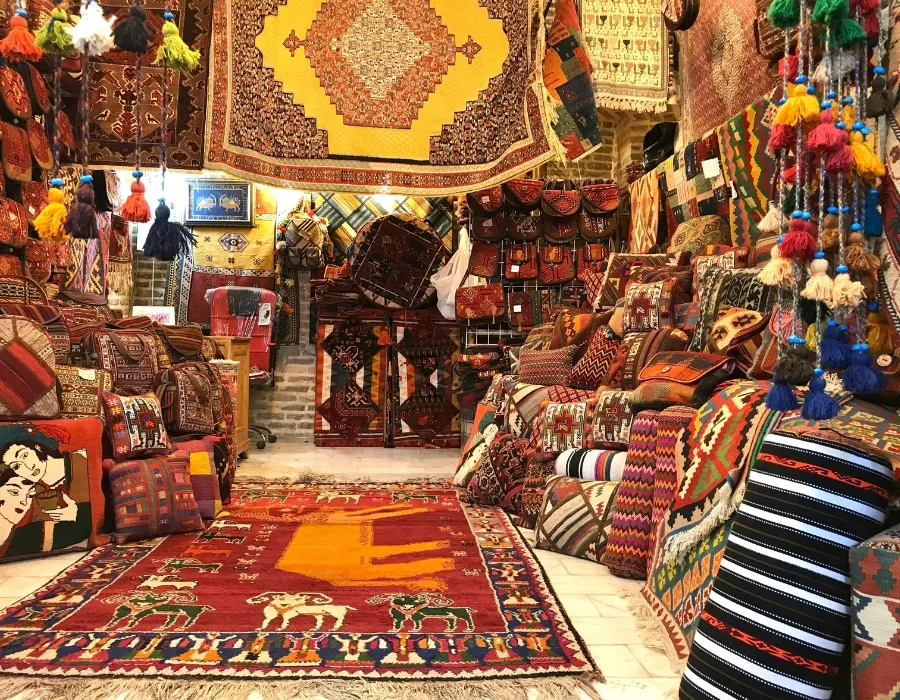
Handmade Egyptian rugs are one of the country’s most overlooked treasures, probably because they’re heavier and pricier than a papyrus scroll. But for travelers who can fit one in their luggage or arrange shipping, a genuine handwoven kilim is the kind of piece that becomes a family heirloom — not a shelf ornament.
There are two main traditions worth knowing. The Nile Delta workshops — particularly the village of Fowa — produce flat-woven kilims using centuries-old techniques, often featuring abstract geometric designs in rich earth tones. The Nubian weavers of Aswan produce something entirely different: bold, vibrant geometric patterns in electric blue, terracotta and saffron, reflecting the Nubian visual language that predates the pharaohs.
The Wissa Wassef Art Centre in Harrania village (just south of Giza) is in a category of its own — an arts school where weavers produce extraordinary tapestries that hang in galleries worldwide. Their pieces have fixed prices and are genuinely investable art.
Affordable Egypt Tour Packages A planned options for budget travellers
|
✅ Insider Tips |
💰 Price Range |
📍 Best Places to Buy |
|
|
|
8. Leather Goods
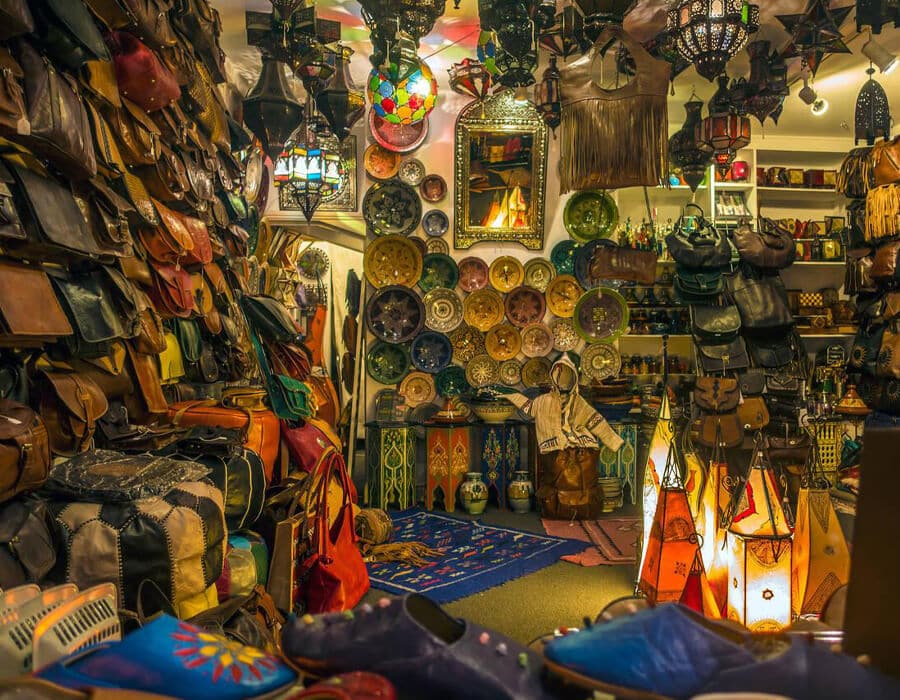
Egyptian leather craftsmanship is rooted in the tannery tradition of Old Cairo, particularly the Al-Muizz Street area where families have worked leather for generations. The best pieces are vegetable-tanned — a slower, more traditional process that produces leather that ages beautifully, developing a richer patina with every year of use rather than cracking and peeling.
I still carry a dark brown shoulder bag I bought from a workshop off Al-Muizz Street eight years ago. The leather has softened and darkened with use. Every traveler who sees it asks where I got it. That’s the quality Egyptian craftwork produces when you find the right source.
Camel-leather sandals are one of the best-value buys in the country — a custom-fitted pair from a market cobbler costs $20–35 and outlasts most shoes I’ve owned. Worth an afternoon detour in Cairo.
| ✅ Insider Tips | 💰 Price Range | 📍 Best Places to Buy |
|---|---|---|
|
|
|
9. Spices and Herbs

The Aswan Spice Market is one of the most sensory experiences in all of Egypt. Cumin piled in mountains, coriander seeds spilling across wooden shelves, whole star anise in baskets, and the deep crimson of dried hibiscus (karkade) catching the light. I’ve taken hundreds of travelers through it and the reaction is always the same: a slow turn in the middle of the alley, breathing deeply, not quite believing the smell.
Egyptian cumin in particular is world-class — smokier and earthier than Indian or Turkish varieties. Dukkah, the traditional nut-and-spice blend eaten with bread and olive oil, is one of those things that becomes a kitchen staple the moment you try it at home.
A word on saffron: vendors will offer ‘genuine saffron’ across every market in Egypt at prices that seem too good to be true. They usually are. Real saffron is deep red, thread-shaped, and smells unmistakably floral. What’s usually being sold is safflower or coloured paprika powder. If you want genuine saffron, go to a reputable spice shop, check the threads, and expect to pay a real price.
| ✅ Insider Tips | 💰 Price Range | 📍 Best Places to Buy |
|---|---|---|
|
|
|
10. Karkade Tea and Egyptian Food Souvenirs
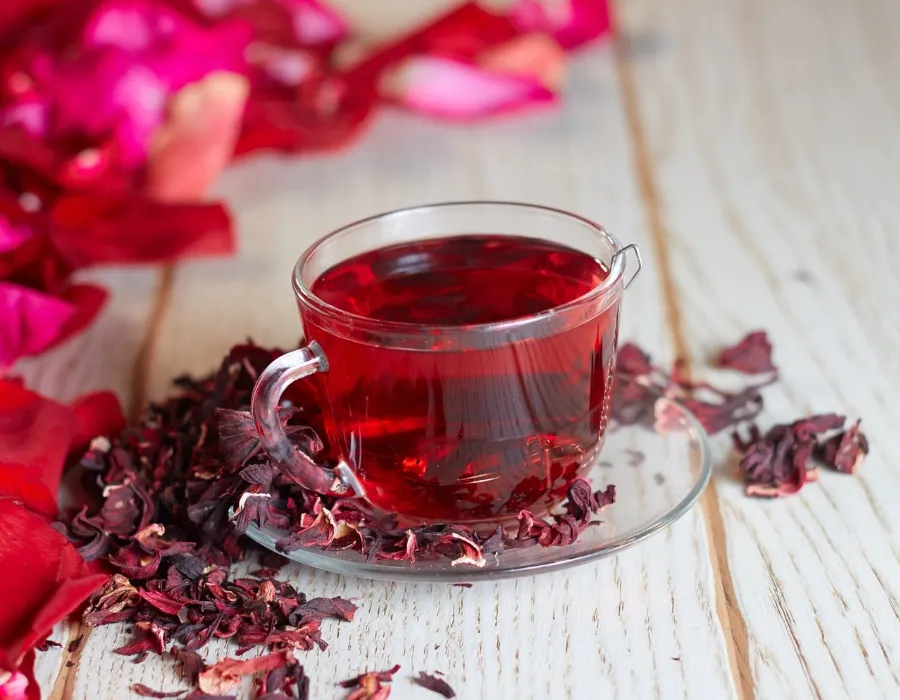
Egypt’s food-based souvenirs are the most underrated category in the country’s entire market scene. They’re lightweight, affordable, genuinely unique, and the most-used souvenirs by far — because they end up in your kitchen, not on a shelf. They’re also the answer to three of the most common travel questions I hear: ‘What can I bring back from Egypt for my family?’ ‘What food souvenirs are allowed through customs?’ ‘What’s something really Egyptian that nobody else will have?’
Karkade — Egyptian Hibiscus Tea
Karkade is the dried flower of the hibiscus plant, brewed into a deep crimson tea that is tart, refreshing and rich in vitamin C. It’s been drunk in Egypt since ancient times — some historical accounts suggest even Cleopatra was a devoted fan. I drink it cold in summer and hot in winter. It’s one of the few things I genuinely miss if I’m out of it.
- Brews hot or cold — delicious either way, with or without sugar
- Budget: $3–6 / 150–300 EGP for a 250g bag from the souk — enough for many servings
- Best source: Aswan Souk (freshest, best price), Khan El Khalili spice alley
El Arosa Tea
El Arosa is Egypt’s most popular loose-leaf black tea brand — the red tin is on every cafe table and kitchen shelf in the country. It brews strong and is traditionally served in a glass with plenty of sugar and sometimes mint. Lightweight, inexpensive, and an authentic taste of daily Egyptian life. Find it at any supermarket in Cairo or Luxor for $2–5.
Egyptian Dates
Medjool and Deglet Noor dates from Upper Egypt are among the finest in the world — naturally sweet, with a honeyed richness that makes supermarket dates taste like a different product. Buy vacuum-packed for travel. $5–20 per pack depending on quality and weight.
Check out our Egyptian Food Guide
Dukkah Spice Mix
Dukkah is a blend of toasted nuts (hazelnuts or peanuts), sesame seeds, cumin and coriander — dipped with bread and olive oil, it’s one of the greatest simple pleasures of Egyptian cooking. I’ve introduced it to travelers from 30+ countries and every single one has looked it up online the moment they got home. $5–15 / 250g from any spice market.
Egyptian Honey — Black Seed Variety
Honey made with black seed (nigella sativa) is widely sold in health shops and markets across Egypt. It has a distinctive, slightly spiced flavour and is traditionally used medicinally as well as in cooking. A good-quality jar costs $8–25 / 400–1,250 EGP.
✈️ Customs Note — Food Souvenirs
Sealed, commercially packaged dry goods (tea, spices, dates, honey) are generally permitted into the US, UK, EU and Australia. Fresh dates with pits and loose herbal plant material may be flagged. Liquid honey must comply with carry-on liquid rules (under 100ml in cabin) or go in checked luggage. Always check your country’s customs and biosecurity guidelines before packing.
11. Copper and Brassware
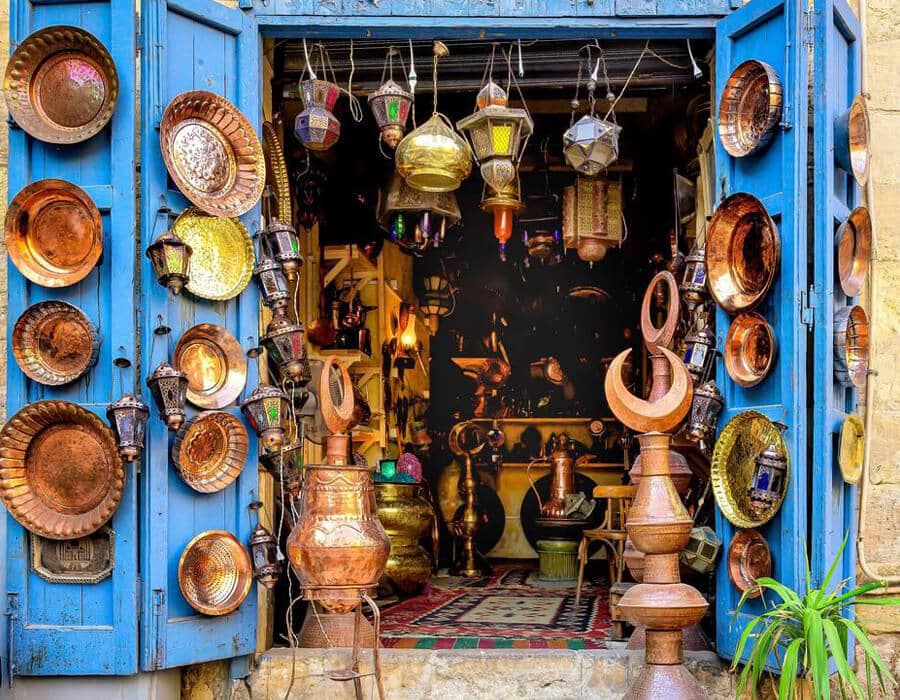
The copper district of Khan El Khalili is one of the most atmospheric streets in all of Cairo. Hammers ring against metal all day. Artisans hunch over trays and pitchers, cutting intricate geometric patterns by hand with chisels that have been in their families for generations. The sound of that alley is one of my favourite sounds in the world.
The difference between a hand-engraved tray and a machine-pressed one is visible once you know what to look for. Hand engraving has slight variations in line depth and spacing — a human quality. Machine pressing is perfectly uniform, slightly shallow, and lacks the shadow that depth creates. The hand-engraved version will cost more. It’s worth it.
Decorative brass lanterns are one of the most practical buys — they work beautifully as candle holders and are light enough to pack safely with good wrapping. Copper coffee pots (jezve/kanaka) are another excellent pick for coffee drinkers.
| ✅ Insider Tips | 💰 Price Range | 📍 Best Places to Buy |
|---|---|---|
|
|
|
12. Handcrafted Pottery and Ceramics
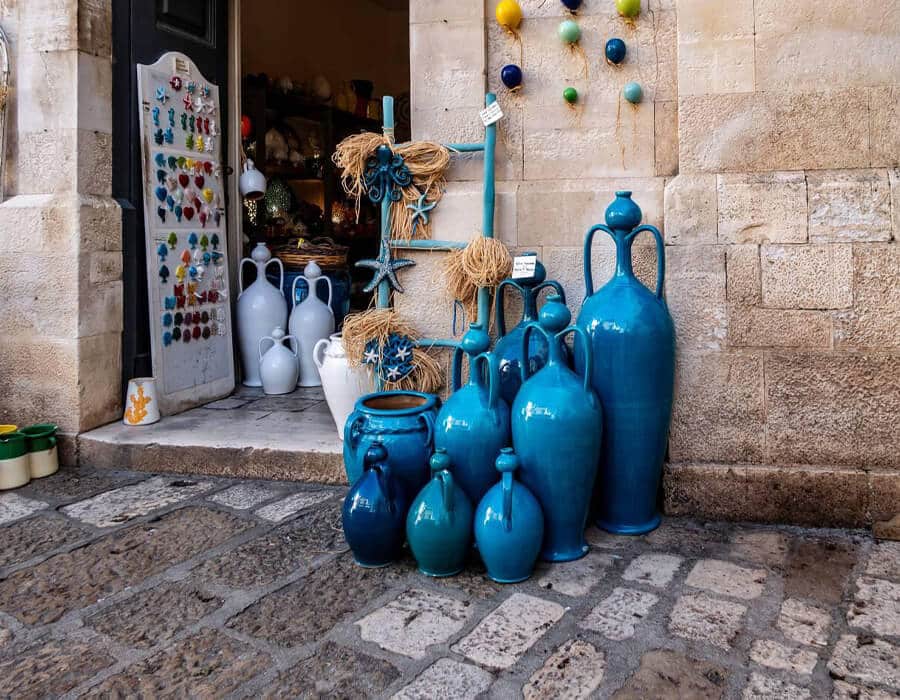
Egyptian ceramics come in two distinct traditions that are worth understanding before you buy. The first is pharaonic-themed pottery — decorative plates, bowls and vases featuring hieroglyphics, cartouches and Egyptian gods, made primarily for the tourist market in workshops around Cairo and Luxor. The quality varies enormously; the best pieces are genuinely hand-painted and quite beautiful.
The second — and in my opinion far more interesting — is Nubian ceramics from Aswan. Nubian potters use a bold, distinctive colour palette: cobalt blue, terracotta, saffron yellow, sometimes bright green. The designs are geometric and ancient, reflecting a visual tradition that predates the pharaohs and belongs entirely to Nubia’s own cultural history. These pieces are rarer, less copied, and more genuinely local.
The pottery district of Fustat in Old Cairo is worth a visit if you’re interested in the craft tradition — some of the oldest continuous pottery-making workshops in Africa operate there.
✏️ Prefer to customise every detail? Build your own Egypt itinerary →
| ✅ Insider Tips | 💰 Price Range | 📍 Best Places to Buy |
|---|---|---|
|
|
|
13. Galabeyya — Egyptian Traditional Dress
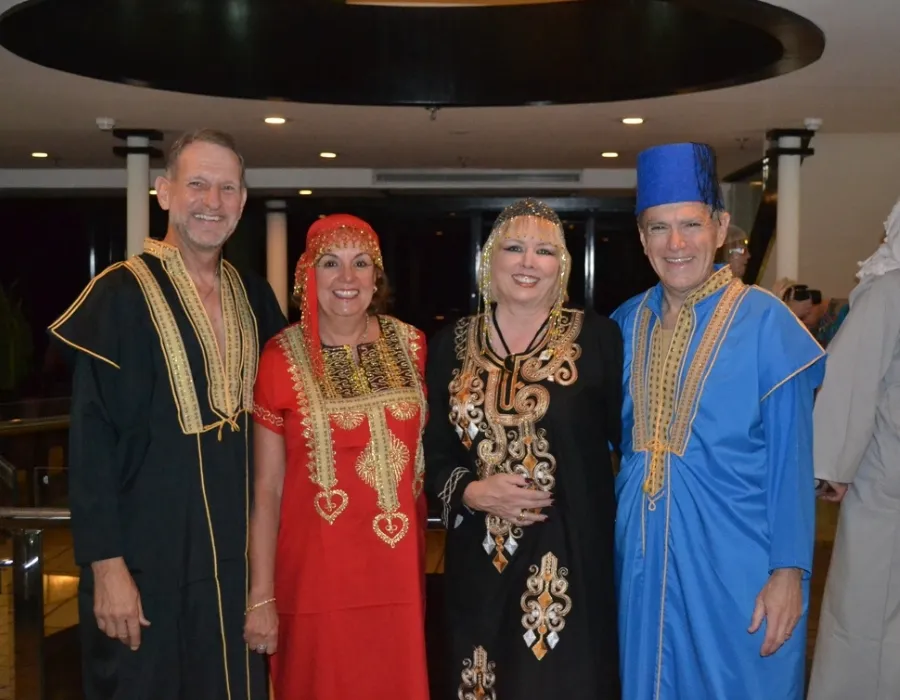
A galabeyya (جلابية) is the traditional full-length robe that Egyptians have worn for millennia — from the fellahin (farmers) of the Nile Delta to the market traders of Khan El Khalili to the residents of Nubian villages in the far south. For travelers, a lightweight cotton galabeyya makes one of the most culturally meaningful and wearable souvenirs available.
The variety is genuinely fascinating. Upper Egyptian and Nubian galabeyyat tend to be richly embroidered in bright colours, with mirror-work detailing around the collar and cuffs. Delta-style galabeyyat are simpler — often plain white or light blue — and more austere. Festival galabeyyat can be extraordinary pieces of textile art.
I once helped a traveler from Canada find a hand-embroidered Nubian galabeyya in Aswan’s souk. She wore it that evening at dinner. The Nubian family at the table next to us recognized the embroidery pattern as being from a specific village. A twenty-minute conversation followed in three languages. That’s what the right souvenir can do.
| ✅ Insider Tips | 💰 Price Range | 📍 Best Places to Buy |
|---|---|---|
|
|
|
14. Sand Art Bottles
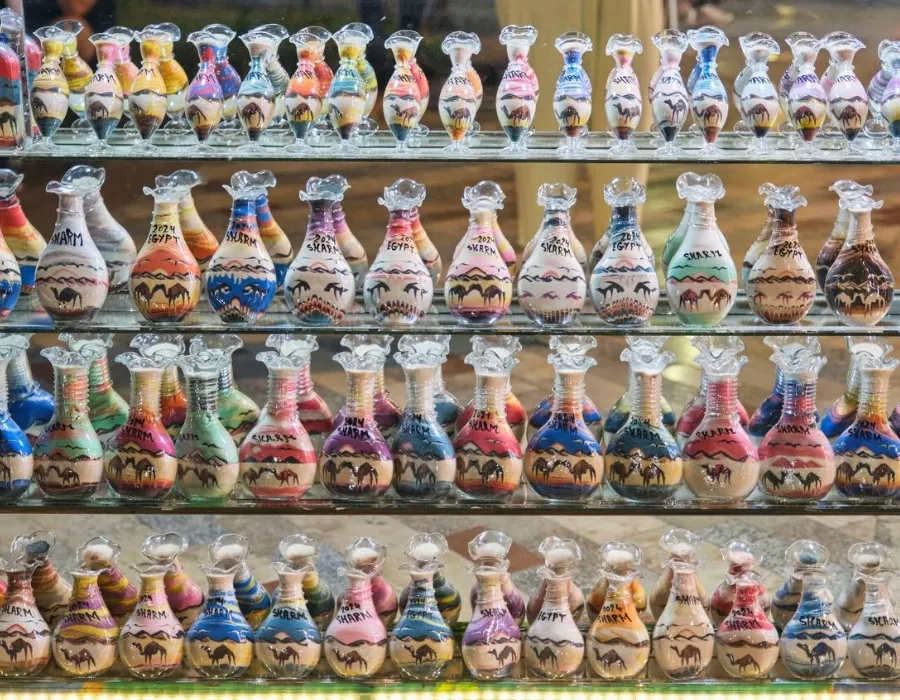
Coloured sand from Egypt’s multiple deserts — Sinai’s red-orange sandstone, the ivory sand of the Western Desert, the dark mineral-rich layers of the Sahara — is layered inside glass bottles to create miniature landscape scenes. The art is in the tool: craftsmen use a thin metal skewer to sculpt within the bottle, pulling sand into camels, pyramids, palm trees and desert horizons inside a sealed glass vessel.
I’ve watched people stand and watch this being made for twenty minutes without moving. There’s something almost meditative about it. And the result is completely unique — no two bottles are identical because the sand shifts slightly as each layer is added. When they write a name or message inside the bottle, it becomes genuinely irreplaceable.
They’re light, packable, and universally appreciated. I’ve never seen a traveler regret buying one.
See our Guide about best time to visit Egypt
| ✅ Insider Tips | 💰 Price Range | 📍 Best Places to Buy |
|---|---|---|
|
|
|
15. Shisha Pipes (Decorative)
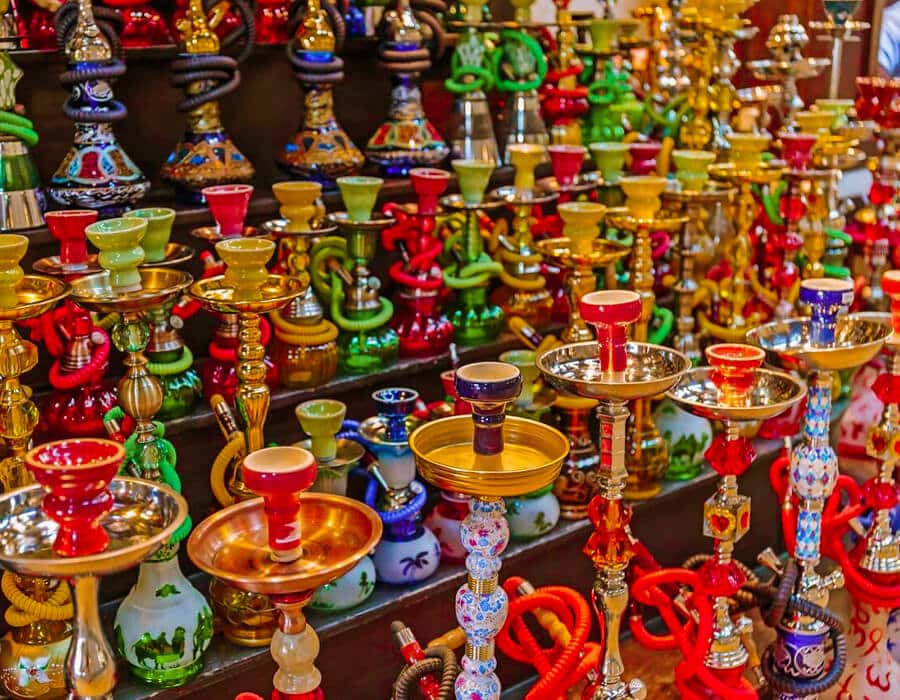
Shisha culture in Egypt is woven into the social fabric of the country in a way that has no equivalent in Western societies. Sitting in a cairene ahwa (coffee house) with a mint or apple shisha in the late afternoon, watching the city slow down, is as authentically Egyptian as the pyramids. Even if you don’t smoke, the pipes themselves are works of craft — hand-blown glass with engraved brass fittings and decorative hoses.
As home decor, a well-chosen shisha pipe is striking. The coloured glass catches light beautifully, and the brass detailing gives it genuine visual weight. I have one at home in Cairo that visitors always ask about. The best pieces come from specialist shops in the Khan El Khalili area rather than tourist stalls near the big monuments, which tend to stock cheaper plastic-heavy versions.
Before you buy: check your airline’s regulations (some restrict shisha pipes in cabin baggage) and confirm whether your home country has any restrictions on importing hookah equipment. Most Western countries permit them freely, but it’s worth five minutes of research.
| ✅ Insider Tips | 💰 Price Range | 📍 Best Places to Buy |
|---|---|---|
|
|
|
Where to Buy Souvenirs in Egypt: Best Markets by City
Egypt’s best shopping isn’t in hotel gift shops or airport duty-free halls. It’s in the souks, bazaars and specialist workshops that most tourists walk past because they look intimidating. Here’s where to go, and what each place is best for.
| Market | Best For | Bargaining? | Maro’s Insider Tip |
|---|---|---|---|
| Khan El Khalili, Cairo | Everything: papyrus, gold, spices, shisha, leather, perfume, copper, cartouche | Yes — always | Best time: weekday mornings before 10am. Start at 30% of first asking price. The copper and gold districts are separate alleys worth finding — ask a local to point you there. |
| Aswan Souk | Nubian crafts, karkade, galabeyya, spices, handwoven fabrics, perfume | Yes — firm but friendly | The least tourist-inflated major market in Egypt. Prices here are closer to local rates. The spice section near the south end of the souk is exceptional. |
| Luxor Bazaar (near Luxor Temple) | Alabaster, papyrus, galabeyya, scarabs, local crafts | Yes | More competitive than Aswan — compare at least 3 shops before any alabaster purchase. West Bank workshops have better quality than the tourist strip near the temple. |
| Wekala Al-Balah, Cairo | Egyptian cotton textiles at near-wholesale prices | Negotiate volume | The best place in Egypt for cotton goods. Bring a list — this is a working wholesale market, not a tourist destination, and the quality is exceptional. |
| Fustat / Old Cairo | Pottery, ceramics, copper, Coptic and Islamic art objects | Yes | Less visited by tourists than Khan El Khalili, which means artisans are more relaxed and more willing to talk about their craft. Excellent for serious ceramics purchases. |
| Wissa Wassef Art Centre, Harrania (Giza) | Handwoven tapestries and kilims by trained artisans | Fixed price | A genuine art institution — pieces here appear in international gallery collections. Fixed price but worth every penny. Ships internationally with full authentication. |
| Konouz EG (Egyptian Museum Shop) | Ministry-certified replica antiquities, jewellery, art objects | Fixed price | The only place to buy legally certified replica artifacts approved by Egypt’s Ministry of Tourism and Antiquities. Zero customs risk. |
| Hurghada Old Market | Papyrus, spices, silver jewellery, beach souvenirs | Yes | Not as rich as Cairo or Aswan markets but good for resort travelers who don’t have time for Cairo. Quality is variable — take your time. |
| Sharm El Sheikh Bazaar | Sinai crafts, sand bottles, silver Bedouin jewellery, spices | Yes | Sinai sand art bottles are particularly good here — made with local Sinai sand which has a distinctive red-orange colour. Bedouin silver is worth looking for. |
The Local’s Guide to Bargaining in Egypt
Bargaining is not rude in Egypt’s markets. It is expected, it is enjoyed, and a vendor who is not given the opportunity to negotiate often feels vaguely disrespected — as if you don’t think their goods are worth your time. The performance of the negotiation has social value beyond the transaction itself.
- Your first offer: Start at 30–40% of the asking price. This sounds low, but Egyptian market prices for tourists routinely carry a 200–400% margin. Your counter-offer is not an insult — it’s the opening move.
- Stay friendly: Smile. Laugh. Comment on the craft. Vendors warm to genuine interest in their work far more than aggressive negotiation. ‘How long did this take to make?’ often gets you a better price than any counter-offer.
- Walk away slowly: If you reach an impasse, begin walking slowly toward the door. In most cases the vendor will call you back with a new price. This is understood by both sides as part of the ritual — not an actual departure.
- The ‘fatha’ advantage: The first sale of the day is considered lucky in Egyptian market culture. Arrive early (before 10am) — vendors are more likely to negotiate down to make their first sale. Some call it the ‘morning blessing price’.
- Know your walk-away price: Decide before you enter a shop what you’re willing to pay. The conversation will be easier and you won’t overbuy in the excitement of negotiation.
- Cash only — and small bills: Most market vendors only accept Egyptian pounds. ATMs are widely available in Cairo and resort cities. Bringing exact or near-exact change to a negotiation is a subtle power move — ‘this is all I have’ is a classic closing line.
- Avoid ‘my cousin’s shop’: Taxi drivers, hotel staff and ‘friendly locals’ who offer to take you to a ‘local, cheaper, government’ shop receive commission from that shop — typically 20–40% of your purchase price. Their prices are almost always higher than open market. Visit markets independently or with a licensed guide.
What NOT to Buy in Egypt — Legal and Customs Warnings
⚠️ CRITICAL — Read Before You Shop
These are items that can be confiscated at Egyptian customs, at your home country’s border, or that carry serious legal penalties. This is not a scare story — it is genuinely important.
- Real antiquities: Egyptian law (Law No. 117 of 1983) strictly prohibits the export of any genuine archaeological item — statues, coins, amulets, fragments of ancient papyrus, scarabs. Even if a vendor shows paperwork claiming export clearance, do not buy. The legal risk falls entirely on you at your home country’s customs. Only purchase replica artifacts from Konouz EG certified shops.
- Ivory and animal products: Prohibited under CITES (Convention on International Trade in Endangered Species). Includes items that look like ivory but might be bone — when in doubt, do not buy. Both Egypt and your home country will prosecute.
- ‘Genuine antiques’ sold in markets: Any vendor claiming to sell a genuine ancient artifact at a market price is lying. No exceptions. The penalties for attempting to export genuine antiquities include confiscation, significant fines, and in some cases criminal charges.
- Loose plant material and seeds: May be seized at UK Border Force, US CBP and Australian Border Force checkpoints. Buy sealed, commercially packaged goods only.
- Shisha pipes (check first): Permitted in most Western countries but some airlines restrict them in cabin baggage. Pack in checked luggage and declare if required.
Frequently Asked Questions — Shopping in Egypt
These are the questions I’m asked most often by travelers before and during their trips. I’ve answered each one the way I’d answer it standing next to you in the market.
What is the best thing to buy in Egypt?
For a single, distinctively Egyptian souvenir: a personalised cartouche pendant with your name in hieroglyphics. Nothing else ties you so directly to 5,000 years of Egyptian culture. For practical value: Egyptian cotton bed linens or bath towels — you’ll use them every day and they outperform everything you own. For a food souvenir: karkade hibiscus tea and dukkah spice mix — both genuinely unique, lightweight and useful.
What is a special gift from Egypt for someone at home?
A personalised cartouche pendant is Egypt’s most culturally significant personal gift. You can have any name engraved in hieroglyphics while you wait at Khan El Khalili’s gold district. Beyond jewelry, a carefully selected Egyptian spice kit (cumin, dukkah, karkade, cinnamon) makes an excellent kitchen gift — personal, lightweight and genuinely useful. For something more visual, a small hand-painted papyrus scroll featuring the recipient’s name in hieroglyphics is equally special.
Is it cheap to shop in Egypt?
Yes — dramatically so for US, UK, EU, Australian and Canadian visitors. The Egyptian pound gives international travelers extraordinary buying power. Quality papyrus scrolls start at $5–15. Hand-crafted perfume oils run $10–40. Egyptian cotton scarves from $8. Gold jewelry is priced by gram weight at a transparent daily market rate. The key to genuinely good prices is bargaining confidently and understanding the local price range before you engage — which is exactly what this guide is for.
What food can I bring back from Egypt?
Sealed, commercially packaged dry goods are generally permitted in most countries: karkade (hibiscus tea), El Arosa loose-leaf black tea, vacuum-packed dates, dukkah spice mix, sealed spice packets, and jarred honey. Loose, unpacked plant material and fresh produce may be restricted — particularly under Australian and New Zealand biosecurity rules, which are among the strictest. Liquid honey must comply with carry-on liquid restrictions (under 100ml cabin) or go in checked luggage. Always verify with your specific country’s customs authority before packing.
What is Egypt famous for buying?
Egypt is most famous internationally for papyrus art, Egyptian cotton, pharaonic-motif gold and silver jewelry, alabaster carvings from Luxor, handcrafted perfume oils, and copper brassware. Among travelers who’ve visited recently, personalised cartouche jewelry, Nubian handwoven kilims, karkade tea and Aswan-blended perfumes have become increasingly sought-after. The unique food souvenirs — karkade, dukkah, Egyptian dates — are fast becoming the most-requested category among repeat visitors and food-conscious travelers.
Are Egyptian souvenirs expensive?
No — Egyptian souvenirs offer exceptional value by any international standard. Decorative trinkets and small crafts start at $2–5 / 100–250 EGP. Quality perfume oils and silver jewelry run $20–60. Mid-range handcrafted pieces (leather bags, medium alabaster, quality papyrus) sit at $30–120. Premium items — 18K gold jewelry, large handwoven rugs, large alabaster sculptures — range from $200 to $1,500+. Bargaining is expected at all local markets and can reduce prices by 30–60%. Fixed-price shops (Wissa Wassef, Konouz EG, Azza Fahmy) are worth it for certainty and quality guarantees.
What can I NOT bring back from Egypt?
You cannot legally export genuine antiquities (any archaeological item regardless of age or size), ivory or products made from endangered species under CITES, or items purchased from informal vendors claiming ‘export clearance’. Large quantities of fresh produce may also be seized at border control. Replica artifacts from Konouz EG certified shops are fully legal and come with Ministry of Tourism documentation. For gold and silver: legitimate pieces from registered shops are completely legal to export — keep your purchase receipt.
How much money should I budget for souvenirs in Egypt?
A realistic souvenir budget depends on what you’re after. For a solid selection of quality pieces — a papyrus scroll, personalised silver cartouche, karkade and spices, a small alabaster figurine, a perfume oil, and a few smaller items — budget $100–200 / 5,000–10,000 EGP. For leather goods, gold jewelry or a kilim on top of that, add another $100–500. Premium shopping (gold, large kilims, art pieces) is unlimited. The important thing is knowing your prices before you walk in.
Final Word: Shop Slowly, Buy Meaningfully
The best souvenir you’ll bring back from Egypt isn’t the most expensive one or the most visually impressive one. It’s the one that comes with a story — the karkade tea you watched being scooped from a crimson mountain in Aswan’s souk, the cartouche being engraved with your daughter’s name while you waited in a gold workshop in Khan El Khalili, the alabaster vase you held up to the Luxor sun and watched glow from within.
Egypt’s artisan traditions are among the oldest still in continuous practice anywhere in the world. When you buy a handwoven kilim from a Nubian weaver in Aswan, or a hand-painted papyrus from a certified institute in Giza, you are sustaining a craft lineage that runs back thousands of years. That deserves patience, genuine engagement, and a fair price.
Shop slowly. Ask the craftspeople questions. Let the stories come to you. That’s the difference between buying a souvenir and bringing home a piece of Egypt.
🗓️ Plan Your Egypt Shopping Experience with a Local Guide
Our Cairo private tours include guided visits to the best markets — with a licensed local expert who knows the vendors, speaks the language, and will make sure you find authentic pieces at fair prices. We’ve guided 1,200+ groups from 32 countries.
📱 WhatsApp our team directly: +20 100 213 5997
We respond 7 days a week and can design a custom Egypt itinerary with market visits, cultural experiences and guided tours built in.
→ Explore All-Inclusive Egypt Tours | → Egypt Private Tours | → Customize Your Egypt Trip