By Magdy Fattouh — Egypt Tours By Locals | Last Updated: March 2026
I get asked about tipping on almost every tour I guide. Usually the question comes somewhere between the airport and the first hotel, delivered in a quiet voice so the driver cannot hear: “How much are we supposed to give him at the end?” And the honest answer — the one that actually helps — takes a few minutes to explain, because tipping in Egypt is not a single number. It is a culture, and once you understand the culture, the specific amounts fall into place naturally.
What follows is the honest guide I give my own clients. Not the vague “10–15% is customary” advice that leaves you no wiser than before. The actual amounts, in the actual situations you will encounter, with the context that makes the whole thing feel less like a minefield and more like a normal part of travelling in Egypt.
Quick Reference: Egypt Tipping Guide 2026
Use this table as your field reference. Detailed guidance for each category follows below.
| Service | Recommended Tip | When to Give | Notes |
| Private tour guide (day tour) | $10–$20 USD per person | End of tour | The most important tip of your trip |
| Private tour guide (multi-day) | $15–$25 USD per person/day | End of each day or at tour end | Adjust up for exceptional service |
| Private driver | $5–$10 USD per person/day | End of day / tour | Always tip separately from guide |
| Hotel porter (bags to room) | 20–50 EGP per trip | When they leave your room | Per trip, not per bag |
| Hotel housekeeping | 20–50 EGP per night | Leave daily — staff rotate | Leave on pillow or desk each morning |
| Hotel doorman / concierge | 20–50 EGP | When they assist you | For meaningful help only |
| Restaurant (tourist area) | 10–15% of bill | When paying | Check bill — service charge may already be included |
| Restaurant (local) | 10–20 EGP | Leave on table | Not always expected but appreciated |
| Taxi / Uber | Round up or small tip | When exiting | Not mandatory for Uber; appreciated |
| Airport porter | 20–30 EGP | When they leave you | Even unofficial porters expect something |
| Nile cruise (all crew) | $5–$10 USD per person/day | End of cruise to head waiter | Collected and divided among crew |
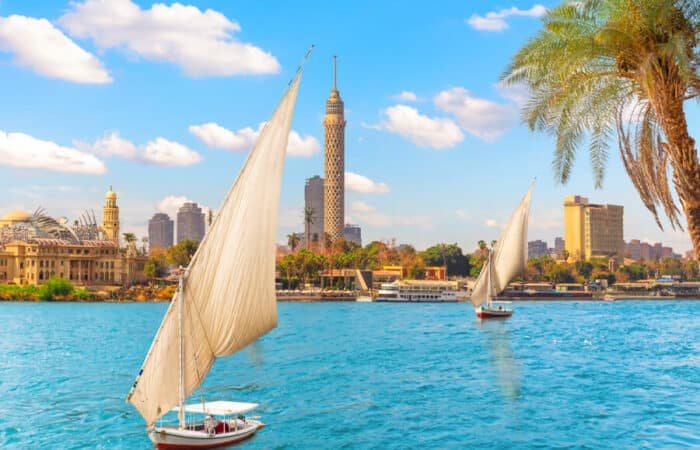
| Felucca captain | 20–50 EGP (short) / 50–100 EGP (multi-hour) | End of trip | Scale to duration |
| Bathroom attendant | 5–10 EGP | After using facilities | Coins are fine |
| Unofficial site helpers | 10–20 EGP if genuinely useful | After assistance | Only if you chose to accept the help |
EGP amounts above are based on the 2026 exchange rate of approximately 48–50 EGP to 1 USD.
To get the most authentic experience, learn how to travel Egypt like a local and discover hidden gems beyond the usual tourist spots.
Understanding Baksheesh — The Culture First, the Numbers Second
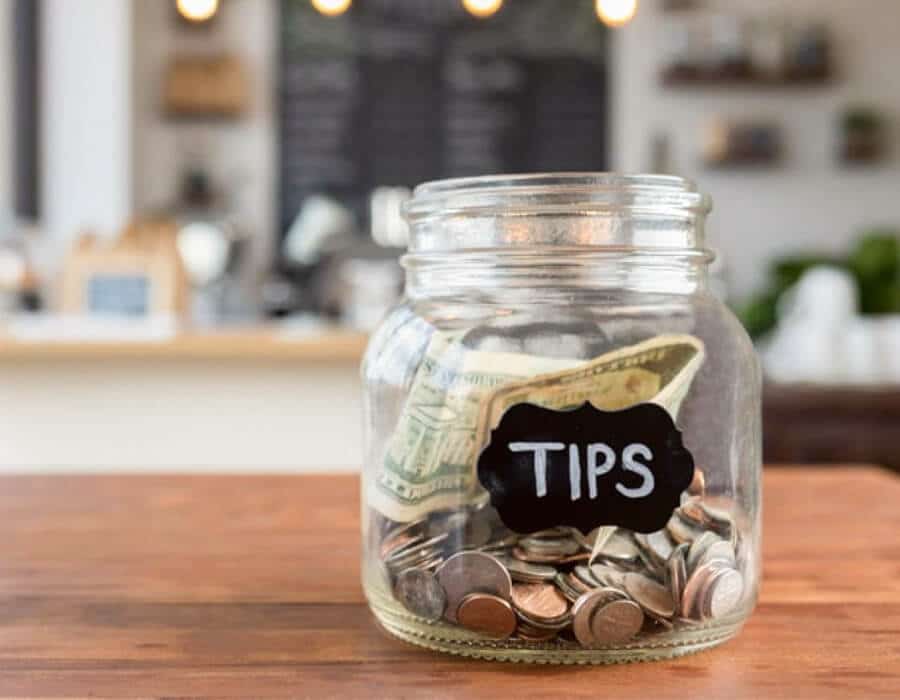
Baksheesh (باقشيش) is an Arabic word with a broader meaning than the English “tip.” It encompasses gratuity for services, charitable giving, and a wider culture of generosity and acknowledgement that runs through everyday Egyptian social life. In Egyptian culture, giving baksheesh is not understood as optional charity — it is a normal part of economic exchange, a way of distributing money through the economy in a country where wages in the service sector are extremely low by international standards.
To give you concrete context: when the Egyptian pound fell sharply against major currencies in recent years, imported goods became dramatically more expensive for ordinary Egyptians. The service workers you encounter — guides, drivers, hotel staff, restaurant staff — have seen the cost of basic necessities rise significantly while their base salaries have not kept pace.
The amounts you tip in foreign currency or Egyptian pounds are, in many cases, a meaningful portion of a working person’s weekly income. This is not said to create guilt, but because understanding the economic reality genuinely changes how tipping feels — from an uncomfortable social obligation to a straightforward act of fairness.
The best attitude to bring to tipping in Egypt is not reluctance, and it is not recklessness either. It is informed generosity: knowing what is appropriate, giving it without drama, and understanding that your few dollars or extra pounds are not trivial to the person receiving them.
Currency note: For larger tips — guides, drivers, multi-day cruise staff — USD and EUR are genuinely preferred because they hold stable value. For day-to-day smaller tips — housekeeping, restaurants, bathroom attendants — Egyptian pounds are more convenient and equally appreciated.
Want to explore Egypt by yourself? Check out our complete guide on Traveling Alone in Egypt.
Tipping Your Tour Guide
This is the most important single tipping decision you will make on an Egypt trip, and the one that matters most to get right.
Your guide has typically invested years of study, licensing examinations, and accumulated experience to be able to show you what they show you. They know which tomb to visit before the tour buses arrive. They know where the light falls on the temple reliefs at a specific time of day. They carry the history and culture of their country in their head and share it with you for a full day.
A full day of guiding is physically and intellectually demanding work: eight or nine hours on your feet in the heat, managing logistics, reading your mood, calibrating the pace of information to what you need. The tip at the end is your direct acknowledgement of all of this.
What to Give
- Private day tour: $10–$20 USD per person
- Multi-day private tour: $15–$25 USD per person per day
- Exceptional service: tip toward the upper end or beyond it without hesitation
Give the tip directly to your guide in person, at the end of the tour. Do not leave it in an envelope at the hotel front desk or ask someone else to pass it on. The personal handover, with a direct thank you, is the correct way to do it.
From pyramids to Nile cruises, our Your Guide to Book Egypt Budget Tour Packages helps you experience Egypt on a budget.
Tipping Your Driver
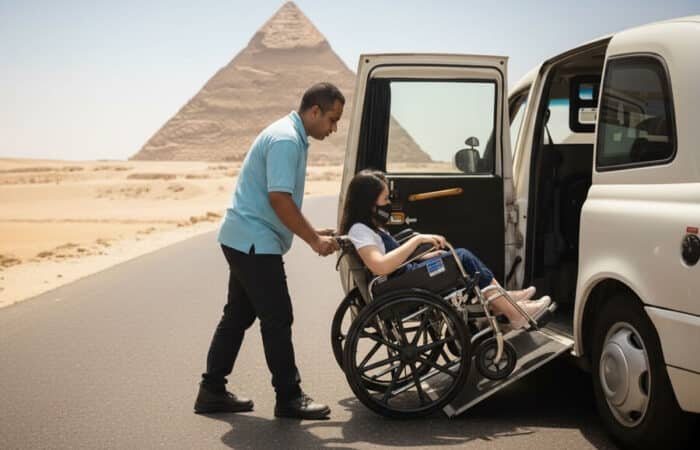
Your driver should always be tipped separately from your guide — they are different people doing different jobs, and the tip should reflect that distinction. A driver on a day tour is responsible for your safety, your punctuality, and your comfort for the entire day. They navigate Cairo traffic, wait for you at each site, manage the vehicle in temperatures that can reach 40°C, and often assist with luggage alongside their core driving role.
What to Give
- Private driver (day tour or multi-day): $5–$10 USD per person per day
- Airport transfer only: 50–150 EGP for a smooth, professional service
A common mistake: when a guide and driver work together on a multi-day tour, tourists sometimes give one combined amount to the guide and assume it will be shared. This is not a reliable arrangement — tip each person separately, directly, and in the right amount for their role.
Hotel Tipping: A Room-by-Room Guide
Porter (Bags to Your Room)
20–50 EGP per trip. Give it when they leave your room, not when you hand over your bags in the lobby. Per trip, not per bag — the trip, not the weight, is the service.
Housekeeping
20–50 EGP per night, left on the pillow or the desk each morning. The “leave it at checkout” approach misses the point — housekeeping staff rotate, so the person cleaning your room on Tuesday may not be the same person as on Wednesday. Daily tipping reaches the right person. If you cannot manage daily tips, leave a larger amount (100–200 EGP) clearly visible at checkout with a note.
Doorman / Concierge
20–50 EGP for meaningful assistance — hailing a taxi, making a reservation, handling a request that required effort. Not for holding a door.
Room Service
If a service charge is not already included on the bill (check), 15–20 EGP per delivery is appropriate.
At Checkout
If a member of the team provided consistently exceptional service over a multi-day stay — the concierge who sorted a problem, the breakfast waiter who remembered your coffee order every morning — a specific tip to that person at the end of your stay is the right way to acknowledge it.
From temple visits to Nile cruises, our guide on What to Wear in Egypt ensures you’re prepared for every experience.
Restaurants and Cafés
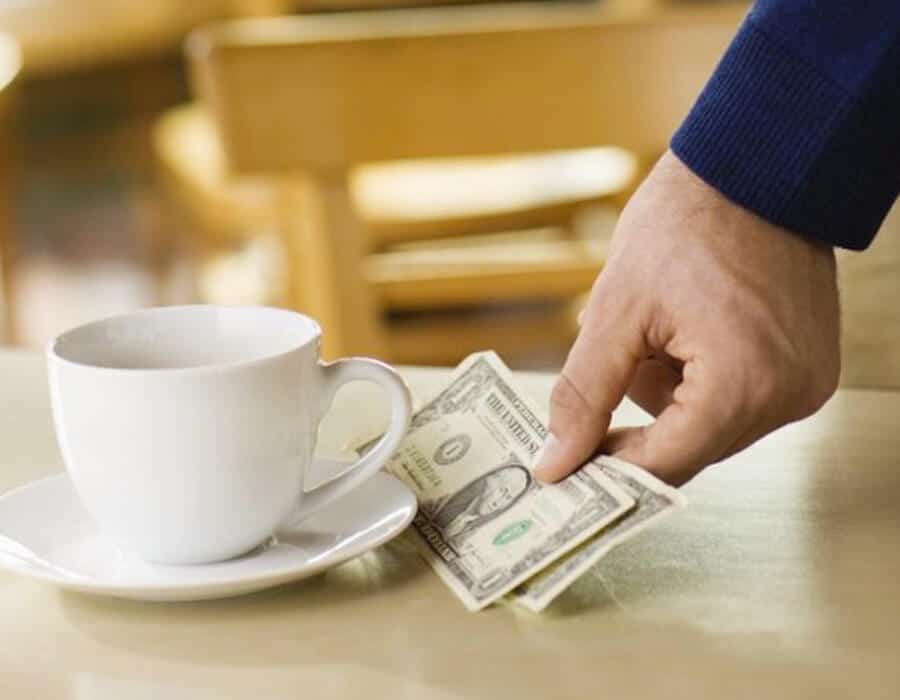
In tourist-area restaurants: check the bill before tipping. Many restaurants in tourist zones add a service charge of 10–12% automatically. If it is on the bill, you have already tipped — adding another 10–15% on top is not expected. If there is no service charge, 10–15% of the bill is the right amount.
In local restaurants: a service charge is rare. Leaving 10–20 EGP for a modest meal or 20–50 EGP for a more substantial one is appropriate and appreciated.
For cafés and casual spots: 5–10 EGP for counter service or a simple coffee is a kind gesture but not an obligation. El-Fishawy Café in Khan el-Khalili and similar well-known tourist destinations: a 10% tip is appropriate.
Taxis and Ride-Share
For standard metered taxis: round up to the nearest convenient number — if the fare is 47 EGP, giving 50 and waving off the change is standard. For a longer journey or particularly good service, 10–20 EGP extra is appropriate.
For Uber and Careem: a tip is not required through the app but is appreciated in cash at arrival — 10–20 EGP for a standard trip.
Do not tip a taxi driver who has overcharged you or attempted to charge more than the agreed fare. Paying the agreed amount and nothing more is the correct response.
Nile Cruise Tipping
A Nile cruise involves a large number of staff — cabin attendant, restaurant waiters, bar staff, deck crew — and tipping each one individually would be logistically impractical.
The standard approach: $5–$10 USD per person per day as a total crew tip, given at the end of the cruise to the head waiter, who distributes it among the crew.
A 5-day cruise for two people: $50–$100 total for the crew tip is appropriate.
Your excursion guides on a Nile cruise are usually separate from the ship crew and should be tipped according to the guide/driver guidelines above at the end of each excursion.
Explore top attractions and activities with our guide to the Best Things to See and Do in Egypt.
Unofficial Helpers at Tourist Sites
At every major tourist site in Egypt — the Pyramids, the Valley of the Kings, the temples — you will encounter people who offer unsolicited help: pointing out features, offering to photograph you, suggesting directions. These are not site employees. They are unofficial helpers working on the expectation of baksheesh.
The rule: if you did not ask for help and would have been fine without it, you have no obligation to tip. If someone genuinely helped you — took a good photograph, explained something valuable — 20–50 EGP is appropriate.
Declining politely: “La’, shukran” (No, thank you) said clearly once, with a small wave and a steady walk away, is universally understood. Once you have accepted help, the expectation of payment follows — and that is entirely reasonable.
Specific Situations to Know
- Pyramids of Giza: camel photo offers, free photo offers, and ‘exclusive angle’ guides are all commercial interactions dressed as friendly offers. Nothing wrong with any of them if you want what’s being offered — just know what you are agreeing to before you agree.
- Valley of the Kings: some guards may offer to illuminate additional details or open locked grilles. 20–50 EGP is the expected amount. You are entirely within your rights to decline.
Tipping at Mosques, Churches, and Religious Sites
At active religious sites where a caretaker has let you in, shown you around, or explained something specific, a small baksheesh of 20–50 EGP is appropriate and respectful. This applies particularly at smaller mosques, Coptic churches in Old Cairo, and sites that are not on the main tourist circuit. At major ticketed sites, tipping is not required simply for entry — but a small acknowledgement for specific assistance is always appropriate.
How Much Cash to Bring for Tips
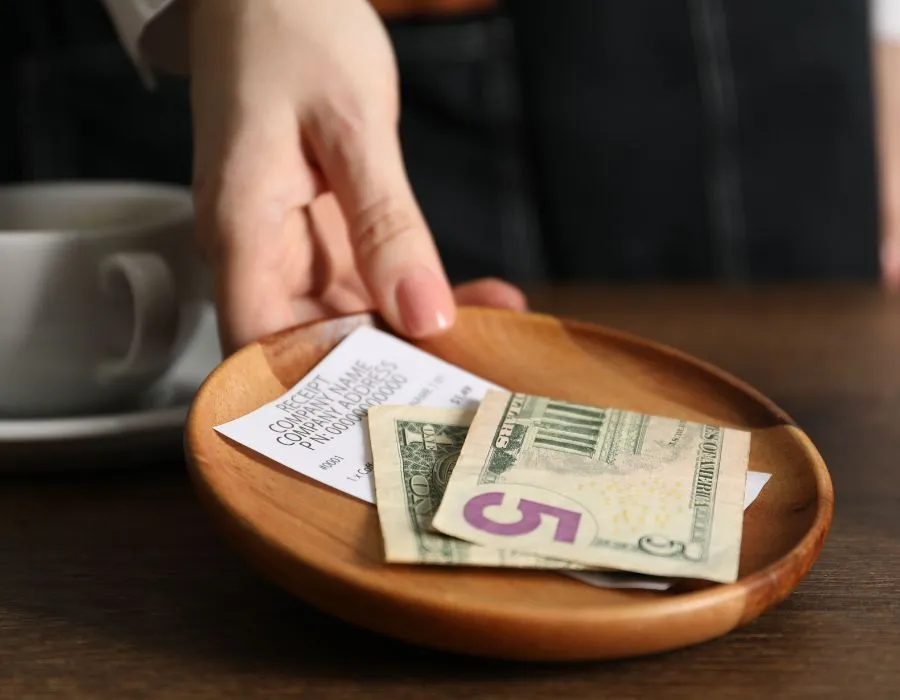
Plan your tip cash separately from your general spending money. Running out of small bills is one of the most avoidable sources of awkwardness on an Egypt trip.
| Trip Type | Suggested Daily Budget (per person) | 10-Day Total Per Person |
| Budget traveller (group tours, budget hotels) | $5–$10 USD equivalent in EGP | $50–$100 |
| Mid-range (private day tours, 3–4 star hotels) | $15–$25 USD | $150–$250 |
| Luxury (private touring throughout, 5-star hotels) | $30–$60 USD | $300–$600 |
Practical Cash Management
- Bring small denomination USD bills ($1, $5, $10) — far more useful than $50 or $100 bills
- Withdraw EGP at bank ATMs on arrival (Banque Misr, CIB, and QNB machines are reliable at Cairo Airport)
- Ask the ATM for a mix of 20s, 50s, and 100s — 200 EGP notes are too large for most daily tips
- Replenish your small bill supply every 2–3 days — running out mid-trip is easily avoided
- Keep two separate sections in your wallet: one for general spending, one for tips so you are never fumbling at the wrong moment
From transport to sightseeing, knowing how safe it is to travel to Egypt will help you enjoy your journey with peace of mind.
When Tipping Feels Uncomfortable
There will be moments when the request for baksheesh feels relentless or unwelcome. When you have already tipped twice in a morning and a third person gestures hopefully, it is natural to feel some fatigue. A few things that help:
Distinction matters. There is a difference between a service worker who has done their job well and is being acknowledged (tip appropriately), and someone asking for money without having rendered a service (a polite no is correct). You do not owe baksheesh to everyone who asks.
Saying no is fine. “La’, shukran” is complete. You do not need to explain, apologise, or engage further. People asking for baksheesh in Egypt are rarely aggressive — they will move on if the answer is clearly no.
Keep it in perspective. A 50 EGP tip — less than $1 USD — is genuinely meaningful to a bathroom attendant or a casual helper at a monument. The economic gap between what these amounts mean to you and what they mean to the recipient is one of the real asymmetries of international travel.
Frequently Asked Questions
Is tipping mandatory in Egypt?
Tipping is not legally mandatory but is deeply embedded in the service culture and is effectively expected in tourist-facing contexts. Not tipping your guide and driver at the end of a tour, or leaving a hotel without acknowledging housekeeping, is considered poor form and will be noticed. The amounts involved are small in international terms but significant to the recipients.
What is baksheesh?
Baksheesh (باقشيش) is the Arabic term for gratuity, charitable giving, or a tip. In Egyptian culture it has a broader meaning than the English ‘tip’ — it encompasses a general culture of acknowledging service and distributing small amounts of money as a normal part of economic exchange. Understanding baksheesh as a cultural practice, rather than resenting it as pressure, makes the Egypt experience significantly more enjoyable.
Should I tip in Egyptian pounds or US dollars?
For small, everyday tips (housekeeping, restaurants, bathroom attendants, taxis): Egyptian pounds are most practical and convenient. For larger tips to guides and drivers: USD or EUR are genuinely preferred because they hold stable value. Bring both currencies and use the appropriate one for the context.
Do you tip at all-inclusive resorts in Egypt?
Yes. All-inclusive pricing covers food and drink but does not replace service tips. At an all-inclusive resort in Sharm el-Sheikh or Hurghada: tip housekeeping 20–50 EGP per night, restaurant staff 10–30 EGP per meal, and specialist staff individually. The all-inclusive model does not change the tipping culture for service workers.
How do I tip a group tour guide vs. a private guide?
For a group tour (8+ people), the guide is shared among many clients: $5–10 USD per person per day is standard. For a private guide — exclusively dedicated to your group — $10–25 USD per person per day reflects the personalised attention and undivided knowledge that private guiding involves. Private guiding is a fundamentally different service.
When exactly do I give the tip — before or after?
Always after the service is complete. Tip your guide and driver at the end of the day or tour, not before. Tip hotel housekeeping at the start of each day (for the previous day’s service). Tip restaurant staff when paying. Tipping before a service in Egypt, outside of very specific contexts, is not standard practice.
What if the service was genuinely poor?
You are not obligated to tip for service that was genuinely substandard. A partial tip — toward the lower end of the range — communicates dissatisfaction more clearly than no tip, which can be misinterpreted as forgetfulness. If service was seriously poor, speaking to the tour operator directly is the appropriate additional step.
Is it rude to tip too little, or can I over-tip?
Under-tipping is more problematic than over-tipping in Egypt. Tipping significantly above the guideline amounts is never awkward — it is received as generosity. For context: tipping a guide $30 instead of $20 for an exceptional day costs you $10 and means a great deal to them. Extreme over-tipping for minor services can occasionally create awkward dynamics, but this is rarely a practical problem.
Don’t miss to check: