
By Magdy Fattouh | Egypt Tours By Locals | Last Updated: March 2026
Every year, I get the same question from clients considering an August trip: “Magdy, is it really that bad?” My honest answer has always been the same: it depends entirely on how you plan it. In 20+ years helping travellers experience Egypt, I’ve seen August trips go spectacularly right — and watched others wilt by 10am on day one. The difference is never luck. It’s always planning.
Egypt in August is hot. Genuinely, seriously hot. In Luxor and Aswan, daytime temperatures reach 42°C (107°F). Cairo sits at a more manageable 36°C (97°F). But here’s the thing that most travel guides miss: this country has been hosting visitors through summer heat for five thousand years. The temples were built to be cool inside. The Nile was always the escape route. And the Red Sea — warm, calm, and extraordinary in August — is arguably at its very best this month.
August is also when international tourist numbers drop by 40–60% compared to peak season (according to Egypt’s Ministry of Tourism data), which means the Pyramids at sunrise belong almost entirely to you. And the pricing difference is real: Nile cruises, private tours, and hotels across Upper Egypt cost 30–55% less than in November or January.
This guide is built on what I’ve learned planning hundreds of August trips. It’s not a collection of generic heat tips — it’s the specific, experience-tested knowledge of someone who has been on the ground with international travellers in every corner of Egypt, in every month, for two decades.
What this guide covers:
- City-by-city temperature table with planning notes for each region
- 7-day sample August itinerary with exact timing and Magdy’s scheduling notes
- The Grand Egyptian Museum — why it changes the August Cairo experience completely
- Dolphin House, Wafaa El-Nil, and the Citadel Festival — August-specific highlights most guides miss
- The domestic tourism warning — why Red Sea resorts fill with Egyptian families in August
- Packing checklist, honest budget breakdown, and practical FAQ

Egypt Weather in August: City-by-City Temperature Guide
The single biggest mistake travellers make before an August trip to Egypt is reading a single headline temperature — ‘Egypt in August: 40°C’ — and imagining that applies uniformly across a country the size of France, Spain, and Germany combined. It doesn’t. The temperature gap between Alexandria on the Mediterranean coast and Aswan in Upper Egypt can exceed 12°C on the same day. Where you go in August matters as much as when you go.
| City / Region | Avg High | Avg Low | Humidity | Planning note |
|---|---|---|---|---|
| Cairo & Giza | 36°C / 97°F | 23°C / 73°F | 20–30% | Plan outdoor activity before 10am or after 5pm |
| Luxor & Aswan | 42°C / 107°F | 27°C / 81°F | 15–25% | Hottest region — sunrise-only outdoor touring |
| Alexandria & Med. Coast | 30°C / 86°F | 22°C / 72°F | 60–70% | Coolest city; sea breeze; good for afternoon walks |
| Hurghada & Red Sea Resorts | 36°C / 97°F | 26°C / 79°F | 35–45% | Ocean breeze; peak dolphin season; book ahead |
| Sharm El Sheikh & Sinai | 37°C / 99°F | 27°C / 81°F | 35–40% | World-class dive sites; Ras Mohammed Park |
| Marsa Alam | 36°C / 97°F | 25°C / 77°F | 35–45% | Quietest Red Sea base; sea turtles & dugongs |
| Siwa Oasis | 38°C / 100°F | 22°C / 72°F | 15–20% | Unique Berber culture; Oracle Temple; salt lakes |
Averages based on regional climate data, 2018–2025.
Note: temperatures in the first half of August run 3–4°C higher than the second half in inland cities — a meaningful difference when planning your travel dates.
Magdy says:
“The question I always ask clients first is: where do you actually want to spend your time? If the answer is Luxor and Aswan, I’m honest with them — it will be very hot, but we plan around it. If they tell me they just want warmth, good beaches, and the pyramids, I can design an August trip that barely feels like summer travel at all.”
First half vs second half: does timing matter?
Yes — more than most people realise. The first half of August (1–15) tends to run 3–4°C hotter than the second half in Cairo and Upper Egypt. By mid-August, temperatures begin their gradual retreat toward the slightly more forgiving September range. If your dates are flexible, travelling from August 16 onwards makes a genuine practical difference, especially for anyone spending time at Luxor, Aswan, or Abu Simbel.
Humidity and rainfall
Egypt in August is virtually rain-free — most regions see zero measurable rainfall. Inland cities (Cairo, Luxor, Aswan) carry humidity between 15–30%, which makes the heat feel intense but dry. Alexandria and the Mediterranean coast run at 60–70% humidity — significantly more humid, but offset by consistent sea breezes and temperatures up to 12°C cooler than Upper Egypt.
Daylight and UV
- Daylight: ~13 hours (sunrise ~6:30am, sunset ~7:30pm)
- UV Index: peaks at 10–11 — classified as extreme by WHO standards. Unprotected skin burns in under 15 minutes between 10am and 4pm
- Best outdoor windows: 6am–10am and 5pm–7:30pm — these aren’t compromises, they’re genuinely when Egypt is most beautiful
Heat note: The first half of August (1–15) is statistically the hottest two-week period on Egypt’s annual calendar. If you’re planning to spend significant time at Luxor or Aswan and have any flexibility on dates, the second half of August offers a measurably easier experience.
Best Destinations to Visit in Egypt in August
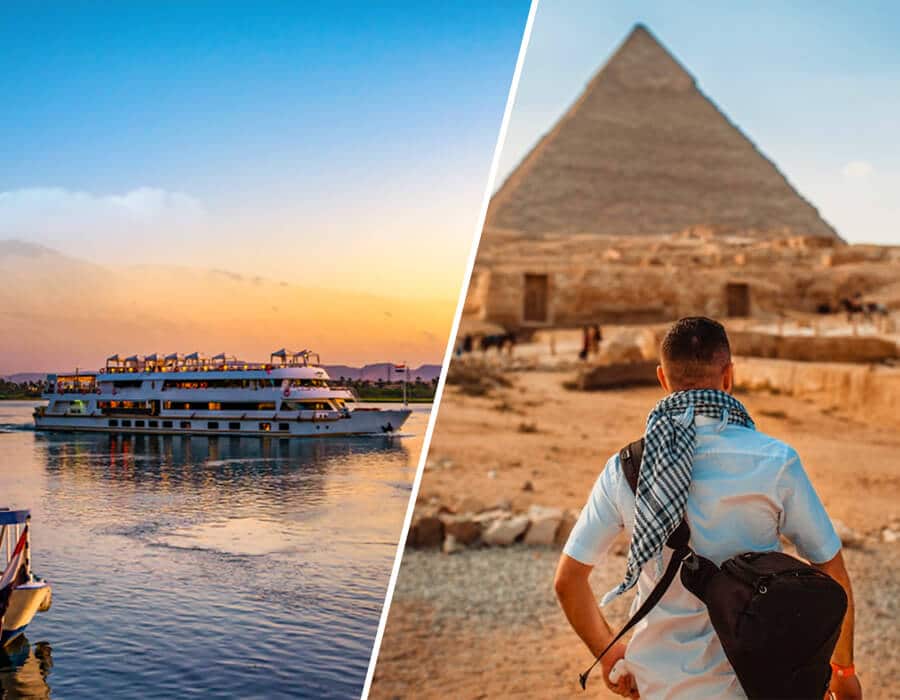
Egypt in August doesn’t mean choosing between comfort and culture. It means choosing the right combination of both — coastal time balanced with early morning historical touring, and strategically brilliant indoor experiences in between. Here’s where to go, and why.
Cairo & Giza: How the Grand Egyptian Museum Changed Everything
For years, the honest answer to “what do you do in Cairo between 10am and 5pm in August?” was: stay at your hotel. The Egyptian Museum in Tahrir Square was old, crowded, and not reliably air-conditioned. The Citadel was outdoors. Cairo’s other cultural sites required walking in the sun. For summer travellers, Cairo was always a morning destination — brilliant at sunrise, logistically awkward for the rest of the day.
That changed in late 2025, when the Grand Egyptian Museum (GEM) reached full operational capacity. It’s now one of the most significant museum openings in a generation — and it happens to solve the August Cairo problem completely.
Magdy says:
“I visited the GEM in January 2026 to assess it properly for our summer clients. What struck me most wasn’t the Tutankhamun gallery — extraordinary as it is — but the sheer scale of the air-conditioned space. You can spend five or six hours inside without once feeling rushed, and you’ll still leave knowing there’s more to see. For August travellers, it’s genuinely transformative.”
The GEM is built on 117 acres at the foot of the Giza Plateau, with direct views of the pyramids from its Grand Staircase. The full collection exceeds 100,000 artefacts — roughly five times what the old Cairo Museum could display at once. Here’s what matters for August planning:
- The Grand Staircase: A monumental ascending hall lined with ancient statuary, including colossal statues of Ramesses II that were too large to display anywhere else in Egypt. It’s the most dramatic entrance sequence of any museum in the world — and completely climate-controlled
- The Tutankhamun Galleries: The complete Tutankhamun collection is displayed together for the first time in history — over 5,000 objects including the famous gold death mask, the throne, and the outermost golden shrine. Dedicated galleries, purpose-built lighting, and space to actually study each piece without the crushing crowds of the old museum
- The Solar Boats of Khufu: Two ancient wooden boats discovered buried at the foot of the Great Pyramid — the largest and oldest preserved wooden vessels in the world. One was painstakingly reassembled over decades; both are now displayed in a purpose-designed climate-controlled wing of the GEM
- The Children’s Museum and Educational Spaces: Well-designed for family visitors with interactive elements — genuinely child-friendly in a way that makes the GEM the best August choice for families in Cairo
- The rooftop terraces: Stunning pyramid views — best accessed in the morning or late afternoon when the temperature outside is manageable; avoid at midday
- Practical logistics: Allow 4–6 hours minimum. Restaurant and café inside. Dedicated parking. Book tickets in advance at gem.gov.eg — August does sell out on peak days, particularly weekends and public holidays
Planning tip: Combine GEM (morning) with the outdoor Giza Pyramids (very early morning on a separate day). Trying to do both on the same day in August leads to exhaustion. Give the GEM its own day — it deserves it.
For outdoor Cairo, the rule remains: before 10am. The Giza Pyramids at 7am are genuinely one of Egypt’s most powerful experiences — cool air, the desert still quiet, soft early light on the limestone faces of the Great Pyramid. Many clients tell me it’s the single best moment of their entire Egypt trip, and a large part of what makes it so is the absence of midday crowds. Khan El Khalili bazaar works well for evening visits — covered walkways, shaded tea houses, and the genuine atmosphere of one of the Middle East’s great markets.
Read Our Full guide about: best hotels in Cairo →
Luxor & Aswan: Sunrise Archaeology on the Nile
These are Egypt’s hottest cities in August, and I won’t minimise that. But they’re also Egypt’s most extraordinary cities — and the experience of standing at the entrance of the Valley of the Kings at 6am, with the desert completely still and the cliffs turning pink in the morning light, is worth every concession you make to the heat.
The practical playbook is simple: all outdoor touring before 10am, midday in your hotel, and evening for the light shows, felucca sailing, and Nile-side dining. The underground tombs in the Valley of the Kings have a natural advantage in August — the temperature inside the tombs remains around 20–22°C year-round, carved as they are into the rock of the Western Bank. You enter the heat and step into something that feels remarkably cool by comparison.
Magdy says:
“Luxor in August is where I see the biggest transformation in clients from the moment they arrive to the moment they leave. They arrive nervous about the heat. On day two, after a 6am Valley of the Kings visit, they always say the same thing: I didn’t expect it to be like this. It’s because we design every August Luxor itinerary around the rhythm of the Egyptian summer, not against it.”
In Aswan, the best August experiences are Philae Temple by motorboat (the approach across the water is genuinely beautiful at any time of day), the Unfinished Obelisk (a quick visit, largely in the shade of the surrounding stone), and an evening felucca on the Nile. Nubian villages just south of Aswan are a cultural highlight — the Nubian community maintains a distinct culture, language, and architectural style that differs markedly from mainstream Egyptian culture, and visiting with a guide who has relationships in the community makes a significant difference.
For Abu Simbel: take the early morning charter flight that departs Aswan around 5am and returns by 9–10am. You arrive when the temples are bathed in early light, tour in the relative cool, and are back in your Aswan hotel pool before the worst of the midday heat. In August, the alternative — a four-hour road transfer each way — is not a realistic option for most travellers.
Red Sea Riviera: Hurghada, Sharm El Sheikh & Marsa Alam

Critical planning note: August is Egypt’s domestic beach high season. Egyptian families from Cairo, Alexandria, and the Nile Delta cities fill Red Sea resorts from mid-July through August. Major resorts in Hurghada and Sharm El Sheikh can be fully booked by June. Book your Red Sea accommodation at least 2–3 months in advance — this is not a general travel recommendation, it’s a specific August reality.
The reward for planning ahead is significant. The Red Sea in August offers warm, calm water — ideal for diving and snorkelling, with visibility often exceeding 20–30 metres according to dive operators in the region. The big August highlight in Hurghada is Dolphin House — a shallow reef approximately 25km north of the town where spinner dolphin populations peak during summer months. August is widely considered the single best month to snorkel or dive with wild dolphins in Egypt, with pods of 50–200+ animals regularly sighted.
- Hurghada: Most accessible base; glass-bottom boats, Dolphin House excursions, Orange Bay island trips, kite surfing at El Gouna
- Sharm El Sheikh: World-class diving — Ras Mohammed National Park, Shark Bay, Thistlegorm wreck dive; Coloured Canyon accessible by 4WD
- Marsa Alam: Quieter than Hurghada and Sharm; peak season for sea turtles at Abu Dabab bay and dugong sightings at Marsa Mubarak
- Dahab: Laid-back alternative to Sharm; famous for Blue Hole and Canyon dive sites; popular with long-stay divers
Alexandria: Egypt’s Coolest August City
At 30–32°C (86–89°F), Alexandria runs up to 10–12°C cooler than Luxor on the same day. Mediterranean sea breezes make afternoon walking genuinely pleasant in ways that are simply not possible inland. The Bibliotheca Alexandrina is one of the world’s great contemporary libraries and cultural centres — air-conditioned, architecturally extraordinary, and home to excellent museums of science and antiquities within the complex. The Corniche waterfront is at its most lively in August evenings, when Alexandrians themselves come out to walk, eat, and socialise by the sea.
Food tip: Try sayyadiyya (spiced fish with rice) or fresh-grilled sea bream. See: popular Egyptian foods →
Siwa Oasis: The Off-the-Beaten-Path August Choice
Siwa Oasis sits 550km west of Cairo in the Libyan Desert, and it occupies a genuinely different world from anything else in Egypt. The Berber-speaking Siwan community maintains a culture, language, and architectural tradition distinct from mainstream Egyptian life. In August, the surrounding desert makes it hot — but the salt lakes (particularly Lake Siwa and Bir Wahed hot spring) provide natural swimming, and the oasis’s dense palm groves and mud-brick fortresses make it dramatically photogenic at any time of day.
The Oracle Temple of Amun at Siwa — where Alexander the Great famously sought divine confirmation of his Egyptian legitimacy in 331 BC — is the most historically significant site in the oasis, and it receives a fraction of the visitors of any comparable Egyptian site. For independent travellers with time (6–7 hour drive from Cairo, or overnight bus from Cairo’s Turgoman station), Siwa in August is one of Egypt’s most rewarding and least-discovered experiences.
Sample 7-Day Egypt Itinerary for August
This itinerary is built around the principles that make August Egypt travel work: outdoor activity early and late, midday in air-conditioned environments, and a Red Sea finale that rewards you for making it through the heat of Upper Egypt. I’ve refined this structure across many August tours — the sequencing is deliberate.
| Day | Base | Magdy’s Recommended Schedule |
|---|---|---|
| Day 1–2 | Cairo | Day 1: Giza Pyramids at 7am — arrive before the heat and the crowds. After 10am: check into hotel, rest or pool. Late afternoon: Khan El Khalili bazaar (covered, shaded walkways). Day 2: Grand Egyptian Museum — full morning and early afternoon. This is the most important single day of an August Cairo visit. Evening: Nile-side dinner, or Saladin Citadel area if the Citadel Festival is running. |
| Day 3 | Cairo → Luxor | Morning domestic flight to Luxor (45 min, ~$50–80). Check in, eat well, rest. Late afternoon: walk the Corniche along the Nile at 5pm when the light turns gold. Early evening: Luxor Temple (partially lit at dusk — a different experience from daytime visits). |
| Day 4 | Luxor | 5:30am departure: Valley of the Kings and Temple of Hatshepsut. Both are best between 6–9:30am — the interior tombs are naturally cool underground. Midday: hotel pool, rest, lunch. 5pm: Karnak Temple. Evening: Karnak Sound and Light Show (book ahead in August — it does sell out). |
| Day 5 | Luxor → Aswan | Board Nile cruise. Morning sail, passing Esna Lock — a slow, interesting process worth watching from the deck in the relative cool of the morning. Afternoon on deck with shade and breeze. Dusk arrival at Edfu: the Temple of Horus is stunning at golden hour from the water. |
| Day 6 | Aswan | Philae Temple by motorboat — one of Egypt’s most photogenic sites and genuinely manageable even in August with early timing. Unfinished Obelisk (quick, mostly shaded). Optional: Abu Simbel charter (5am flight, return by 10am — back at the hotel pool before the worst heat). Evening: felucca on the Nile at sunset, Nubian village visit. |
| Day 7 | Hurghada | Fly or drive from Aswan to Hurghada (~1hr flight or 3.5hr road). Afternoon: check in, beach, pool, recover. Dolphin House snorkelling trip — best arranged for the morning of Day 8 if you have flexibility. Peak spinner dolphin populations in August make this one of the best wildlife experiences in Egypt. |
Every itinerary we design is customised to the traveller. If you’d prefer more time at the Red Sea, a longer Nile cruise, or Abu Simbel as the centrepiece, we can build around your priorities. Message us on WhatsApp to start the conversation.
Activities & Experiences Worth Planning Around

Water-based activities: diving, snorkelling, Nile cruises
The Red Sea in August is one of the world’s most compelling dive environments. Water temperatures hover around 27–28°C, visibility frequently exceeds 20 metres, and marine life is abundant. The Professional Association of Diving Instructors (PADI) consistently ranks the Red Sea among the world’s top ten dive destinations, and August’s calm seas make it accessible to beginners and experienced divers alike.
- Dolphin House (Hurghada): Peak spinner dolphin season — pods of 50–200+ regularly sighted; snorkelling and diving both available
- Ras Mohammed National Park (Sharm): One of the Red Sea’s finest reef systems; calm August conditions make boat access straightforward
- SS Thistlegorm (Sharm): One of the world’s most famous wreck dives — a WWII British merchant vessel; August visibility is exceptional
- Nile River Cruises: Air-conditioned cabins, scenic Luxor-to-Aswan route, temple visits at dawn — the ideal way to experience Upper Egypt without sustained outdoor heat exposure
- Windsurfing and kiteboarding: El Gouna and Dahab both benefit from consistent August northerly winds — conditions are excellent
Early morning and evening touring
Magdy says:
“The pyramids at sunrise in August is one of those experiences that stays with people for life. The light comes up slowly from the east and catches the Great Pyramid face-on — the stone goes from grey to amber to gold in about twenty minutes. In peak season, you’re sharing that moment with hundreds of other people. In August, before 8am, you’re often sharing it with a handful. I’ve seen experienced travellers — people who’ve been everywhere — go completely quiet at the Giza plateau at dawn in August. That’s what this time of year can give you.”
- Giza Pyramids at 7am: Cool air, empty plateau, extraordinary light — the best version of Egypt’s most iconic site
- Valley of the Kings at 6am: Tomb interiors stay at 20–22°C year-round — a natural relief; soft morning light at the necropolis entrance
- Abu Simbel via morning charter: 5am departure from Aswan, arrive 7am, back by 10am — the entire visit in the coolest part of the day
- Karnak Sound and Light Show: Evening spectacle; no sun, no heat, genuinely spectacular narration and lighting of the temple complex
- Felucca on the Nile at sunset: Traditional wooden sailboats; the Aswan Nile at dusk is one of Egypt’s most peaceful experiences
See: best time to visit Egypt →
Cultural events in August
Wafaa El-Nil — Flooding of the Nile Day (begins August 15): Egypt’s ancient celebration of the Nile’s annual flood cycle, marked since Pharaonic times. The modern festival begins on August 15 — Flooding of the Nile Day — and runs for approximately two weeks, with music, boat processions, and cultural events in Cairo and Luxor. It’s one of the few genuinely Egyptian cultural events (as opposed to tourist-facing shows) that August visitors can experience, and the opening days are the most atmospheric.
Citadel Festival for Music and Singing (Cairo): An annual summer music festival held at the Saladin Citadel — one of Cairo’s most dramatic medieval landmarks. The festival features Arab and Egyptian musicians and singers performing in an open-air amphitheatre against the backdrop of the Citadel’s towers. Evening timing makes it entirely manageable in August; check current scheduling with the Cairo Opera House or Egyptian Ministry of Culture as exact dates vary by year.
Alexandria Mediterranean Countries Film Festival: A celebration of cinema from Mediterranean nations, held in Alexandria during summer. The combination of Alexandria’s relative cool, its historic cinematic culture, and the festival atmosphere makes it a worthwhile stop for culturally-oriented travellers. Exact dates vary — confirm with the Alexandria Cultural Centre before arrival.
Festival tip: Wafaa El-Nil on August 15 is fixed and predictable — build your Cairo dates around it if cultural immersion is a priority. The Citadel Festival varies by year; contact us and we’ll confirm current scheduling before you finalise your trip.
Essential Travel Tips for August in Egypt
Clothing: cover up, not down
The counterintuitive reality of Egypt in August is that long, loose linen or cotton clothing is more comfortable than shorts and a t-shirt. Long sleeves and trousers protect skin from direct UV radiation — which at UV Index 10–11 is severe — while allowing air to circulate. They also satisfy the modest dress required at mosques, temples, and rural communities, eliminating the need to carry a separate wrap.
- Lightweight linen or cotton — the two materials that actually breathe in dry desert heat
- Wide-brimmed hat — the single most practical item you can bring
- UV-protective polarised sunglasses — polarised makes a notable difference at reflective sites like Aswan’s Nile and the Red Sea
- Cooling towel or neck wrap — dramatically more effective than most people expect
- Modest outfit for religious sites — shoulders and knees covered, carried or worn at all times
Hydration: the one thing you cannot underestimate
Dehydration is the primary health risk for tourists in August Egypt. The low humidity (15–30% in inland areas) means you lose moisture faster than you feel thirsty — the standard thirst signal is significantly delayed in very dry heat. By the time you feel thirsty in Luxor in August, you are already dehydrated.
- 3 litres minimum per day — more on active touring days
- Electrolyte tablets or ORS sachets — available in every Egyptian pharmacy; essential, not optional
- Avoid caffeine during outdoor time — it accelerates fluid loss
- Carry a personal spray bottle — misting face and neck gives immediate cooling relief
- Eat water-rich foods: Egyptian watermelon, cucumber, tomatoes, and freshly squeezed juice (carrot, mango, and sugarcane are all excellent and widely available)
Medical emergency: If anyone in your group becomes very hot, stops sweating, and shows confusion or slurred speech — this is heat stroke, not heat exhaustion. Move to shade immediately, apply cool water to skin, and call for emergency assistance. Egyptian resorts and major hotels all have medical staff available.
Read our full guide about: Tipping in Egypt →
Structuring your day
- 6:00–7:00am: Begin all outdoor touring — coolest temperatures, best light for photography, minimal crowds
- 10:00am–5:00pm: Indoor activities: Grand Egyptian Museum, Bibliotheca Alexandrina, hotel pool, shopping centres, air-conditioned restaurants, afternoon rest
- 5:00–7:30pm: Resume outdoor activity — golden hour light, falling temperatures, bazaars come alive
- Evening: Sound and light shows, felucca rides, Nile Corniche walks, beachfront dining, Citadel Festival (if running)
Getting around
- Private air-conditioned transfers: Non-negotiable between major sites in August — not a luxury, a genuine health consideration
- Careem or Uber Cairo: Always safer and clearer on pricing than unmarked taxis; both operate reliably in Cairo
- Domestic flights: Cairo–Luxor, Luxor–Aswan, Luxor–Hurghada, and Aswan–Hurghada routes are inexpensive (~$45–80) and save hours of heat exposure compared to road travel
- First-class train (Cairo–Luxor–Aswan): Budget-conscious option with reliable air conditioning; book tickets at least 2–3 days ahead at Egyptian National Railways
Avoiding common tourist traps
August’s lower international crowds reduce some pressure near major sites — but tourist-targeted scams still operate, particularly around the Giza Plateau and Luxor’s West Bank.
- Unsolicited gifts: A scarf or trinket offered freely near the pyramids is never free. Decline with a smile: ‘La shukran’ (no thank you)
- Unlicensed guides: Only officially licensed Egyptian Tourism Authority guides carry a laminated badge with photo ID. Book guides through your tour operator
- Taxi pricing: Always agree a price before entering an unmarked cab, or use Careem/Uber for transparent metered pricing
- Entry tickets: Buy only from official booths inside the site entrance — never from individuals at the gate or nearby
Safety and cultural awareness
Egypt’s main tourist areas — Cairo, Luxor, Aswan, and Red Sea resorts — are considered safe for international visitors following standard travel precautions. Both the U.S. State Department and UK Foreign Commonwealth and Development Office (FCDO) support travel to these tourist zones with normal travel awareness.
- Dress modestly, especially in rural areas and when visiting any religious site
- Avoid photographing military installations, government buildings, or people without permission
- Friday midday sees reduced trading hours near mosques — factor this into market visit plans
- Travel insurance covering medical evacuation is strongly recommended for any Egypt trip in summer
Budgeting for Egypt in August: The Real Numbers
August is firmly within Egypt’s low international tourism season for historical and cultural travel — hotels, Nile cruises, and private tours across Cairo and Upper Egypt run 30–55% cheaper than peak November–February season. The pricing shift is real and substantial. However, it’s worth understanding one important exception: Red Sea resorts are in domestic high season in August, which means pricing there is higher than shoulder months, and availability is tighter.
| Expense | Peak Season (Nov–Feb) | August Low Season | Saving |
|---|---|---|---|
| Mid-range hotel / night | $80–$120 | $40–$70 | ~45% |
| Group day tour | $50–$70 | $30–$50 | ~35% |
| Private day tour | $120–$180 | $70–$110 | ~38% |
| 3-night Nile cruise | $350–$500 | $220–$350 | ~35% |
| Domestic flight (avg.) | $90–$120 | $45–$80 | ~40% |
| 5-star Red Sea all-inclusive | $200–$350 | $90–$160 | ~55% |
Prices are approximate USD averages based on market data as of early 2026. Red Sea all-inclusive pricing reflects domestic peak demand — 5-star resorts in Hurghada command summer premiums from Egyptian guests. Book early.
Negotiating prices: how it works in Egypt
Bargaining is a genuine part of Egyptian commercial culture — especially in markets, with souvenir vendors, and for some tour activities. It’s not adversarial; approached correctly, it’s a social exchange that locals often enjoy. In August, with fewer international tourists, vendors are more motivated to close a sale.
Magdy says:
“The clients who get the best prices in Egyptian markets are never the aggressive ones. They’re the ones who engage genuinely — who pick up an item, ask the vendor where it came from, talk for a few minutes, and then name a fair price. The best phrase to know is ‘la shukran’ — no thank you. Said with a smile and a slow turn toward the exit, it closes about 70% of the gap between asking price and real price.”
- Start at 50–60% of the first quoted price in markets and bazaars
- ‘La shukran’ (no thank you) + slow walk away: the most effective negotiating tool in Egypt
- ‘Kam al-thaman?’ (how much?) shows basic Arabic respect — vendors genuinely warm to the effort
- For private tour pricing: 10–20% negotiation is reasonable in August; multi-day arrangements have more flexibility
- Best souvenir value: local markets in Luxor and Aswan — prices are consistently lower and quality higher than tourist-facing shops in Cairo
Full guide: what to wear in Egypt →
Egypt August Packing Checklist
Everything on this list comes from watching what actually matters when clients are on the ground in Egypt in August — not from a generic travel checklist.
Clothing & accessories
- Lightweight linen or cotton trousers and long-sleeved shirts
- Wide-brimmed hat or sun cap — non-negotiable
- UV-protective polarised sunglasses
- Modest outfit (shoulders and knees covered) for mosques and temples
- Swimwear for Red Sea resorts and hotel pools
- Cooling towel or neck wrap
- Sandals AND enclosed walking shoes for archaeological sites
- Light scarf or UV wrap — sun protection and cultural versatility
Health & safety
- SPF 50+ sunscreen — carry a personal bottle, not hotel supply
- Electrolyte tablets or ORS rehydration sachets
- Basic first-aid kit including blister plasters
- Hand sanitiser and travel tissues
- Personal mist fan or small spray bottle
- Travel insurance covering medical evacuation
Documents & money
- Passport + Egypt e-visa (apply at visa2egypt.gov.eg)
- Printed or digital hotel and flight confirmations
- Egyptian Pounds (EGP) — withdraw at airport ATMs on arrival
- Universal travel adapter (Egypt uses EU Type C plugs)
- Offline maps downloaded — Google Maps or Maps.me
Digital essentials
- Careem or Uber Cairo app — always safer than unmarked taxis
- WhatsApp — standard communication with Egyptian guides and hotels
- Arabic translation app with offline pack downloaded
- Tour confirmation details and guide numbers saved locally
Frequently Asked Questions
Is August a good time to visit Egypt?
Yes — for the right traveller, with the right plan. August offers exceptional value, far fewer international tourists, and full access to every historical site in the country. The Grand Egyptian Museum is now the definitive midday Cairo experience, transforming the August schedule entirely. The primary challenge is heat, particularly in Upper Egypt. The primary opportunity is everything else: the Pyramids almost to yourself at dawn, a Nile cruise at 40% off winter rates, Dolphin House during peak dolphin season, and Wafaa El-Nil on August 15. Best suited to: flexible travellers, beach-focused visitors, those on a budget, and anyone who finds quieter sites more rewarding than crowded ones.
What is the weather like in Egypt in August?
Egypt in August is hot and dry across most of the country. Cairo averages 36°C (97°F), Luxor and Aswan reach 42°C (107°F), Alexandria stays around 30–32°C (86–89°F), and Red Sea resorts hover at 36–37°C (97–99°F) with cooling sea breezes. Rainfall is virtually zero everywhere. The first half of August is 3–4°C hotter than the second half in inland cities — a meaningful planning consideration if your dates are flexible. See the full city temperature table above.
What should I pack for Egypt in August?
Focus on sun protection and breathability above everything else. Essential items: lightweight linen or cotton clothing (long sleeves and trousers), wide-brimmed hat, SPF 50+ sunscreen, UV sunglasses, electrolyte tablets, reusable water bottle, modest attire for religious sites, swimwear for the Red Sea, and a personal spray bottle for cooling. Full checklist in the section above.
Are tourist sites open in August?
All major attractions remain open year-round. The Giza Pyramids, Grand Egyptian Museum, Valley of the Kings, Karnak Temple, Philae Temple, and all Luxor and Aswan sites operate standard hours. Many open as early as 6am — making early morning the ideal and recommended time to visit any outdoor site in August. The GEM is open from 9am daily; book tickets in advance at gem.gov.eg for weekend and public holiday visits.
Do I need to book Red Sea accommodation far in advance?
Yes — this is the most commonly overlooked August planning consideration. August is Egypt’s domestic beach high season: Egyptian families from Cairo and other major cities fill Red Sea resorts from mid-July onwards. Book Hurghada, Sharm El Sheikh, and Marsa Alam accommodation at least 2–3 months ahead for reasonable availability and rates. Waiting until 4–6 weeks before travel risks finding only limited options at significantly inflated prices.
Is Egypt safe in August?
Egypt’s main tourist areas are considered safe for international visitors with normal travel precautions. The U.S. State Department and UK FCDO both support travel to Egypt’s primary tourist zones — Cairo, Luxor, Aswan, Red Sea resorts. The principal health risk in August is heat-related illness, not security. Travel insurance covering medical evacuation is strongly recommended. Full safety guidance is available from both official sources linked above.
What is the best Egypt itinerary for August?
The most effective August structure balances: 2 days Cairo (Giza Pyramids at sunrise + Grand Egyptian Museum full day), 3 days Upper Egypt on a Nile cruise combining Luxor and Aswan with sunrise-departure site visits, and 2 days Red Sea (Hurghada or Sharm El Sheikh) for Dolphin House, beach recovery, and diving. This sequence works because it ends at the coast — physically the easiest part of an August Egypt trip — giving travellers a chance to rest after the intensity of the historical sites. See the full 7-day itinerary table above.
Is Egypt in August Worth It? An Honest Answer
After 20+ years in this business, I’ve stopped giving the cautious answer. The cautious answer is: “It depends on your heat tolerance.” The honest answer is: yes, for almost anyone willing to plan properly, August in Egypt is absolutely worth it.
The travellers I’ve watched get the most out of August in Egypt aren’t the ones who came despite the heat — they’re the ones who came because of what the heat buys them: the Pyramids with space around them, a Nile cruise at half the winter rate, the Red Sea with its Dolphin House at peak season, and a cultural city like Luxor that feels genuinely, quietly itself rather than a site being processed by tourism at scale.
The Grand Egyptian Museum has added something genuinely new to the equation for 2025 and 2026. A museum of this calibre — with this much space, this level of curation, and this much to see — is exactly what August Cairo was missing. It’s not an add-on to the trip. For many travellers, it will be the defining experience.
Pack smart. Start early. Stay hydrated. And go. Egypt is waiting — and in August, it has more room for you than at any other time of year.
About the Author
Magdy Fattouh
Tour Consultant & Egypt Travel Expert — Egypt Tours by Locals
20+ years planning and leading private Egypt tours | Specialist in Egypt travel logistics and cultural immersion itineraries
Magdy has spent over two decades as a tour consultant and travel expert at Egypt Tours by Locals, planning and accompanying private groups through Egypt from 32 countries. He is not an archaeologist or Egyptologist — his expertise is in the practical, logistical, and cultural experience of travelling Egypt well: knowing which sites to prioritise, how to sequence an itinerary for maximum comfort, and how to connect travellers with the human side of this country that most standard tours miss.
He has guided hundreds of August tours across Egypt and contributes first-hand seasonal knowledge to every article he writes for the Egypt Tours by Locals blog. His approach is always practical, honest, and built on direct experience rather than received wisdom.
Plan Your August Egypt Trip with a Local Expert
- 14+ years | 1,200+ groups | 4.9 stars | 247 reviews | 32 countries
- Tell us your travel dates and we’ll build your personalised August itinerary.
- Message Magdy directly on WhatsApp:
- wa.me/201002135997


