





Grand Egyptian Museum vs NMEC: Which Cairo Museum to Visit First
 Magdy Fattouh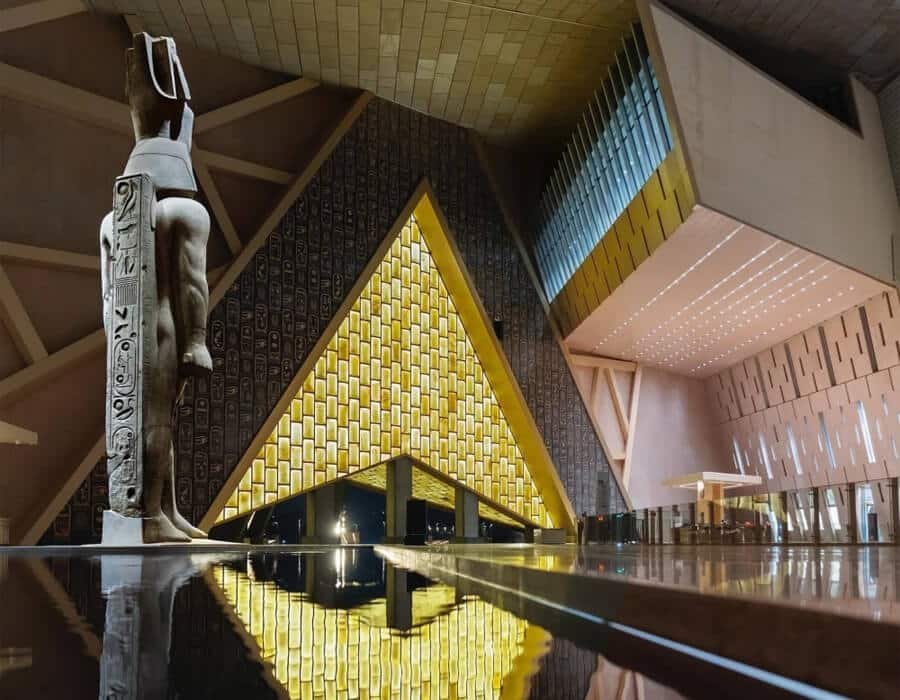
Grand Egyptian Museum or NMEC — Which Should You Visit?
They are not interchangeable, and one thing decides it: the Royal Mummies Hall is at NMEC and nowhere else. Go to the Grand Egyptian Museum for scale, Tutankhamun’s collection and pyramid views — entry ~600–1,000 EGP, allow 4–6 hours, and pair it with Giza the same day. Go to NMEC in Fustat for the royal mummies and the narrative of Egyptian civilization from prehistory to modern — ~200 EGP plus 400 for the mummies, best in the morning. With two days, do both in that order: GEM first, NMEC second.
- Royal MummiesNMEC only — not at GEM or Tahrir
- TutankhamunGrand Egyptian Museum
- GEM cost & time~600–1,000 EGP · 4–6 hours
- NMEC cost~200 EGP + 400 for the mummies
- One day onlyGEM + Pyramids, or NMEC for the mummies
Two of Cairo’s three great museums opened a new chapter for the city, and travellers ask us the same question every week: if there is only time for one, which one? The honest answer is that it depends on a single decision — whether you came to stand in front of the royal mummies, or to see Tutankhamun’s treasures in the largest museum ever built for one civilization.
This guide compares the Grand Egyptian Museum (GEM) and the National Museum of Egyptian Civilization (NMEC) on the things that actually decide it: what is inside each, what they cost, how long they take, and who each one suits. If you would rather have the sequencing handled for you, our guides build it into every Cairo itinerary — you can customize your Egypt tour around whichever you pick.
GEM vs NMEC: The Complete Comparison
| Grand Egyptian Museum | NMEC | |
|---|---|---|
| Location | Beside the Giza Plateau, near the Pyramids | Fustat, in older Cairo |
| The headline draw | Tutankhamun’s collection — the golden mask, sarcophagi and personal belongings | The Royal Mummies Hall — not shown at either other museum |
| Scale | Over 500,000 m², 50,000+ artifacts — the world’s largest museum devoted to a single civilization | Focused and curated rather than vast |
| Approach | Modern galleries with space to breathe; glass-and-steel architecture; pyramid views | Narrative — Egyptian civilization from prehistoric to modern, including daily life |
| Entry | ~600–1,000 EGP | ~200 EGP, plus 400 for the Royal Mummies Hall |
| Time needed | 4–6 hours | Morning to early afternoon |
| Best paired with | The Pyramids of Giza, same day | A slower Cairo day; strong bilingual labels and A/C |
| Comfort | Pristine bathrooms, wide galleries and seating, the best café for a sit-down meal | Modern restrooms, strong wayfinding, easy flow |
The Grand Egyptian Museum
What is inside
The GEM is the world’s largest museum dedicated to a single civilization — over 500,000 square metres beside the Giza Plateau, holding more than 50,000 artifacts. The centrepiece is Tutankhamun’s collection: the famous golden funerary mask, intricate sarcophagi, and a large body of his personal belongings — clothing, jewellery and everyday objects that open a window on his life.
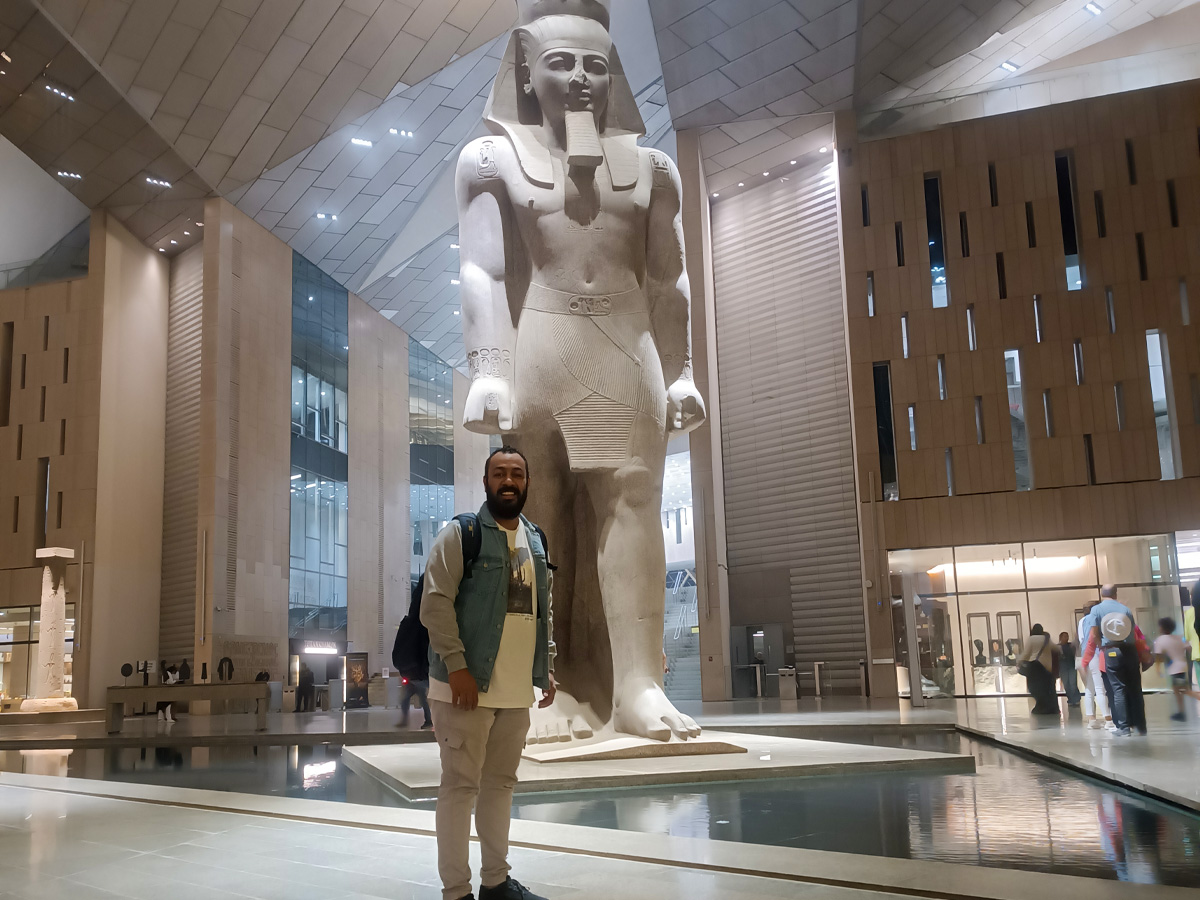
Beyond Tutankhamun the museum holds monumental statuary including the colossal Ramses II, carved reliefs of deities and daily life, and funerary treasures. The design is glass and steel, and the architecture makes the desert silhouette part of the visit.
Even in its soft opening the GEM felt polished: roomy halls, strong signage, and exhibits arranged so statues and artifacts have room to speak.
What it costs and how long it takes
Entry runs approximately 600–1,000 EGP, and you should allow 4–6 hours to do it properly. That is why we pair it with the Pyramids on the same day — the flow from architecture outside to collection inside works, and both sit on the same side of the city.
Who it suits
Choose GEM first if you want a wide architectural overview of ancient Egypt, if Tutankhamun is the reason you came, or if mobility or sensory comfort matters — the wide galleries and seating make it the easiest of the three to move through slowly.
The National Museum of Egyptian Civilization (NMEC)
The Royal Mummies Hall
This is the deciding factor. The Royal Mummies Hall is at NMEC in Fustat — not at the Grand Egyptian Museum and not at the Egyptian Museum in Tahrir. If seeing the royal mummies is on your list, no other museum substitutes for it.
The hall is the emotional centre of the museum: dim, respectful, and unforgettable. It is a different register from the rest of a Cairo museum day.
What it costs and how long it takes
Entry is approximately 200 EGP, with a further 400 EGP for the Royal Mummies Hall. Plan it for the morning to early afternoon — that is when the narrative halls are at their best and the museum is most comfortable.
Who it suits
Choose NMEC if you want the story rather than the spectacle. The museum is curated from prehistoric to modern Egypt and traces daily life, crafts and urban life alongside the royal collections. Clear bilingual labels, strong air conditioning and confident wayfinding make it an easy museum to read.
Where the Egyptian Museum in Tahrir Fits
Cairo’s third museum is still open and still worth your time. The Egyptian Museum at Tahrir Square costs approximately 200 EGP and feels completely different from the other two — wood cases, glass, dust, and an immediate sense of discovery. It reads like a pharaoh’s attic: sarcophagi, statues, jewellery and tools packed close together.
It continues to display thousands of artifacts, including pieces tied to Tutankhamun, even after many objects moved to the GEM. Its bathrooms are older but serviceable — plan hydration accordingly.
Visit it last, if at all. It rewards slow, curious looking rather than a rushed stop.
Which Should You Visit? By Situation
If you have only one day in Cairo
Take the GEM with the Pyramids — they are neighbours, and it is the strongest single day Cairo offers. The exception is if the royal mummies are the reason you came, in which case go to NMEC instead and accept that Giza becomes a separate trip.
If you are running the full one-day Cairo loop, keep any museum stop tight — under 90 minutes — or fatigue takes the afternoon. Giza itself opens at 8:00 AM (7:00 AM in summer), so start there.
If you have two days
Do both, in this order: GEM first, NMEC second. GEM gives you the wide architectural overview and the Tutankhamun material; NMEC then supplies the narrative and the royal mummies. The sequence saves energy and sharpens the trip.
If you have three days
Add the Egyptian Museum in Tahrir last. By then you will have the context to enjoy its density rather than be overwhelmed by it.
If mobility or comfort is a concern
Start with GEM for the wide galleries and seating. NMEC also flows easily with clear signage. The Egyptian Museum in Tahrir is the most demanding of the three.
Practical Tips for Both Museums
- Buy tickets in advance where you can — it avoids the queue and makes entry smooth.
- Go off-peak. Both museums are calmer and more enjoyable outside the busiest hours.
- Morning suits NMEC, late morning suits a relaxed GEM stroll with a café break.
- Facilities: GEM and NMEC both have modern restrooms; GEM’s café is the most comfortable for a sit-down meal.
- Transport: ride-hailing works well — set your pickup a few metres from the doors rather than at them.
- Security at GEM is tight — plan ahead and allow time at the entrance.
Frequently Asked Questions
What is the difference between the Grand Egyptian Museum and the National Museum of Egyptian Civilization?
The Grand Egyptian Museum sits beside the Giza Plateau and is the world’s largest museum devoted to one civilization — over 500,000 m² and 50,000+ artifacts, built around Tutankhamun’s collection and monumental statuary. NMEC in Fustat is a narrative museum tracing Egyptian civilization from prehistoric to modern times, and it holds the Royal Mummies Hall, which the GEM does not.
Which museum has the royal mummies?
The National Museum of Egyptian Civilization (NMEC) in Fustat. The Royal Mummies Hall is not at the Grand Egyptian Museum and not at the Egyptian Museum in Tahrir Square. Entry to NMEC is approximately 200 EGP with a further 400 EGP for the mummies hall.
Which museum has Tutankhamun?
The Grand Egyptian Museum holds Tutankhamun’s collection, including the golden funerary mask, sarcophagi and his personal belongings. The Egyptian Museum in Tahrir Square also still displays pieces tied to Tutankhamun, even after many objects moved to the GEM.
Should I visit GEM or NMEC first?
GEM first. It gives you the wide architectural overview and the headline collection, and NMEC then supplies the narrative and the royal mummies. That sequence — GEM, then NMEC, then the Egyptian Museum in Tahrir if you have a third day — saves energy and makes the story clearer.
How long do you need at the Grand Egyptian Museum?
Allow 4–6 hours to see it properly. If you are running a single packed day across Cairo, keep the museum stop under 90 minutes instead and accept that you are sampling rather than seeing it.
Can you visit GEM and the Pyramids on the same day?
Yes — that is the pairing we recommend. The Grand Egyptian Museum sits beside the Giza Plateau, so the transfer is short. Start at the Pyramids for the 8:00 AM opening (7:00 AM in summer), then move to the museum.
Conclusion: Which Cairo Museum to Visit First
If you take one thing from this comparison: the Royal Mummies Hall is at NMEC and nowhere else, and Tutankhamun’s collection is at the Grand Egyptian Museum. Everything else — scale, architecture, comfort, cost — follows from which of those two you came for.
With one day, GEM with the Pyramids is the strongest Cairo has. With two, do GEM then NMEC. With three, finish at Tahrir. Get the order right and the city tells you its story in sequence rather than all at once.
Don’t miss to check:
Related guides
Egypt Tour Package vs DIY: The Real Cost Breakdown, Line by Line
Quick Answer Egypt Tour Package vs DIY — Which Is Actually Cheaper? At the hostel tier,…
Egypt and Jordan in One Trip: How the Combo Actually Works
Quick Answer Can You Combine Egypt and Jordan in One Trip? Yes — and it’s easier…

Best Diving Spots in Egypt: Your Professional And Standard Guide
Are you looking for an amazing underwater adventure? Egypt's Red Sea is full of hidden treasures.…
Ready to plan your Egypt trip?
Tell us your dates and interests. A Cairo consultant will reply within 24 hours with an itemised itinerary — free to enquire.