





Is a Nile Cruise Worth It? An Honest Answer from a Local Operator
 Magdy Fattouh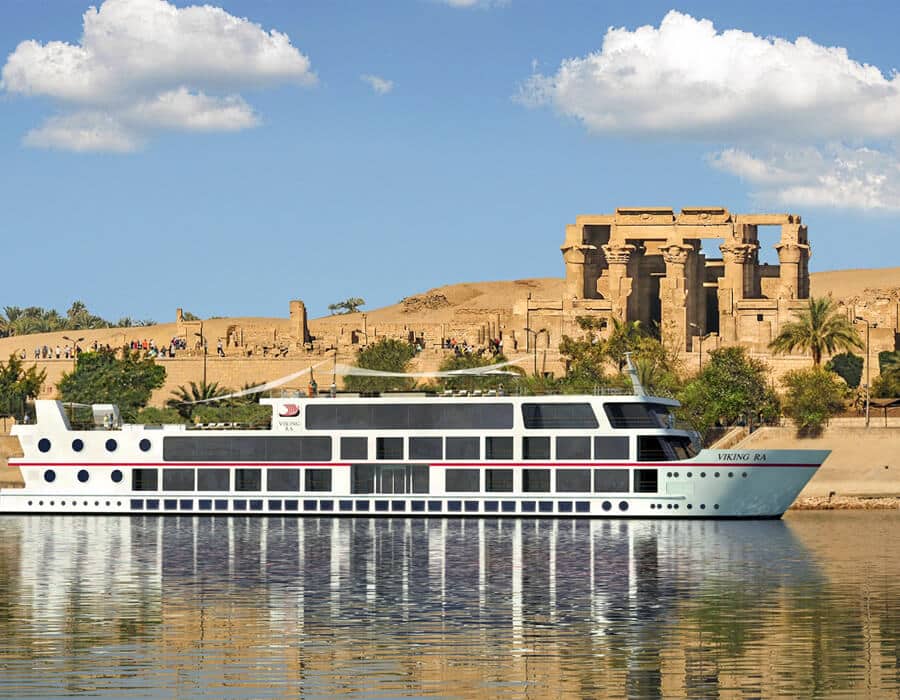
Quick Answer
Is a Nile Cruise Worth It?
For a first Egypt trip: yes, almost without exception. A Nile cruise is the only way to see Karnak, the Valley of the Kings, Edfu, Kom Ombo and Philae without changing hotels once — your room travels with you. From $600 per person for 3 nights on a 5★ ship with full board and private guided shore visits, it’s one of the best value-per-wonder purchases in travel. But the internet’s complaints about cruises — ships docked in walls, convoy crowds, tipping ambushes — are real too. This guide validates them honestly and shows which ones you can design out.
- Verdict: Yes for first-timers — clearly
- From$600 per person, 3 nights
- Covers5 headline temple sites, one unpacking
- Think twice if you hate set schedules — see below
You’ve seen the price, you’ve seen the photos, and now you’re asking the only question that matters: is a Nile cruise actually worth it — or is it a tourist ritual you could skip? If you’ve been reading the forums, you’ve also seen the horror stories: ships moored five abreast, six thousand people arriving at Edfu at once, “all-inclusive” fares that end in a tipping ambush. Most articles answering this question are written by travelers who took one cruise; the complaints threads are written by travelers who took the wrong one.
We’re a Cairo-based operator that places guests on these ships every week — which is exactly why this answer doesn’t need to oversell you. The complaints are mostly true. They’re also mostly avoidable, and knowing which is which is the whole game. Some travelers genuinely shouldn’t cruise, and we’ll say so plainly. For everyone else, the cruise is the spine of every great first Egypt trip — which is why it sits inside almost all of our Egypt tour packages.
Key Takeaways
- The cruise solves Upper Egypt’s geography: five headline sites spread along 220 km of river, one unpacking.
- Real cost on our tours: from $600 (3 nights) or $700 (4 nights), full board with private guided shore days.
- The famous complaints — docking walls, convoy crowds, tip ambushes — are real, and most are avoidable by design.
- Dahabiyas ($1,000–$1,500) fix nearly every big-ship complaint for travelers who want quiet.
- A land-based Luxor stay with day trips is the legitimate non-cruise alternative.
- Verdict: worth it for first-timers, families and most couples — clearly.
What a Nile Cruise Actually Solves
Strip away the romance for a second: the cruise is a logistics machine. The sites of Upper Egypt — Karnak and the Valley of the Kings in Luxor, the temples of Edfu and Kom Ombo, Philae in Aswan — are strung along more than 200 km of river. Seeing them by road means hotel changes, long transfer days and repacking every morning.
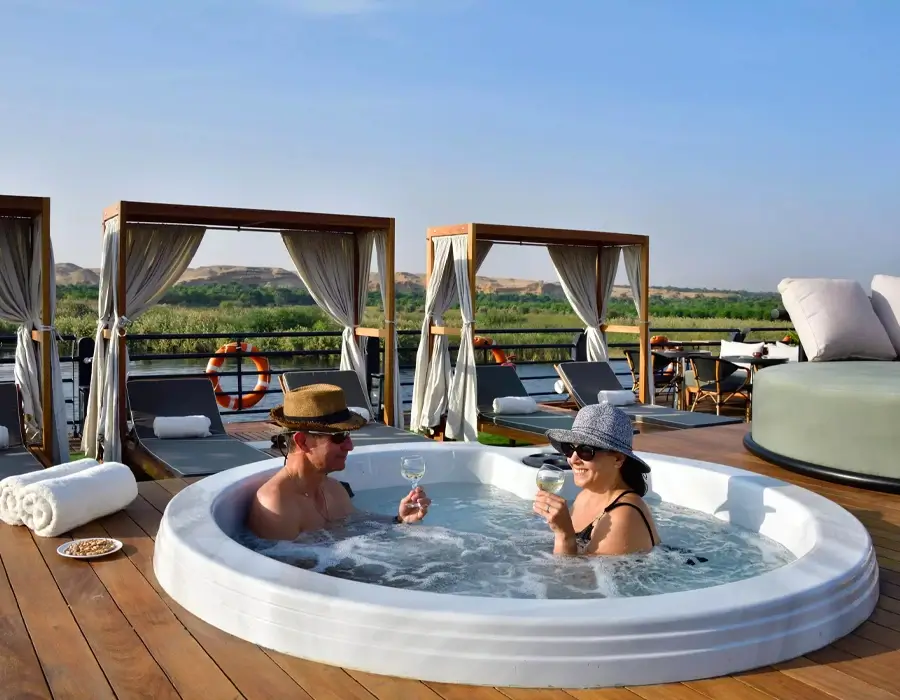
The cruise dissolves all of it. You unpack once. The ship repositions while you eat dinner or sleep, and each morning a new temple waits a short drive from the dock. Add the part no bus can offer — the Nile itself sliding past the sundeck, villages and palm groves and feluccas — and you understand why this remains one of the world’s classic journeys.
On our sailings there’s a third layer: the shore days are private, with a licensed Egyptologist dedicated to your party — not a 40-person group following a paddle. The difference between seeing Karnak and understanding it lives right there.
The Complaints Are Real — Here’s the Honest List
Read enough forum threads and the same grievances repeat. We work this river; every one of them is familiar. Here they are, validated, with the truth about which you can design out:
- “Ships dock side by side, and my balcony faced a wall.” True. At Luxor and Aswan, vessels moor several abreast, and you may walk through other ships’ lobbies to reach shore. Design-out: don’t overpay for a balcony on a 3–4 night sailing (the sundeck always has the view) — or book a dahabiya, which moors alone at islands.
- “Thousands of people hit the temple at the same time.” True at peak hours — ships move on similar schedules, so mid-morning at Edfu is a crowd. Design-out: a private guide (not the ship’s group tour) can shift your timings against the flow; low season helps; dahabiyas run offset schedules entirely.
- “You barely actually sail.” Partly true. On a 3–4 night itinerary the ship spends real hours docked; the golden sailing stretches are the Esna–Edfu–Kom Ombo legs. Design-out: if sailing time is the point for you, choose the 4-night direction, a 7-night round trip — or a dahabiya, where sailing IS the product.
- “The tipping at the end felt like an ambush.” Only when nobody briefs you. Tipping is customary: a shared crew box at the end plus your guide, a few dollars per person per day in total. We put it in writing before you travel — our tipping guide covers the norms — so it’s a line item, not a surprise.
- “The ‘5-star’ boat was tired.” Real risk. A Nile five-star is a local rating, and the fleet ages fast; renovation year predicts your experience better than stars. Design-out: book through someone who knows the boats and will name your vessel in writing — here’s how ship assignment really works.
- “Vendors row up to the ship shouting.” True at Esna especially — it’s a tradition as old as tourism here. Some guests find it charming for ten minutes, then close the balcony door. Pack light earplugs if you’re a sensitive sleeper; it passes.
- “5 am wake-up calls after 8 pm dinners.” True on optional early excursions — Abu Simbel runs, and sunrise balloons start dark. They’re optional, and on a private program you decide the trade each time.
- “No elevator.” Many ships have none. If stairs are a concern for anyone in your party, say so before a vessel is assigned — it changes which boats we use. This matters especially for the senior travelers these cruises otherwise suit wonderfully.
Notice what’s missing from the complaint list: cost. At $600–$700 for three to four nights’ accommodation, all meals, transport between cities, entrance fees and private guiding, the cruise routinely beats the same days assembled separately — our Nile cruise cost breakdown runs the full numbers.
What a Cruise Day Actually Looks Like, Hour by Hour
Nobody prints this, and it answers half the forum anxiety. A typical West Bank day on a 4-night sailing:
- 06:00 — optional balloon guests leave in the dark; everyone else sleeps
- 07:30 — breakfast aboard, docked in Luxor
- 08:00–13:00 — ashore: Valley of the Kings, Hatshepsut’s temple, the Colossi — with your private guide setting the pace and the order (this is where private beats the ship’s group tour: you move against the crowd, not with it)
- 13:30 — lunch aboard as the ship casts off — the first proper sailing stretch, and the sundeck earns its reputation
- Afternoon — the Nile does the entertaining: villages, birdlife, tea on deck, the Esna lock queue (an event in itself)
- 19:00 — evening at Edfu dock; dinner aboard; the ship’s lounge does its gentle thing
That’s the honest rhythm: intense, wonderful mornings; slow, golden afternoons. Travelers who expect a resort-at-sea are the ones who come home disappointed; travelers who expect a moving boutique hotel through 4,000 years of history come home converted.
Worth It for You? The Five-Traveler Test
| You are… | Worth it? | Why |
|---|---|---|
| A first-time Egypt visitor | Yes, clearly | The circuit IS Upper Egypt — skipping it means skipping half the country’s headline sites |
| A family with kids | Yes | Unpack once, pool on deck, short shore outings — the lowest-friction way to do temples with children |
| A couple after romance | Yes — pick the ship well | Sunset on the Nile does the work; a luxury ship or dahabiya does it better |
| A crowd-averse traveler | Yes — via dahabiya | 8–16 guests under sail fixes nearly every complaint about big ships |
| A total-freedom traveler | Maybe not | Fixed sailings chafe — the land-based alternative below fits you better |
Add two honest cautions from the complaint list: travelers with mobility limits should flag stairs before a ship is chosen, and very light sleepers should ask about cabin position (and pack the earplugs for Esna).
The Alternatives, Honestly Compared
| Option | Crowds | Schedule freedom | What you trade | From (our tours) |
|---|---|---|---|---|
| Standard 5★ cruise | Shared peaks ashore | Fixed sailings | Nothing — the full circuit | $600 / 3 nights |
| Dahabiya sailing boat | 8–16 guests, offset stops | Flexible by design | Pool deck & amenities; higher price | $1,000 / 3 nights |
| Land-based Luxor stay | You pick your hours | Total | Edfu, Kom Ombo & the sailing itself | Day tours from $60 |
| Felucca hop | Just you and the boatman | Wind-dependent | Comfort — it’s an outing, not a cruise | An afternoon add-on |
The dahabiya answers the crowd and schedule objections at a higher price: silent sail power, moorings at islands the big ships pass, and food cooked fresh for a handful of guests — $1,000–$1,500 on our 3-night, 4-night and 5-night sailings. The full head-to-head is in our dahabiya vs. standard cruise guide.
The land-based Luxor stay means basing in a hotel and day-tripping: Karnak and the West Bank on your own clock, a full-day Luxor tour, even a sunrise balloon — then hitting the sites at opening time while the cruise crowds are still at breakfast. Total freedom, real trade-offs: you surrender Edfu, Kom Ombo and the river itself, and Aswan becomes a long day trip. Right for repeat visitors and the schedule-allergic; a compromise for first-timers.
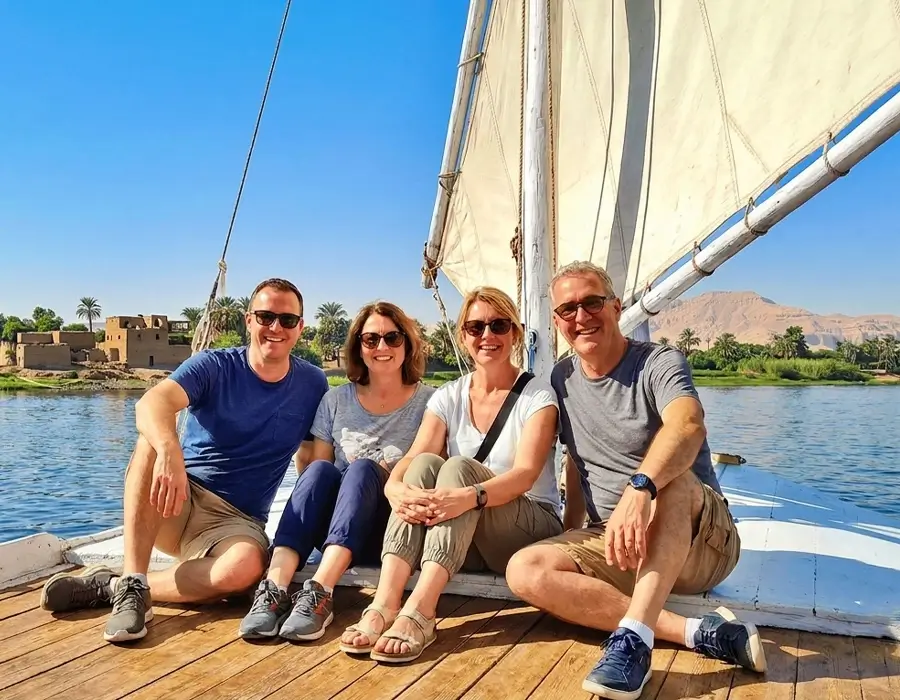
The felucca — the little lateen-sailed boats — is the budget-romantic’s answer, and it’s lovely for what it is: an afternoon or sunset sail, not a touring platform. Do it in Aswan as well as your cruise, not instead of it.
Skipping Upper Egypt entirely is the only genuinely wrong answer on a first trip. Cairo alone is half the story.
How Not to Get Ripped Off (the Fear Behind the Question)
Scratch most “is it worth it?” threads and the real question underneath is “will I get burned?” A five-point vetting list that answers it:
- Itemized quote or walk away. Every inclusion — excursions, entrance fees, guiding, transfers — in writing before you pay. Vague fares are where the surprises live.
- Ask “private or group?” about the shore days. Two quotes with the same headline price can hide a 40-person coach tour versus your own Egyptologist — the single biggest quality gap on the river.
- Get the vessel named in writing for your dates. “A 5-star ship” is not a ship name. Serious operators check your sailing and commit.
- Check the operator’s reviews, not the boat’s brochure. The company that guides and supports you shapes the trip more than the hull.
- Know the tipping norms in advance so the last morning is a thank-you, not a shakedown — and sensible deposit terms (ours: 30% after you approve the quote, balance paid on arrival).
If You Cruise, Do It Properly
- Put it inside a package. The cruise covers Luxor–Aswan; you still need Cairo. Our 8-day Best of Egypt pairs both with Abu Simbel from $1,700 — the configuration most first-timers should book.
- Choose the class deliberately. Standard 5★ for value, luxury for finish, dahabiya for silence — our ship comparison guide makes it a ten-minute decision.
- Go 4 nights if you can. The Luxor→Aswan direction breathes better than the 3-night sprint, with more of the sailing hours that are the whole point — $100 well spent.
- Insist on private shore days. The guide, not the ship, decides whether the temples change you — and it’s also your crowd-avoidance weapon. Ours are licensed Egyptologists, dedicated to your party, included in the price.
- Pack for it. Temple-modest daywear, a warm layer for winter deck evenings, earplugs for Esna — the Nile cruise packing list has the rest.
Frequently Asked Questions
Is a Nile cruise worth the money?
For value alone, yes: $600–$700 buys three to four nights’ accommodation, all meals, city-to-city transport, listed entrance fees and private guided touring of five headline sites. Assembling the same days by land — hotels, drivers, guides, tickets — rarely comes out cheaper and never comes out simpler.
Is a Nile cruise worth it for only 3 nights?
Yes — three nights covers the full Aswan–Luxor circuit including Karnak, the Valley of the Kings, Edfu, Kom Ombo and Philae. Four nights does the same route with more actual sailing time and a calmer pace; choose it if your itinerary allows.
How much of a Nile cruise do you actually spend sailing?
Less than the brochures imply: on a 3–4 night itinerary the ship is docked for real stretches, and the golden sailing runs are the Esna–Edfu–Kom Ombo legs. If sailing hours are your priority, go 4 nights over 3, consider a 7-night round trip — or book a dahabiya, where being under sail is the product itself.
Do Nile cruise ships really dock side by side?
Yes — at Luxor and Aswan ships moor several abreast, and you may cross neighboring lobbies to reach shore while your window faces another hull. It’s normal, it’s temporary, and it’s why we tell guests the sundeck — not the balcony — is where the view lives. Dahabiyas, mooring alone at islands, skip the issue entirely.
Is the food on Nile cruises safe and any good?
Ship kitchens on the established 5★ fleet cater to international guests daily, buffets are generous, and the standard advice keeps everyone comfortable: bottled water only (cheap and everywhere), fruit you peel, food that’s hot. Most guests are pleasantly surprised; dahabiya cooking — fresh, local, small-batch — is consistently the river’s best-kept secret.
Is the Nile cruise overrated?
The experience isn’t; some expectations are. It’s not a Caribbean mega-ship — cabins are hotel-room sized, entertainment is low-key, “5-star” is a local rating, and the point is the temples and the river. Judge it as a moving boutique hotel through 4,000 years of history and it over-delivers.
Should I skip the cruise and stay in Luxor instead?
Only if you’re a repeat visitor or genuinely can’t tolerate fixed schedules. A Luxor base covers Luxor brilliantly — and at opening hours, before the crowds — but surrenders Edfu, Kom Ombo and the sailing itself — the parts people fly home talking about.
Is a Nile cruise good for seniors or guests with limited mobility?
The format suits seniors beautifully — unpack once, short outings, no daily transfers — with one critical caveat: many ships have no elevator, and temple terrain is uneven. Tell us about any mobility needs before a vessel is assigned; it changes which ships and itineraries we recommend, and that conversation costs nothing.
Conclusion
The verdict, plainly: for a first Egypt trip the Nile cruise is worth it — not as a treat, but as the smartest way to see Upper Egypt. The famous complaints are real; almost all of them are design decisions you now know how to make.
If crowds are your worry, sail a dahabiya. If schedules are your enemy, base in Luxor. If it’s your first time, take the cruise inside a complete package — private shore days, named ship, itemized quote — and thank yourself at Kom Ombo at sunset.
Still unsure which camp you’re in? Message Egypt Tours by Locals with your dates and travel style — you’ll get an honest recommendation and an itemized price within 24 hours, even if the answer is “don’t cruise.”
Important Links to Check:
- How Much Does a Nile Cruise Cost? Real Prices, Itemised
- Best Nile Cruise Ships 2026: Standard, Luxury & Dahabiya Compared
- Dahabiya vs. Standard Nile Cruise: Which Journey Fits You?
- 8 Day Egypt Itinerary — Cairo and 4 Nights Cruise with Abu Simbel
Related guides
Celebrating Ramadan in Egypt: Your 2026 Guide
Last Ramadan, I was guiding a family of four from the United States through Cairo. The…

MrBeast’s 100-Hour Adventure in the Pyramids: What He Discovered
Egypt’s Great Pyramids of Giza have stood for over 4,500 years, captivating travelers, archaeologists, and history…

Khan el-Khalili Bazaar Guide 2026 A Local Egyptian’s Honest Review
I have a complicated relationship with Khan el-Khalili. I love it. I have been coming here…
Ready to plan your Egypt trip?
Tell us your dates and interests. A Cairo consultant will reply within 24 hours with an itemised itinerary — free to enquire.