





Visiting the Pyramids of Giza: The Complete Practical Guide (2026)
 Magdy Fattouh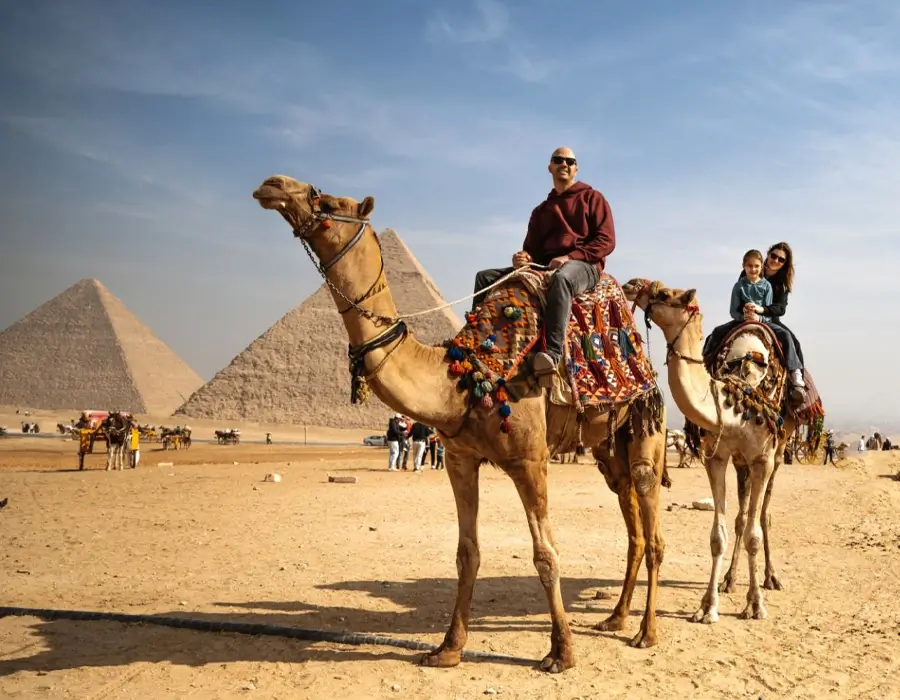
Pyramids of Giza — What Should You Know Before Visiting?
Arrive at 7 am and buy tickets only at official booths. The plateau ticket is 700 EGP; the Great Pyramid interior is 1,500 EGP with just 150 visitors a day — it sells out by mid-morning. Allow 3–4 hours on site, or a full day if you add the Grand Egyptian Museum.
- TicketsPlateau 700 EGP · Great Pyramid interior 1,500 EGP
- Interior cap150/day — be there at 7 am
- Time needed3–4 hrs; full day with the GEM
- Getting thereUber from central Cairo 80–130 EGP (~$2–4)
You’ve seen them in every documentary, on every travel bucket list, and in countless Instagram posts. But actually planning a visit to the Pyramids of Giza — understanding what to wear, how to get there, how much to pay, and what traps to avoid — is a different story entirely. That’s where this guide comes in.
Having guided 1,200+ groups from 75+ countries across the Giza Plateau over the past 13 years, my team and I have answered every question a traveler can ask about these monuments. This is the complete, honest, up-to-date answer to all of them — in one place.
Arriving at Port Said on a cruise ship? See our Port Said shore excursions.
Whether you’re arriving from Cairo on a budget or joining a private tour, this 2026 visitor guide covers everything: entry prices, what the experience is really like, the best time to show up (hint: it’s 7 am), and why that camel ride might cost more than you think.
What to Expect at the Pyramids of Giza
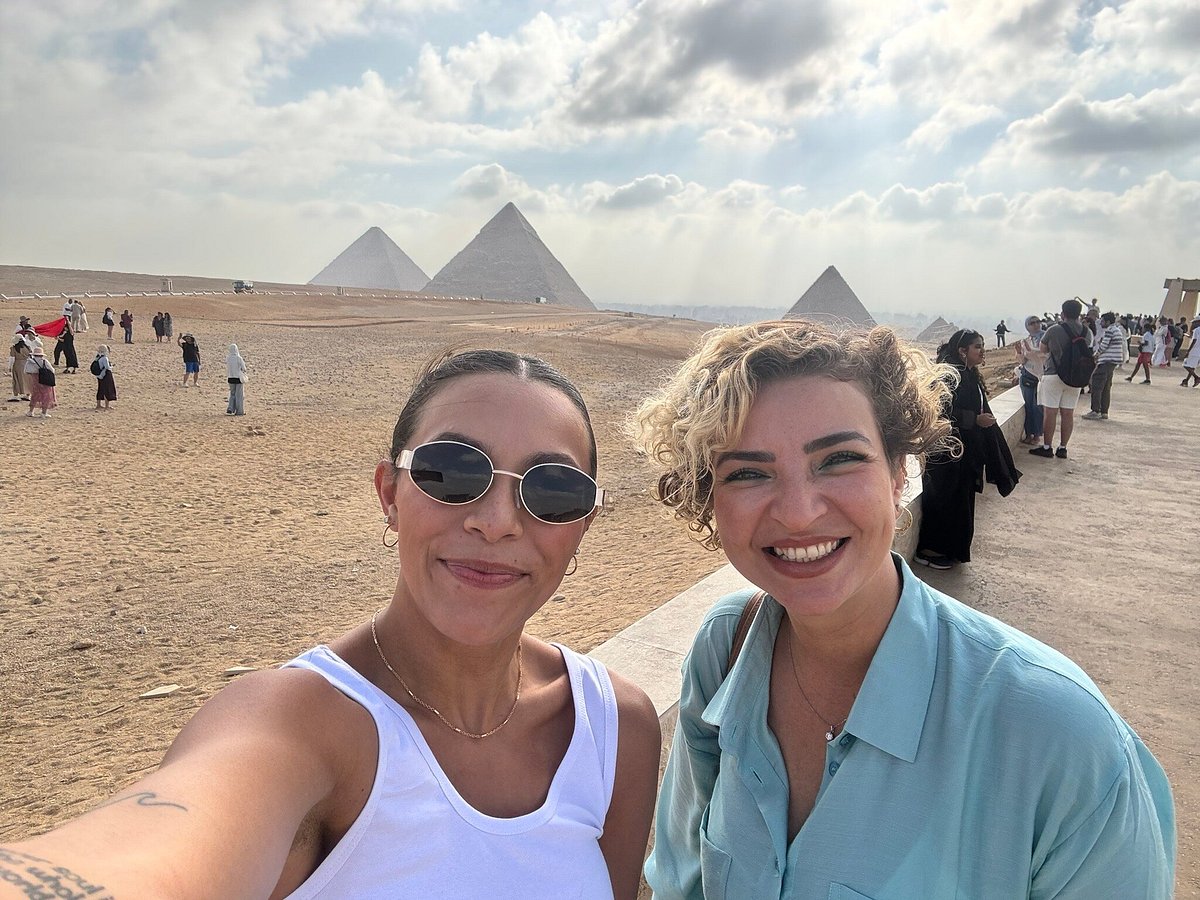
The Giza Plateau sits on the edge of Cairo’s western suburbs — the city literally ends where the desert begins, and the Pyramids rise from that boundary in a way that is genuinely difficult to process when you first see them. There is no soft arrival.
The site contains three main pyramid complexes:
- The Great Pyramid of Khufu — the oldest of the Seven Wonders of the Ancient World and the only one still standing. At 138 meters tall (originally 146 meters before its limestone casing eroded), it was built around 2560 BC and took an estimated 20 years and 20,000 workers.
- The Pyramid of Khafre — slightly smaller but appears taller because it sits on higher ground. Still has its original casing stones at the peak.
- The Pyramid of Menkaure — the smallest of the three main pyramids, but still an enormous structure by any normal standard.
In addition, the plateau includes the Great Sphinx, the Tomb of Queen Meresankh III, and several smaller satellite pyramids and ancient cemeteries. Note: the famous Khufu Solar Boat — the ancient cedar ship discovered beside the Great Pyramid — was relocated approximately three years ago to the Grand Egyptian Museum (GEM), where it is now on permanent display. It is no longer on the Giza Plateau. Most visitors spend 3–4 hours on the plateau; if you plan to enter multiple pyramids and add a GEM visit, allow a full day.
[Book your Giza day tour here →] Cairo Day Tours
💡 Insider Perspective
The plateau is much larger than it looks in photos. From the Sphinx viewpoint — which is free to enter — you’re nearly a kilometer away from the Great Pyramid. Budget time and energy accordingly, and don’t underestimate the walking distances in summer heat.
How to Get to the Pyramids of Giza from Cairo
The Pyramids are located in Giza, approximately 20–25 kilometers from central Cairo. There is no metro station at the site, but you have several solid options depending on your budget and comfort level.
By Uber or Taxi
The easiest independent option. An Uber from downtown Cairo or Zamalek typically costs 80–130 EGP (roughly $2–4 USD) and takes 30–50 minutes depending on traffic. Use the app rather than hailing a taxi on the street — negotiated taxi fares to the Pyramids from Cairo often start high for tourists and require confident bargaining.
Practical tip: Set your Uber drop-off to the main entrance on the eastern face of the plateau (search ‘Sphinx entrance’ or ‘Pyramids of Giza main gate’). This puts you closest to the Sphinx and the main ticket office. Ask your driver to wait or pre-arrange a return — the area has fewer Ubers than central Cairo.
By Public Microbus (Budget Option)
Take the Cairo Metro to the Giza station (Line 2), then pick up a microbus marked ‘Harameya’ or ‘Remaya Square’ — the local name for the main square at the Pyramids entrance. Total cost from central Cairo: around 10–15 EGP. Not recommended in summer heat or with heavy luggage, but perfectly workable in cooler months.
By Private Tour with a Guide
If you’re visiting Egypt for the first time, a guided Pyramids tour from Cairo is genuinely worth it — not for the historical narration alone (though that’s valuable), but for the logistical ease. Your guide handles transport, tickets, queue navigation, and the constant vendor pressure that solo visitors face. Our day tours from Cairo start from $45 per person and include round-trip hotel transfers. Book your Giza Pyramids day tour here
What Does Entry Cost? (2026 Prices)
Ticket prices at the Giza Plateau have increased significantly over recent years and are now priced in Egyptian Pounds (EGP). Prices below reflect 2026 rates — always verify at the ticket office, as prices are subject to updates from the Egyptian Tourism Authority.
| Ticket / Access | Price (EGP) 2026 |
|---|---|
| Giza Plateau Ticket (exterior access only) | 700 EGP |
| Great Pyramid of Khufu — Interior | 1,500 EGP |
| Pyramid of Khafre (2nd Pyramid) — Interior | 280 EGP |
| Pyramid of Menkaure (3rd Pyramid) — Interior | 280 EGP |
| Sound & Light Show (evening) | $20 USD per person |
| Sound & Light Show — VIP | $26 USD per person |
| Tomb of Queen Meresankh III (on plateau) | 200 EGP |
Plateau Ticket vs Individual Pyramid Entry
The base plateau ticket gets you access to the site and all exterior areas — including walking around all three pyramids and the Sphinx area. You cannot enter any pyramid interior on the plateau ticket alone. The Solar Boat is no longer at the plateau — it was moved to the Grand Egyptian Museum (GEM) roughly three years ago, so you will not find a Solar Boat Museum ticket at the Giza gate.
Interior access requires a separate ticket per pyramid, purchased at the main ticket office or sometimes at the pyramid entrance itself. At 1,500 EGP, the Great Pyramid interior is a significant add-on — but for most first-time visitors, it is worth every pound. Only 150 visitors per day are permitted inside — these sell out early in peak season (October to April). If entering Khufu’s interior is a priority, arrive before 8 am and go directly to that ticket window.
The Tutankhamun’s Tomb Connection — What Tourists Get Wrong
Important clarification: Tutankhamun’s tomb is in the Valley of the Kings in Luxor — not at Giza. We get asked about this regularly because of viral content. The ‘extra ticket’ at Giza for the Great Pyramid interior is not for Tutankhamun. If you want to see Tutankhamun’s mummy and burial chamber, that’s a separate trip to Luxor — Valley of the Kings entry is 750 EGP, and Tutankhamun’s tomb requires an additional 700 EGP special ticket.
💡 Local Tip
Pay for tickets only at the official ticket windows — not from any person approaching you outside the gate. Unofficial ‘guides’ sometimes offer to ‘get you in cheaper’ or claim the site is closed. It isn’t. Walk past them to the booth.
Can You Go Inside the Pyramids?
Yes — you can enter both the Great Pyramid of Khufu and the Pyramid of Khafre, for separate fees. Not every visitor chooses to, and it’s worth knowing what to expect before you buy the ticket.
Inside the Great Pyramid, you descend then climb through a low, narrow ascending passage (roughly 1.2 meters high in sections) that leads to the Grand Gallery — a tall corbelled corridor — and ultimately to the King’s Chamber, which contains only the empty granite sarcophagus. There are no wall paintings, no hieroglyphs, no artifacts. The experience is purely architectural and atmospheric — the weight of 2.3 million stones above you, the ancient precision of the engineering, the darkness broken only by installed lighting.
Not recommended for anyone with claustrophobia, mobility difficulties, or breathing conditions. The passage is physically demanding — you’re climbing steeply, bent over, in warm and sometimes humid air.
The Pyramid of Khafre’s interior is slightly less claustrophobic and leads to the burial chamber, which still has the original granite sarcophagus lid. At 100 EGP, it’s an excellent value for those who want the interior experience without the full intensity of Khufu’s passage.
The Pyramid of Menkaure is currently undergoing restoration, and interior access may be restricted — confirm on arrival.
What to Wear at the Pyramids of Giza
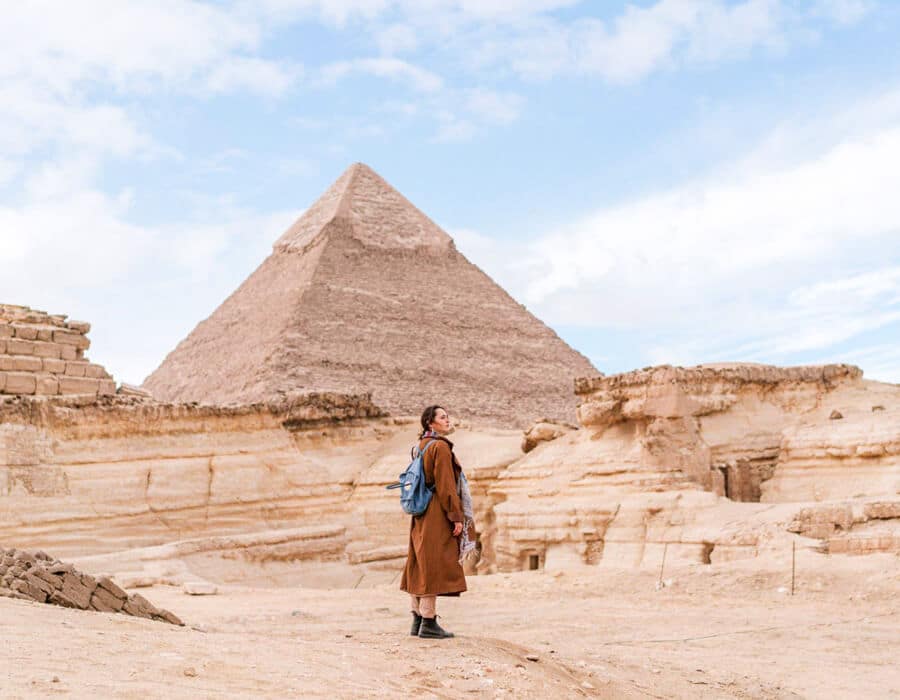
This is one of the most searched questions about visiting Giza, and for good reason — the wrong clothing choices can make your visit genuinely uncomfortable. Here is exactly what to wear:
Women
- Loose, lightweight trousers or a maxi skirt — shorts are not recommended at the Pyramids. While not strictly prohibited as a dress code, you will receive persistent attention, and some vendor pressure can be avoided by dressing more conservatively. Loose linen or cotton works best in heat.
- A lightweight long-sleeved top or scarf — Egypt is a conservative country and having your shoulders covered is considered respectful. It also protects your arms from the sun.
- A wide-brimmed hat or scarf for your head — the plateau has almost no shade at all. Sun protection is critical from April through October.
- Comfortable closed-toe shoes or sturdy sandals — you’ll be walking on uneven stone, sand, and rubble. No heels, no flip-flops if you plan to go inside a pyramid.
Men
- Light trousers or long shorts — knee-length shorts are fine and comfortable.
- A breathable T-shirt or cotton shirt — avoid dark colors in summer; they absorb heat.
- A hat — non-negotiable from May to September.
- Comfortable walking shoes — trainers or hiking sandals are ideal.
All Visitors
- Sunscreen SPF 50+ — the plateau is fully exposed. Apply before arrival and bring a travel-size bottle.
- Sunglasses — the glare off the pale desert sand and limestone is intense.
- A small backpack — to carry water, snacks, and a light layer for the pyramid interior (which can feel cool relative to outside air).
Find out everything in the guide to What to Wear in Egypt 2026
💡 Insider Tip
Bring your own water from Cairo — 1.5 L minimum per person in summer, 1 L in winter. Water inside the site is sold by vendors at inflated prices. The plateau has very little shade; in July and August, temperatures regularly exceed 38°C.
Best Time of Day to Visit (and Why 7 am Wins)
The gates open at 7 am, and this is, without question, the best time to arrive. Here’s why:
- Crowds are minimal — the bulk of tour groups from Cairo arrive at 9–10 am. The first two hours are dramatically quieter.
- The light is exceptional — morning light on the limestone creates a warm, golden tone that midday sun simply doesn’t produce. This is your best photography window.
- Temperature is manageable — even in summer, early mornings at Giza are comfortable. By 11 am in July, the plateau can feel punishing.
- Interior pyramid tickets — if you want to enter the Great Pyramid, arriving at 7 am means you’re at the front of the queue for the 150 daily interior tickets.
The site officially closes at 5 pm (4 pm during Ramadan). The late afternoon — around 3–4 pm — is also less crowded, though the midday sun makes the 11 am–2 pm window the hardest part of the day on the plateau.
Best Season to Visit Egypt
October to April is the ideal travel window for Egypt — warm days (18–28°C), cool evenings, and manageable crowds outside of the peak holiday weeks. December and January see the highest international tourist numbers, so expect larger groups in that window.
May to September is manageable if you have heat tolerance, start extremely early, and plan to be inside or at a cool restaurant by noon. Many experienced travelers do it fine — it just requires adjustment.
How Long Do You Need at Giza?
The honest answer depends on what you want to do:
- 2–3 hours — Exterior walk of all three pyramids, Sphinx viewpoint, quick photos. Good for second-time visitors or those tight on time.
- 3–4 hours — Full exterior circuit + interior of one pyramid + Sphinx area. This is the standard half-day tour.
- 5–6 hours — Full plateau including interior of multiple pyramids, the Tomb of Queen Meresankh III, and time to properly absorb the scale of the site.
If you also want to visit the Grand Egyptian Museum (GEM) — which now houses the Solar Boat and the entire Tutankhamun collection — add a separate half-day. GEM is located right beside the plateau and is best visited as a second stop on the same day trip from Cairo. Entry is 1,590 EGP.
Most organized tours from Cairo build in a 3–4-hour window on the plateau, then continue to other sites such as the Egyptian Museum, Khan el-Khalili bazaar, or Memphis and Saqqara. If the Pyramids are your primary interest and you want to see them properly, request a dedicated Giza tour rather than a combined day tour.
What to Bring With You
Beyond clothing (covered above), these are the practical items that make a real difference:
- Water — at least 1.5L per person, bought before you arrive
- Cash in Egyptian Pounds — tickets are cash only; most vendors do not accept cards or USD reliably
- A power bank — you’ll want your phone charged for photos and Google Maps
- Hand sanitizer or wet wipes — useful after touching dusty surfaces and before eating
- A light snack — the plateau doesn’t have reliable food vendors within the main site; energy bars are useful for long visits
- A portable phone charger — you will use your camera heavily
- Earplugs (optional) — the Pyramid interiors have sound from other visitors; some people prefer the meditative silence with earplugs
Camel Rides, Vendors & Scam Awareness
This section is one of the most important in the guide. The Giza Plateau has a well-documented problem with aggressive vendors, unlicensed guides, and overpriced services — and being caught off-guard can genuinely derail your visit.
Camel Rides
Camel rides at Giza are available and can be a fun photo opportunity — the view from camel height with a pyramid behind you is genuinely iconic. However, always agree on the full price before mounting the camel. The most common scam is that a vendor offers a ride for ’50 EGP’ and when you return, demands 50 USD per person, or refuses to let you dismount until you pay significantly more.
Always confirm: the price per person, the total duration, whether the photo stop is included, and what currency they expect. Pay at the end, not upfront. A reasonable camel ride on the plateau runs 200–400 EGP for a short circuit — anything quoted in USD is being priced for tourists.
Vendors Inside and Around the Site
You will be regularly approached by vendors selling scarves, statuettes, postcards, and ‘Egyptian cartouches’. A polite but firm ‘La shukran’ (No thank you, in Arabic) is usually sufficient.
Some vendors are persistent — the best approach is to keep walking and avoid eye contact. If you want to buy something, the shops near the exit often have more reasonable prices than those on the plateau itself.
Unlicensed Guides
People near the entrance will approach, offering guided tours at low prices. Some are skilled and knowledgeable; many are not licensed and some will lead you into shops for commission cuts. If you want a guide, book one in advance through your hotel or a reputable tour operator.
Our licensed local guides have government-issued badges and deep site knowledge built from years of working the plateau.
💡 The MrBeast Question
Searches for ‘how did MrBeast get access to the pyramids’ spike regularly. In 2023, MrBeast filmed inside the Great Pyramid for a viral video. Special filming permits for this kind of commercial production are issued by Egypt’s Ministry of Tourism and Antiquities, and require significant advance planning, fees, and restrictions. Standard tourists are not offered comparable access — what you see in the video is a commercial permit, not available to regular visitors.
Are the Pyramids of Giza Worth Visiting?
Every year, a small number of travelers report feeling underwhelmed by the Pyramids — usually because of the vendor pressure, the crowds, or the stark contrast between the monuments and the chaotic suburban sprawl surrounding them. It’s an honest reaction and worth addressing.
Our view, after guiding well over a thousand groups: Yes, unequivocally — but context matters. The Pyramids are more extraordinary when you understand what you’re looking at. A stone block in Khufu’s pyramid can weigh 2.5 tonnes. There are approximately 2.3 million of them. They were placed with a precision that modern engineering still studies. The Great Pyramid was the tallest structure on Earth for 3,800 years. No other building held that record for a fraction of that time.
The visitors who leave most moved are those who arrived with some understanding of scale, history, and context — not just a camera. This is one reason a knowledgeable local guide genuinely transforms the experience. The stones don’t speak for themselves unless you know what to ask.
The visitors who feel underwhelmed usually hit the site during midday heat, didn’t enter a pyramid interior, were bombarded by vendors without a guide, and spent more time swatting away distractions than absorbing the monument. With good timing, good information, and ideally a good guide, the Pyramids of Giza remain one of the most singular experiences on Earth.

Frequently Asked Questions About Visiting the Pyramids of Giza
What is the best time to visit the Pyramids of Giza?
Arrive at 7 am when the gates open — crowds are minimal, the light is beautiful for photography, and it’s cool enough to walk comfortably. In terms of season, October through April is ideal, with mild temperatures of 18–28°C. The site is open daily from 7 am to 5 pm (4 pm during Ramadan).
How much does it cost to visit the Pyramids of Giza in 2026?
The Giza Plateau entry ticket is 700 EGP. The Great Pyramid’s interior costs 1,500 EGP (limited to 150 visitors per day—arrive early). The 2nd and 3rd Pyramid interiors are 280 EGP each. The Sound and Light Show is $20 USD. Note: the Solar Boat is no longer at the plateau — it is now at the Grand Egyptian Museum (GEM). All tickets are paid in Egyptian Pounds at official booths only.
What should I wear to the Pyramids of Giza?
Wear lightweight, loose-fitting clothes that cover your shoulders and knees — this is practical for the heat and culturally respectful. Comfortable walking shoes are essential. Bring a hat, sunglasses, and SPF 50 sunscreen. Women may find a light scarf useful both for sun protection and as a head covering if desired. Avoid sandals if you plan to enter a pyramid interior.
Can you go inside the Pyramids of Giza?
Yes. The Great Pyramid of Khufu and the Pyramid of Khafre are both open for interior access (separate tickets required). The passages are low, steep, and narrow in places — not suitable for visitors with claustrophobia or mobility limitations. Inside, you’ll find the burial chambers and original stone sarcophagi, but no wall paintings or artifacts — these are purely architectural experiences.
How do I get from Cairo to the Pyramids?
The easiest options: (1) Uber or taxi — 80–130 EGP, 30–50 minutes from central Cairo. (2) Metro to Giza station + microbus to Remaya Square — around 10–15 EGP total, but slower. (3) Private guided tour from your hotel — recommended for first-time visitors as it includes transport, tickets, and expert guidance.
How long does a visit to the Pyramids take?
Allow 3–4 hours for a thorough visit, including the exterior, the Sphinx, and one pyramid interior. Budget 5–6 hours if you want to visit the Solar Boat Museum and enter multiple pyramids. A quick photo stop and exterior walk can be done in 2 hours, but this doesn’t do the site justice.
Is it safe to visit the Pyramids of Giza?
The Pyramids are visited by millions of tourists annually and are among Egypt’s most popular tourist sites. The main nuisance — not a safety risk — is persistent vendors and unlicensed guides. Stay with your group or guide, ignore approaches outside the official ticket area, and you’ll have a safe and manageable experience. Keep your valuables secure as you would in any busy tourist site.
Can I visit the Pyramids independently without a guide?
Yes — the site is well-signposted, and you can walk around without a guide. That said, first-time visitors often find that having a knowledgeable local guide significantly enhances the experience — not just for historical context, but for navigating ticket purchases, avoiding vendor pressure, and reaching the best viewpoints efficiently. Many experienced travelers say it was the best investment of their trip to Egypt.
Ready to Visit the Pyramids of Giza?
The Pyramids of Giza have been drawing travelers for thousands of years, and they still deliver. The key is to go prepared: arrive early, dress appropriately, buy your tickets at the official booths, and give yourself enough time to actually stand in front of these monuments rather than rushing through.
If you’d like local expertise on the ground — from transport and tickets to the stories behind the stones — our team has been doing exactly this for 13 years. With guests from 75+ countries, we know what makes a Giza visit truly memorable.
Related guides
Cairo’s Museums: GEM vs NMEC vs Egyptian Museum—Which One When?
I ask that because each place tells Egypt's story in a very different voice. I’ve walked…
Wheelchair-Accessible in Egypt: Sites, Ramps, Bathrooms, Vehicles (2026)
Can a trip to the Giza Pyramids feel effortless when you use a wheelchair? I ask…
Siwa’s Salt Lakes: Best Pools, Photography Tips & When to Go
Ever wondered how it feels to float on a mirror in the middle of the desert?…
Ready to plan your Egypt trip?
Tell us your dates and interests. A Cairo consultant will reply within 24 hours with an itemised itinerary — free to enquire.