




Christmas in Egypt 2027: What to Expect & How to Celebrate Like a Local
 Magdy Fattouh
Is Egypt Good at Christmas?
Yes — December and early January are among Egypt’s best months. Comfortable 18–24°C, sunny skies, and two Christmases: Western on December 25 and Coptic Orthodox on January 7, with midnight mass at the Hanging Church the standout experience. Book 2–3 months ahead — New Year occupancy tops 90%.
- Weather18–24°C, sunny, near-zero rain
- Two datesDec 25 (Western) & Jan 7 (Coptic)
- HighlightMidnight mass, Hanging Church
- Book2–3 months ahead for New Year
Ready to spend the holidays here? See our Egypt Christmas & New Year tours 2026/27 — private packages with December departures.
My clearest Christmas memory from guiding: an American couple I took to Coptic Cairo on January 7th — Coptic Christmas Day. They had booked a standard Cairo tour, and the Coptic Christmas visit was simply one item on the day’s programme. We arrived at the Hanging Church in Old Cairo mid-morning, when the previous night’s midnight mass had already concluded but the decorations were still up and the bells had not stopped entirely. The wife — who was not religious, she told me — stood in the doorway of the church and did not move for three minutes. Then she turned around and said, quietly, “I had no idea this existed.”
That is the conversation I have been having with tourists for thirteen years. Egypt at Christmas is not what most visitors imagine. They expect the desert, ancient and timeless. They do not expect candlelit Coptic churches on the night of January 6th, families in their best clothes exchanging the greeting Eid el-Milad el-Magid, the smell of incense and the sound of hymns sung in the ancient Coptic language — a tradition continued without interruption for nearly two thousand years.
This guide covers both the Christmas Egypt offers: the comfortable, festive, high-season tourist experience of December and early January, and the deeper, older celebration that most visitors miss entirely.
Quick Answer: Is Egypt Good at Christmas?
YES — December and early January are among Egypt’s very best months to visit: perfect temperatures (18–24°C), winter sunshine, festive atmosphere at hotels and resorts, two distinct Christmas celebrations, and New Year’s Eve events across every major city. The only caveat: it is peak season — book 2–3 months in advance.
-
- Perfect temperatures: 18–24°C in Cairo and Luxor, warm enough for comfortable sightseeing, cool enough for long days at the Pyramids
- Winter sunshine with near-zero rainfall at most sites
- Festive atmosphere in hotels, resorts, and tourist areas throughout December
- Two distinct Christmas celebrations: Western Christmas (Dec 25) and Coptic Christmas (Jan 7)
- New Year’s Eve events across every major city and resort
- Book accommodation, Nile cruises, and private tours at least 2–3 months in advance — hotel occupancy exceeds 90% around New Year’s Eve
Planning to celebrate the holidays in Egypt? Discover our Best Egypt Tour Packages and experience a magical Christmas among ancient wonders.
Two Christmases: Understanding the Calendar
1- Western Christmas — December 25: Observed commercially throughout Egypt. Hotels, malls, and tourist areas are decorated, Christmas dinner packages are offered at most mid-range and luxury hotels, and the festive atmosphere in the tourist circuit is genuine. This is not a religious holiday on the Egyptian national calendar, but it is enthusiastically embraced by the hospitality industry.
2- Coptic Christmas — January 7: A national public holiday in Egypt, observed by Egypt’s Coptic Orthodox Christian community — approximately 10–15 million people, roughly 10% of the population. This is a deeply religious celebration involving 43 days of fasting, a midnight mass on the night of January 6th, a family feast that breaks the fast, and traditions maintained since the earliest centuries of Christianity in Egypt. This is the Christmas most tourists know nothing about, and it is one of the most extraordinary experiences Egypt offers.
Coptic Christmas: The Celebration Tourists Miss
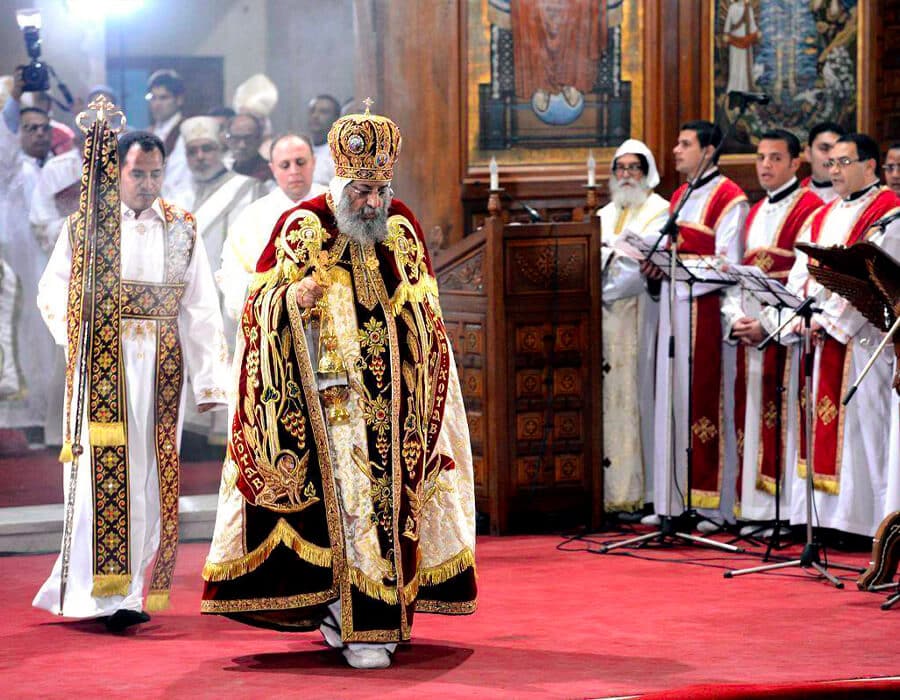
Coptic Christianity is one of the oldest Christian denominations in the world, tracing its founding to Saint Mark the Apostle in Alexandria in the first century AD. The Coptic community has maintained its faith, calendar, and ancient liturgical language through Roman persecution, the Arab conquest, the Ottoman period, and into the present.
The History Behind January 7th
The Coptic Orthodox Church follows the ancient Julian calendar rather than the Gregorian calendar used in most of the world. This places the Feast of the Nativity on what the Gregorian calendar calls January 7th (the Julian calendar runs 13 days behind). Christianity reached Egypt within decades of the crucifixion — Alexandria was a major theological centre of the early Christian world, producing some of the most significant early church fathers. When you attend a Coptic Christmas service, you are witnessing a tradition of extraordinary continuity.
The 43-Day Fast and How It Ends
In the weeks before Christmas, Coptic Christians observe the Kiahk fast — 43 days of abstaining from all animal products: no meat, no dairy, no eggs. The fast breaks on Christmas Eve (the night of January 6th going into January 7th). The midnight mass begins around 9–10pm and culminates at midnight when the bells ring and Christmas Day officially begins.
After the service, families return home for the feast. The main Christmas meal is fatta — rice, crispy fried bread, boiled lamb or beef, and a sharp garlic-and-vinegar sauce. After 43 days without meat, the fatta is deeply anticipated. Alongside it come kahk (shortbread cookies stuffed with dates or nuts, dusted with icing sugar) and shortbat (a warm spiced Christmas drink). Gifts are exchanged, family visits continue through the day, and many families gather at Al-Azhar Park for Christmas Day picnics.
Planning a festive trip to Egypt? Discover How to Book Your Egypt Tour? and secure your holiday experience with ease.
Witnessing Coptic Christmas as a Tourist
Several of Cairo’s Coptic churches welcome respectful visitors to the Christmas midnight mass and Christmas Day celebrations. This is a religious observance, not a tourist event — approach it accordingly.
The Hanging Church (Al-Mu’allaqa), Coptic Cairo
The most famous Coptic church in Egypt, built above the gatehouse of the Roman fortress of Babylon. On Christmas, it is beautifully decorated and receives both worshippers and visitors. Walking through the Coptic quarter on Christmas Day — with families in their best clothes, church bells echoing off the ancient stone, and the smell of incense from open church doors — is one of Cairo’s most atmospheric experiences.
St. Sergius and Bacchus Church (Abu Serga), Coptic Cairo
Said to have been built at the site where the Holy Family rested during their flight from Egypt. One of the oldest churches in Cairo, with a crypt that marks the traditional location of the Holy Family’s shelter. On Christmas, the symbolic resonance of being in this specific place is very deep.
If you’re spending the holidays in the capital, explore the Best Things to Do in Cairo and make the most of your Christmas trip.
Saint Mark’s Cathedral, Azbakeya
The seat of the Coptic Pope, where the Christmas Eve midnight mass is officiated. Egypt’s president and senior government officials traditionally attend this service — a demonstration of the national significance of Coptic Christmas. The scale and atmosphere are extraordinary. Arrange access through your guide well in advance.
Practical Guidance for Visitors
- Dress modestly — shoulders and knees covered; women may wish to bring a headscarf
- Arrive well before the service begins; midnight mass is extremely well attended
- Photography during the service is generally discouraged — observe rather than document
- The greeting is Eid el-Milad el-Magid (Glorious Birth Feast) — use it with every Coptic family you encounter
From snorkeling to desert adventures, check out the Amazing Things to Do in Sharm during your festive holiday in Egypt.
Western Christmas in Egypt (December)
What to Expect at Hotels and Resorts
The Egyptian hospitality industry has enthusiastically embraced the Western Christmas aesthetic. Christmas trees appear in hotel lobbies from early December. Christmas Eve and Christmas Day special dinner packages — typically a multi-course set menu, often with live music — are offered at most 3-star properties and above. Prices for these dinners are significantly higher than standard menu prices; book and confirm ahead.
The Sofitel Winter Palace in Aswan: The iconic Christmas destination in Egypt — a Victorian-era hotel with gardens running to the Nile, where afternoon tea, Christmas dinner, and New Year’s Eve celebrations take place in a setting that feels genuinely cinematic. Book months ahead. Important: from May 2026, the Winter Palace will no longer be operated by Sofitel — verify current management before booking if travelling after that date.
Cairo luxury hotels: The Four Seasons, the Nile Ritz-Carlton, and the Kempinski run elaborate Christmas and New Year’s Eve events. A Nile-view rooftop dinner on December 31 in Cairo is one of the great New Year’s experiences in the Middle East.
Cairo City at Christmas
In the Cairo neighbourhoods of Zamalek, Heliopolis, and Garden City — areas with significant international and Christian communities — December brings visible Christmas decoration: lit trees in apartment balconies, decorated windows in boutique shops, Christmas music in cafés. The major shopping malls (City Stars, Cairo Festival City) go full Western Christmas from early December, with elaborate decorations, seasonal promotions, and children’s events.
New Year’s Eve in Egypt
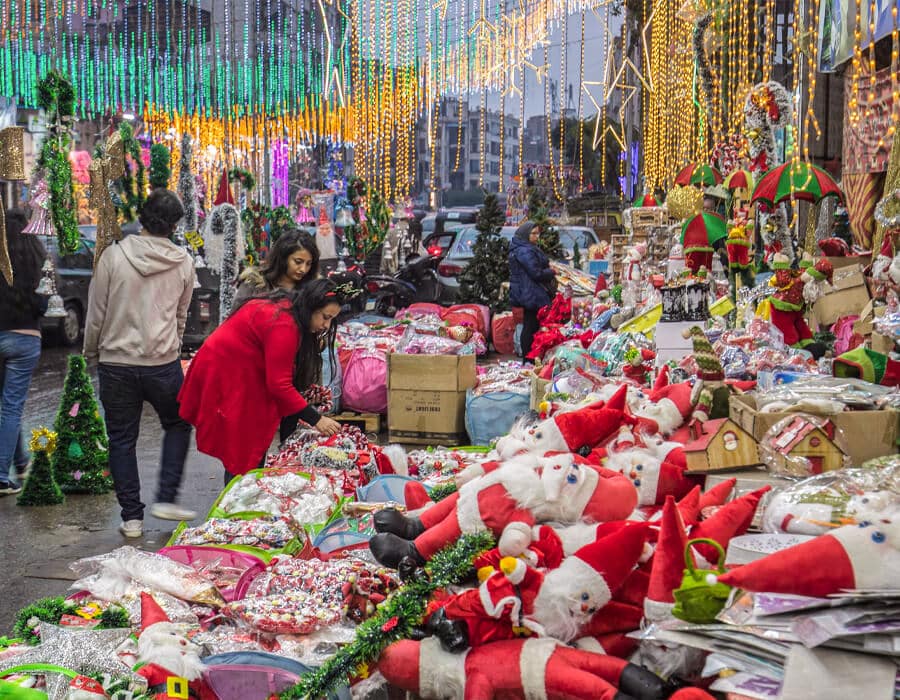
New Year’s Eve (December 31) is not a national holiday in Egypt, but it has become one of the country’s biggest celebration events. Hotel occupancy across the country exceeds 90%; many sold-out properties start turning away bookings in October.
Cairo New Year’s Eve
The Nile Corniche becomes the gathering point. Fireworks are fired over the Nile and — in Giza — over the Pyramids. The sight of fireworks erupting above the Great Pyramid is one of the most theatrical New Year’s images in the world. Hotels along the Corniche run gala dinners with Nile views. Nile dinner cruises operate through the evening with live music, belly dancing, and tanoura (Sufi spinning dance) performances.
Mena House Hotel by the Pyramids: The fireworks over the Pyramids are visible from the hotel terrace in a way that justifies the premium the property charges for New Year’s Eve packages. Book months in advance.
Luxor and Aswan New Year’s Eve
For a more historically resonant New Year’s Eve, Luxor and Aswan offer experiences available nowhere else on earth. Karnak Temple at night, illuminated for the Sound and Light Show, on New Year’s Eve — with the enormous stone columns lit against the dark sky — is a backdrop that no European city can match. In Aswan, the Old Cataract Hotel runs New Year’s Eve gala dinners on its terrace overlooking the Nile, with the granite islands and feluccas in the river below.
Red Sea New Year’s Eve
Sharm el-Sheikh and Hurghada run beach-based New Year’s Eve events. Soho Square in Sharm becomes an outdoor venue with live music, DJ events, and fireworks. Most resort hotels offer New Year’s packages with gala dinners, folklore shows (belly dancing, Nubian music), and beach access. Water temperature in the Red Sea in December is approximately 22–23°C — comfortable for night swimming after the fireworks.
Make your holiday trip even more memorable by tasting the Egyptian Foods during your Christmas visit to Egypt.
Best Places to Spend Christmas in Egypt
| Destination | Christmas Experience | Why Choose It |
|---|---|---|
| Cairo | Full tourist Christmas + Coptic Christmas (Jan 7) | The most complete experience. GEM, Pyramids, Islamic Cairo at winter best. Two Christmases in one city. |
| Aswan | Old Cataract / Winter Palace Christmas | The most romantic option. Legendary hotel, Nile views, warmest winter city in Egypt. Book months ahead. |
| Luxor | Temples in winter light + New Year’s Eve options | Karnak at Christmas is spectacular. Valley of the Kings quieter than peak summer season. |
| Sharm el-Sheikh | Beach Christmas — unusual and memorable | 24°C in December. Red Sea diving, resort celebrations. A genuinely different kind of Christmas. |
| Hurghada | All-inclusive Christmas resort packages | Affordable beach Christmas. Great value for families. Excellent resorts. |
| Nile Cruise | Floating between Luxor and Aswan | Christmas dinner onboard, winter temples, fairy-lit cruise ships at dock along the Nile. |
Christmas Weather in Egypt
| City | Day Temp | Night Temp | Rain | Overall |
|---|---|---|---|---|
| Cairo | 18–20°C (64–68°F) | 8–12°C (46–54°F) | Rare | Perfect sightseeing weather. Pack a jacket for evenings. |
| Luxor | 24–26°C (75–79°F) | 10–14°C (50–57°F) | Almost none | Warm days, cold nights. Ideal for temples. |
| Aswan | 26–28°C (79–82°F) | 12–16°C (54–61°F) | None | Warmest winter city in Egypt. |
| Sharm el-Sheikh | 22–25°C (72–77°F) | 14–17°C (57–63°F) | Rarely | Excellent beach weather. |
| Alexandria | 16–18°C (61–64°F) | 10–13°C (50–55°F) | Occasional | Cooler and wetter — Mediterranean climate. |
Egypt’s winter is one of its best-kept travel secrets. The temperatures above are what most of Europe calls a perfect summer day. While visitors from northern Europe or North America are enduring the coldest month of their year at home, a December trip to Luxor or Aswan offers warm sunshine and the ability to spend a full day at the temples in complete comfort. Pack a warm layer for evenings — Cairo and Luxor can be genuinely cold after sunset.
Practical Tips for a Christmas Trip to Egypt
- Book everything early. December is peak season and competition for accommodation is real. Nile cruises for Christmas–New Year sell out months in advance. The Sofitel Winter Palace, Mena House, and the Old Cataract are effectively booked by October for Christmas dates.
- Plan for both Christmas dates. If your trip spans both December 25 and January 7, you have the extraordinary opportunity to experience two fundamentally different celebrations. A Christmas dinner at a Nile-view hotel in December, followed by a January 7 morning walk through Coptic Cairo when the churches are decorated — this combination is unique to Egypt.
- Tour sites early. The major sites — Valley of the Kings, Karnak, the Pyramids — are open throughout December and January. Consider late-afternoon GEM visits to avoid the largest tour groups.
- Dress for the temperature range. Cairo in December can reach 20°C at midday and drop to 9°C by 10pm. Layers that can be added or removed are essential. For Coptic Christmas church visits, modest dress (shoulders and knees covered) is required.
- Respect the Coptic Christmas experience. If you visit churches on January 6th or 7th, you are a guest at a religious observance. Arrive with your guide, dress modestly, observe rather than photograph during services, and receive the Eid el-Milad el-Magid greeting with the warmth it deserves.
Christmas Itinerary Suggestions
7 Days: Cairo + Nile Cruise + Coptic Christmas
- Days 1–2: Cairo — Pyramids and GEM, Islamic Cairo and Khan el-Khalili
- Day 3: Coptic Cairo morning — Hanging Church, Abu Serga, Souq el-Fustat. Evening: early Coptic Christmas atmosphere building
Night Jan 6 / Day Jan 7: Midnight mass at a Coptic church in Cairo (arranged through your guide). Christmas Day morning walk in Coptic Cairo. - Day 5: Fly Cairo–Aswan. Philae Temple, Old Cataract afternoon
- Day 6: Nile cruise: Aswan–Kom Ombo–Edfu
- Day 7: Arrive Luxor. Karnak Temple. Fly home from Luxor.
10 Days: Christmas + New Year’s Eve + Coptic Christmas
The full experience: three distinct celebrations across Egypt’s main destinations.
- Days 1–3: Cairo — GEM, Pyramids, Islamic Cairo, Christmas Eve dinner at Nile-view restaurant (Dec 25)
- Days 4–6: Nile Cruise Luxor–Aswan (temples, New Year’s Eve onboard — Dec 31)
- Days 7–8: Aswan — Philae, Nubian villages, Old Cataract dinner
- Day 9: Fly Aswan–Cairo. Return for Coptic Christmas (Jan 7) — full day in Coptic Cairo
- Day 10: Fly home from Cairo
Travelling over the wider winter season? See our Egypt winter holidays guide, compare November as the season opens, and browse ready-made Christmas & New Year packages.
Frequently Asked Questions
Does Egypt celebrate Christmas?
Yes — Egypt celebrates Christmas twice. Coptic Orthodox Christmas falls on 7 January (this is the main Christmas celebration for Egypt’s Coptic Christian community, approximately 10% of the population). Western Christmas on 25 December is widely observed in tourist hotels, restaurants, shopping centres, and cosmopolitan neighbourhoods of Cairo. Both celebrations bring a festive atmosphere to Egypt, with the 7 January Coptic Christmas being the more culturally authentic Egyptian experience.
How does Egypt celebrate Christmas?
Coptic Christmas (7 January): families attend midnight mass on the evening of 6 January, then gather the next day for the traditional Fatta meal (layers of rice, bread, and meat in a broth — the Christmas dish of Coptic Egypt). Cairo’s streets and shopping areas are decorated through December–January. Hotels offer Christmas dinners and festive packages. Nile cruises are particularly atmospheric during this period. For Western Christmas (25 December), the international hotels and restaurants in Cairo, Hurghada, and Sharm fully celebrate with decorations, Christmas menus, and events.
What is Christmas called in Egypt?
In Arabic, Christmas is called Eid el Milad el Majid (عيد الميلاد المجيد) — literally ‘Feast of the Glorious Birth.’ This is the term used by Egypt’s Coptic Christian community. In casual modern Egyptian Arabic, you’ll also hear ‘el Krismas’ from the English word. Coptic Christmas on 7 January is the official public holiday in Egypt for this celebration.
What do they call Santa Claus in Egypt?
Santa Claus is called Baba Noel (بابا نويل) in Egypt — the same name used across most of the Arab world. Children in Cairo and Egypt’s cities look forward to Baba Noel during the Christmas and New Year period. In tourist areas, you’ll see the same imagery of Santa/Baba Noel as in Europe and America, particularly in international hotels and malls from mid-December onwards.
When is Christmas Day in Egypt?
Two dates: Coptic Orthodox Christmas is 7 January — this is Egypt’s official Christmas public holiday and the main celebration for the Coptic community. Western Christmas (25 December) is not an official Egyptian public holiday but is widely celebrated in tourist areas, international hotels, and urban centres. If you want to experience authentic Egyptian Christmas traditions, visiting around 6–7 January for the Coptic celebration is the more meaningful choice.
How is Coptic Christmas different from Western Christmas?
Coptic Christmas follows the Julian calendar, placing it on 7 January rather than 25 December. The traditions are deeply religious: midnight mass at Coptic churches is the central event (St. Mark’s Cathedral in Cairo holds a major service), followed by family gathering and the Fatta meal. It’s more spiritually focused than the commercial Western Christmas. For tourists in Egypt during early January, the Coptic Christmas atmosphere — church candles, midnight services, family gatherings — offers an extraordinary window into Egyptian Christian culture that few international visitors ever witness.
Related Guides:
Related guides
Traveling Alone in Egypt: Your Complete Guide for 2026
Traveling alone in Egypt is an exhilarating adventure filled with history, culture, and unmatched scenery. From…
How to Avoid Tourist Scams in Egypt: A Traveler’s Guide for 2026
Traveling to Egypt is a dream come true for many, with its ancient wonders, vibrant bazaars,…
Top 10 Historical Sights in Egypt You Can’t Miss in 2026
Egypt—where history and wonder collide! Whether you’ve dreamed of standing before the towering Pyramids of Giza…
Ready to plan your Egypt trip?
Tell us your dates and interests. A Cairo consultant will reply within 24 hours with an itemised itinerary — free to enquire.